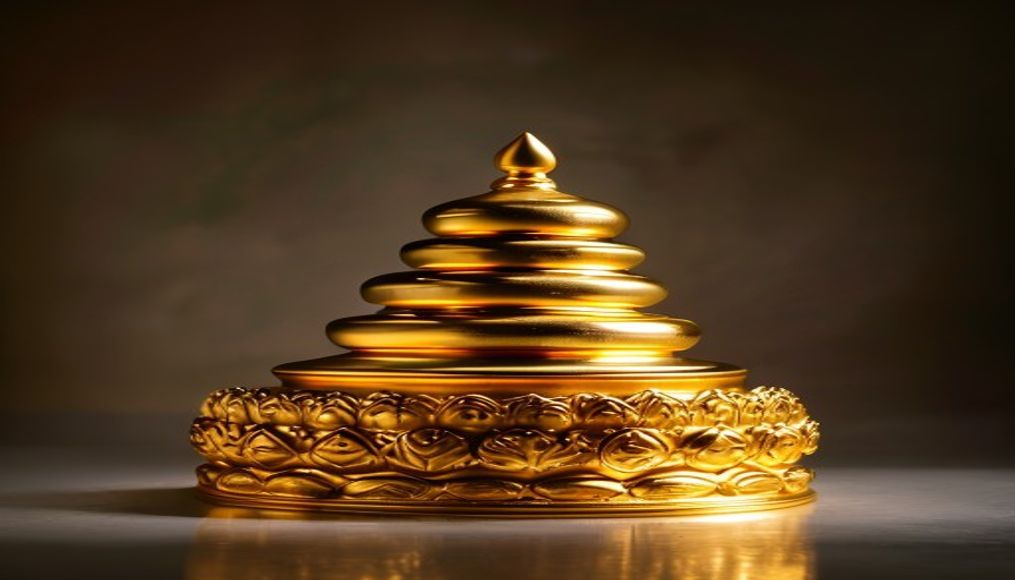
Buddhist stupa golden
1344×768 · AVIF · CC BY 4.0
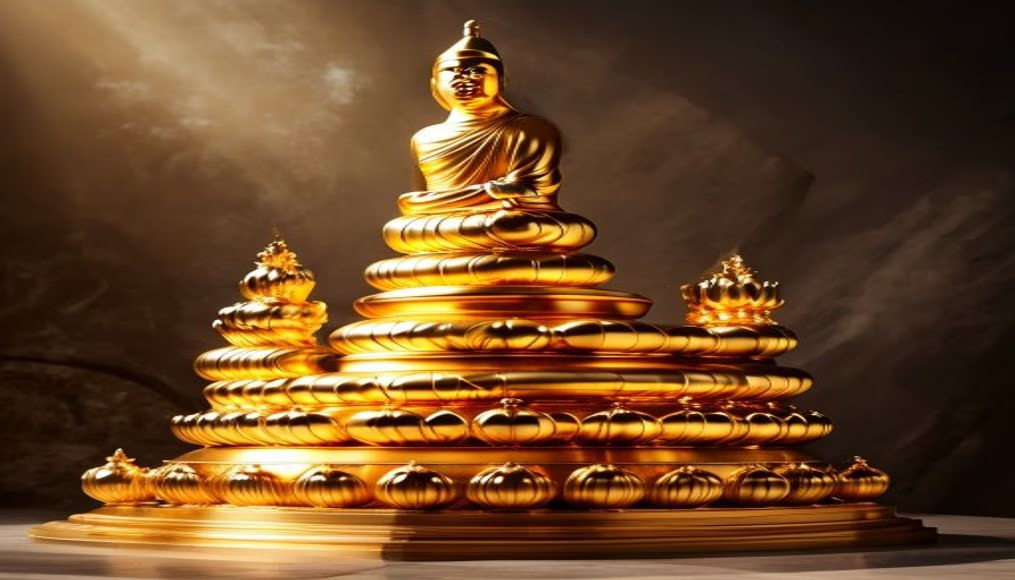
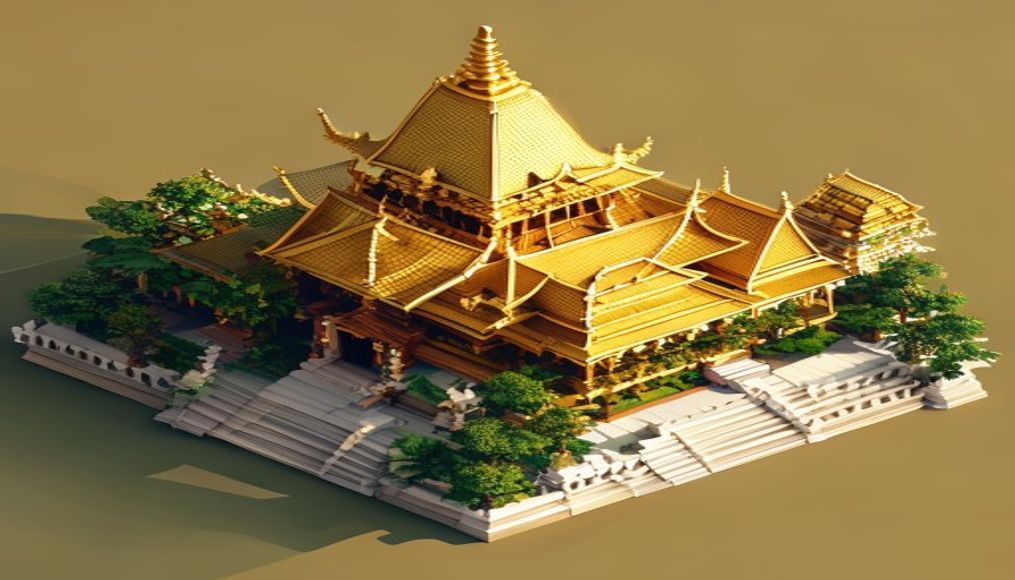
A golden Buddhist stupa is a sacred structure symbolizing enlightenment, often housing relics, common in countries like Myanmar, Thailand, and Nepal.
About this subject
A golden Buddhist stupa, also known as a chorten or pagoda, is a fundamental architectural structure in Buddhism, representing the state of enlightenment. The golden color, often achieved by applying gold leaf or metallic paint, carries deep symbolism: wisdom, purity, and spiritual wealth. Iconic golden stupas include the Shwedagon Pagoda in Yangon, Myanmar, which is covered with over 60 tons of gold, and the Golden Temple of Dambulla in Sri Lanka. These structures are not only places of worship but also pilgrimage sites attracting millions of devotees and tourists.
The shape of a stupa follows precise symbology: the square base represents earth, the hemispherical dome water, the spire fire, the crescent moon air, and the sun space. The top is crowned with an umbrella, symbolizing protection and nobility. Many golden stupas house relics of the Buddha or venerated monks, making them centers of meditation and rituals. In Thailand, Wat Phra Kaew houses the Emerald Buddha, but the complex also features ornate golden stupas. In Nepal, the Swayambhunath Stupa, with its painted eyes, is a less golden but equally revered example.
The technique of gilding stupas is a meticulous process, usually performed by specialized artisans. Gold leaf is applied with brushes and natural adhesives, requiring periodic renewal due to weather exposure. This care reflects the devotion of Buddhist communities, who often donate gold as religious merit. Beyond aesthetics, gold serves a protective function against corrosion, prolonging the structure's life. In some cases, like Shwedagon, the gold layer is so thick that the stupa glows intensely under tropical sunlight.
Historically, the tradition of golden stupas dates back to the Maurya Empire in India, with the construction of the Great Stupa at Sanchi, though it was not originally gilded. The practice spread across Southeast Asia via the Silk Road, adapting to local cultures. Today, these stupas are not only religious symbols but also UNESCO World Heritage sites, such as the stupa clusters of Bagan in Myanmar. Preservation efforts face challenges like natural disasters and overtourism, but these monuments continue to inspire awe and spirituality.
Frequently Asked Questions
What does the golden color represent in a Buddhist stupa?
The golden color symbolizes wisdom, purity, and spiritual wealth, reflecting the Buddha's enlightenment. It is also considered an offering of religious merit.
What are the most famous golden stupas in the world?
The most famous include the Shwedagon Pagoda in Yangon, Myanmar, the Golden Temple of Dambulla in Sri Lanka, and Wat Phra Kaew in Bangkok, Thailand.
How is gold applied to stupas?
Artisans apply thin gold leaf using brushes and natural adhesives, a process that requires periodic renewal due to weather exposure. The technique is traditional and time-consuming.
Direct URL
https://pub-c7d6a6ea828543ac903a74a341ccb2e1.r2.dev/imagens/buddhist-stupa-golden-high-fashion-editorial-p0.avifHow to credit
Include a visible link back to UtilizAí. Copy one of the snippets below:
<a href="https://xn--utiliza-eza.com/en/midia/imagens/buddhist-stupa-golden-high-fashion-editorial-p0">Buddhist stupa golden</a> by <a href="https://xn--utiliza-eza.com">UtilizAí</a>, licensed under <a href="https://creativecommons.org/licenses/by/4.0/">CC BY 4.0</a>.
[Buddhist stupa golden](https://xn--utiliza-eza.com/en/midia/imagens/buddhist-stupa-golden-high-fashion-editorial-p0) by [UtilizAí](https://xn--utiliza-eza.com), CC BY 4.0
License: CC-BY-4.0