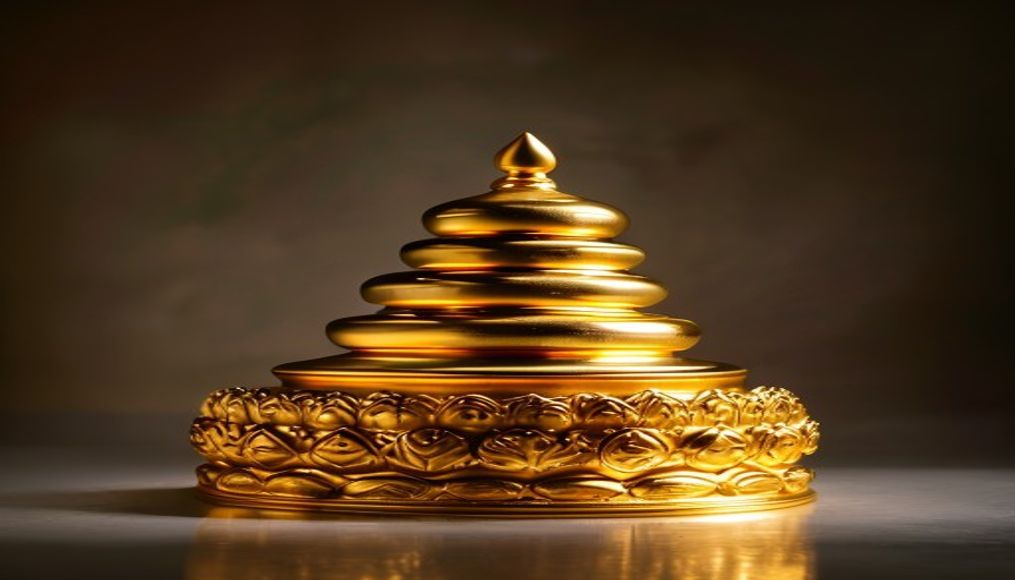
Buddhist stupa golden
1344×768 · AVIF · CC BY 4.0
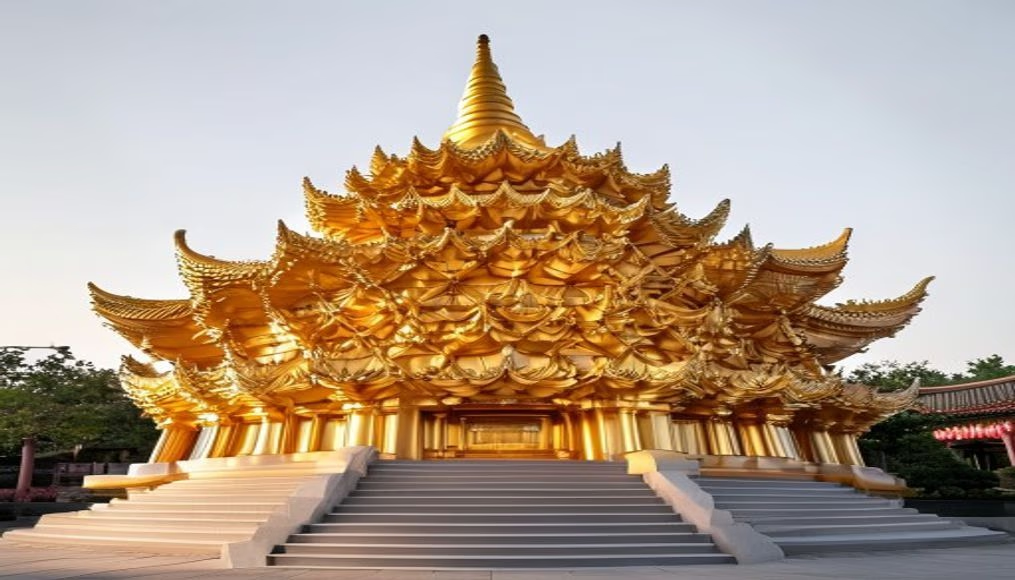
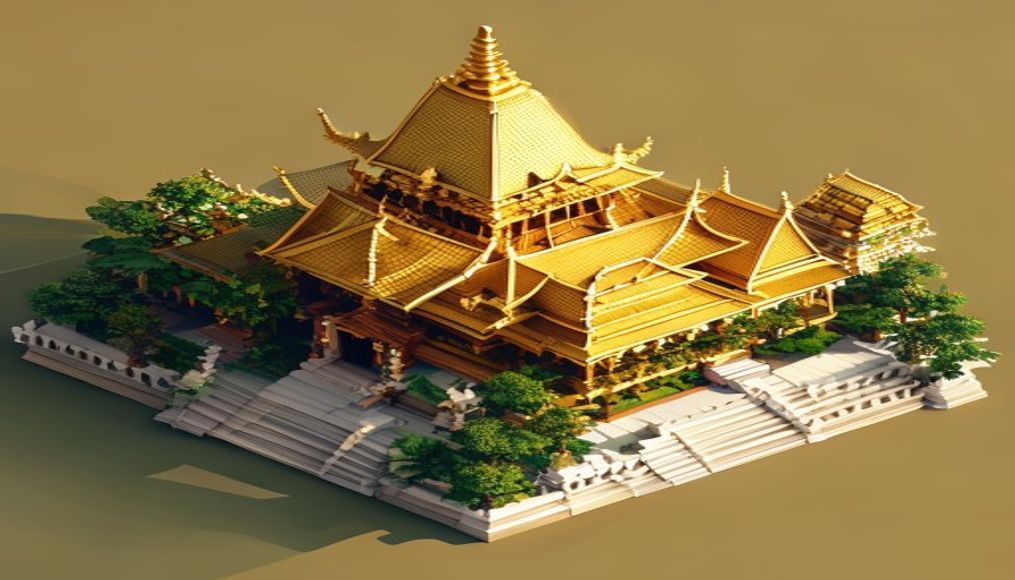
Golden Buddhist stupa: a sacred architectural structure symbolizing enlightenment, found in Asian temples, with gold representations reflecting devotion and cultural wealth.
About this subject
A golden Buddhist stupa is a typical architectural structure in Buddhism, serving as a religious monument that houses sacred relics or symbolizes the enlightened mind of the Buddha. Originating in ancient India, the stupa evolved into different forms in countries such as Bhutan, Thailand, Myanmar, and Japan. The use of gold, whether in leaves or coatings, is not merely decorative: it represents purity, enlightenment, and transcendence, being common in major stupas like the Shwedagon Pagoda in Yangon, Myanmar, which has an enormous amount of gold on its structure.
The construction of a stupa follows symbolic proportions: the square base represents earth, the hemispherical dome water, the spire fire, the umbrella air, and the tip space or emptiness. At the top, an ornament in the shape of a crescent moon and sun symbolizes enlightenment, while the layers of the spire indicate the path to nirvana. In many Buddhist cultures, it is believed that looking at or circumambulating a stupa generates spiritual merit.
Historically, Emperor Ashoka in the 3rd century BCE was a great propagator of stupas, building thousands to spread Buddhism. Famous examples include the Sanchi Stupa in India and the Boudhanath Stupa in Nepal. In Brazil, stupas can be found in Buddhist temples such as the Zu Lai Temple in São Paulo and the Tibetan Temple in Cascavel, Paraná, often decorated with gold that recalls Asian traditions.
The golden color is also linked to alchemical symbolism: gold is considered a perfect, incorruptible metal, just as the state of Buddha is seen as pure and unchanging. Photographs of golden stupas are popular for their aesthetic beauty and for conveying a sense of peace and sacredness. The architectural design, with smooth curves and sharp points, combines influences from Greek, Persian, and Indian art, resulting in a universally recognizable form.
Frequently Asked Questions
What does a golden stupa mean in Buddhism?
It symbolizes purity, enlightenment, and transcendence. Gold represents the perfect and unchanging state of the Buddha's enlightened mind, and its presence enhances the sacredness of the monument.
What are the main parts of a stupa?
Square base (earth), hemispherical dome (water), spire (fire), umbrella (air), and tip or ornament (space). Each part has a symbolic meaning on the path to enlightenment.
Are there golden stupas in Brazil?
Yes, in Buddhist temples such as the Zu Lai Temple in São Paulo and the Tibetan Temple in Cascavel, Paraná, which have stupas with golden details, following Asian tradition.
Direct URL
https://pub-c7d6a6ea828543ac903a74a341ccb2e1.r2.dev/imagens/buddhist-stupa-golden-architectural-photography-p1.avifHow to credit
Include a visible link back to UtilizAí. Copy one of the snippets below:
<a href="https://xn--utiliza-eza.com/en/midia/imagens/buddhist-stupa-golden-architectural-photography-p1">Buddhist stupa golden</a> by <a href="https://xn--utiliza-eza.com">UtilizAí</a>, licensed under <a href="https://creativecommons.org/licenses/by/4.0/">CC BY 4.0</a>.
[Buddhist stupa golden](https://xn--utiliza-eza.com/en/midia/imagens/buddhist-stupa-golden-architectural-photography-p1) by [UtilizAí](https://xn--utiliza-eza.com), CC BY 4.0
License: CC-BY-4.0