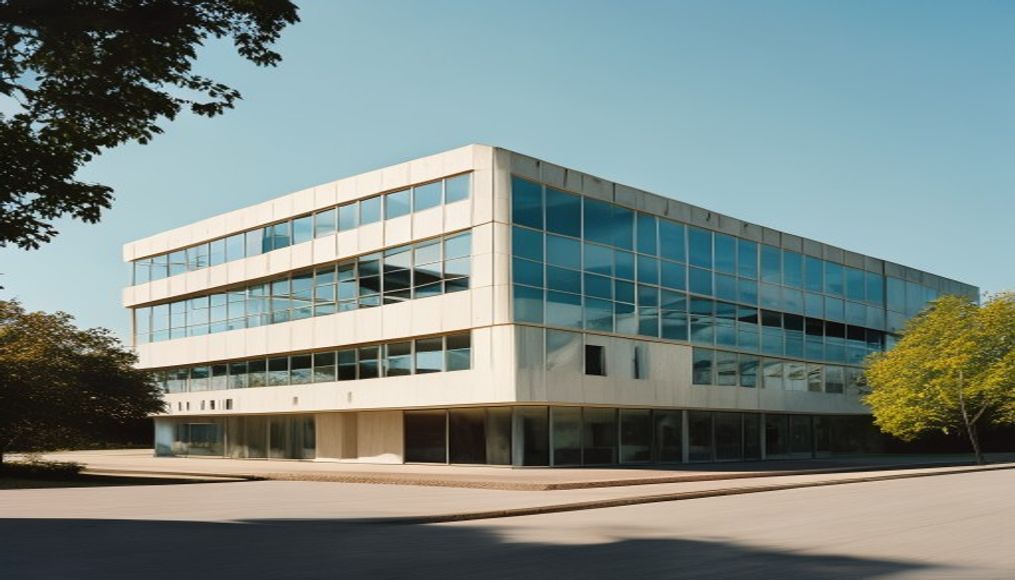
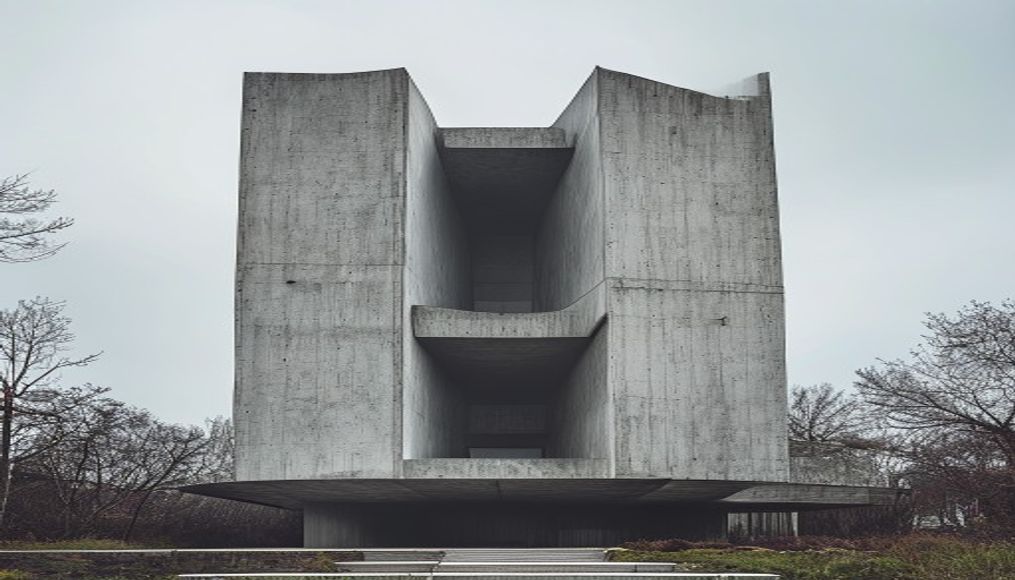
Brutalist concrete monument
1344×768 · AVIF · CC BY 4.0
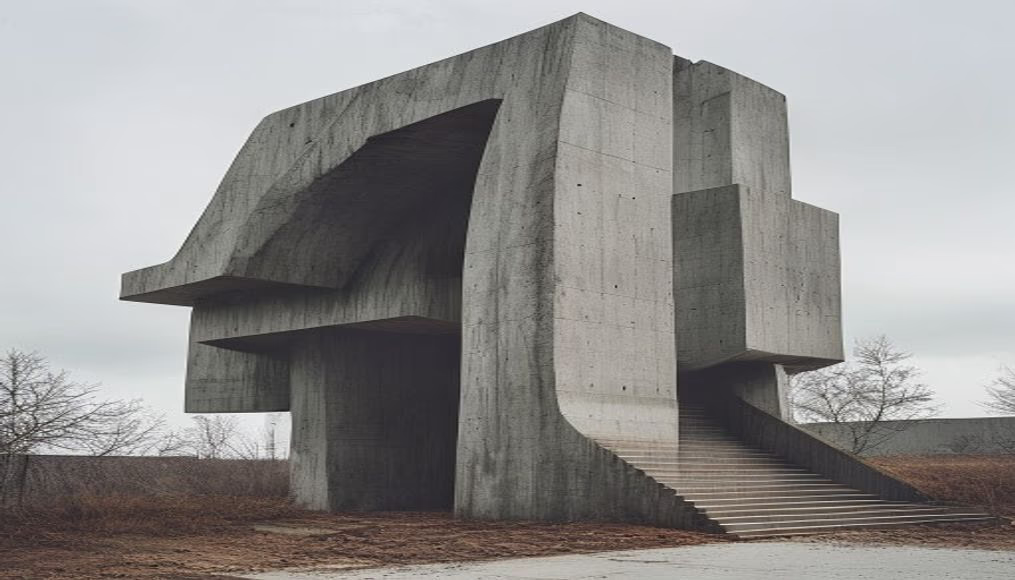
Brutalist concrete monuments define the 20th century with geometric shapes and exposed concrete, challenging traditional architectural aesthetics.
About this subject
Brutalism emerged in the 1950s, inspired by Le Corbusier's works, especially the Unité d'Habitation in Marseille (1952). It is characterized by the use of exposed concrete (béton brut), angular forms, and an emphasis on functionality. The term 'Brutalism' derives from the French 'béton brut', popularized by the Swiss-French architect. The style flourished worldwide between the 1950s and 1970s. In the United Kingdom, buildings like Ernő Goldfinger's Trellick Tower and the Barbican Centre became icons. In Brazil, Brutalism was adapted by architects such as Paulo Mendes da Rocha and Lina Bo Bardi, resulting in works like the São Paulo Museum of Art (MASP) and Sesc Pompeia. In Eastern Europe, the style was used for housing estates and government buildings, such as the Palace of the Parliament in Bucharest. The Brutalist aesthetic often sparks controversy: many find the buildings oppressive or ugly, while others value their structural honesty and expressiveness. Recent decades have seen a preservation movement, with examples like the listing of Trellick Tower in the UK. Brutalism has also influenced pop culture, appearing in films like '2001: A Space Odyssey' and the series 'The Imitation Game'.
Frequently Asked Questions
What defines the Brutalist style in architecture?
Brutalism is defined by the use of exposed concrete (béton brut), bold geometric forms, exposed structures, and an aesthetic that prioritizes functionality and material honesty.
What are the most famous examples of Brutalist architecture in Brazil?
In Brazil, highlights include the São Paulo Museum of Art (MASP) designed by Lina Bo Bardi, the Sesc Pompeia also by her, and works by Paulo Mendes da Rocha such as the Brazilian Museum of Sculpture (MuBE).
Why is Brutalism a controversial style?
Controversy arises because its massive concrete buildings are often seen as oppressive or ugly, while proponents emphasize their expressiveness, functionality, and structural innovation.
Direct URL
https://pub-c7d6a6ea828543ac903a74a341ccb2e1.r2.dev/imagens/brutalist-concrete-monument-national-geographic-style-p2.avifHow to credit
Include a visible link back to UtilizAí. Copy one of the snippets below:
<a href="https://xn--utiliza-eza.com/en/midia/imagens/brutalist-concrete-monument-national-geographic-style-p2">Brutalist concrete monument</a> by <a href="https://xn--utiliza-eza.com">UtilizAí</a>, licensed under <a href="https://creativecommons.org/licenses/by/4.0/">CC BY 4.0</a>.
[Brutalist concrete monument](https://xn--utiliza-eza.com/en/midia/imagens/brutalist-concrete-monument-national-geographic-style-p2) by [UtilizAí](https://xn--utiliza-eza.com), CC BY 4.0
License: CC-BY-4.0