Brazilian factory worker on assembly line with safety helmet
1344×768 · AVIF · CC BY 4.0
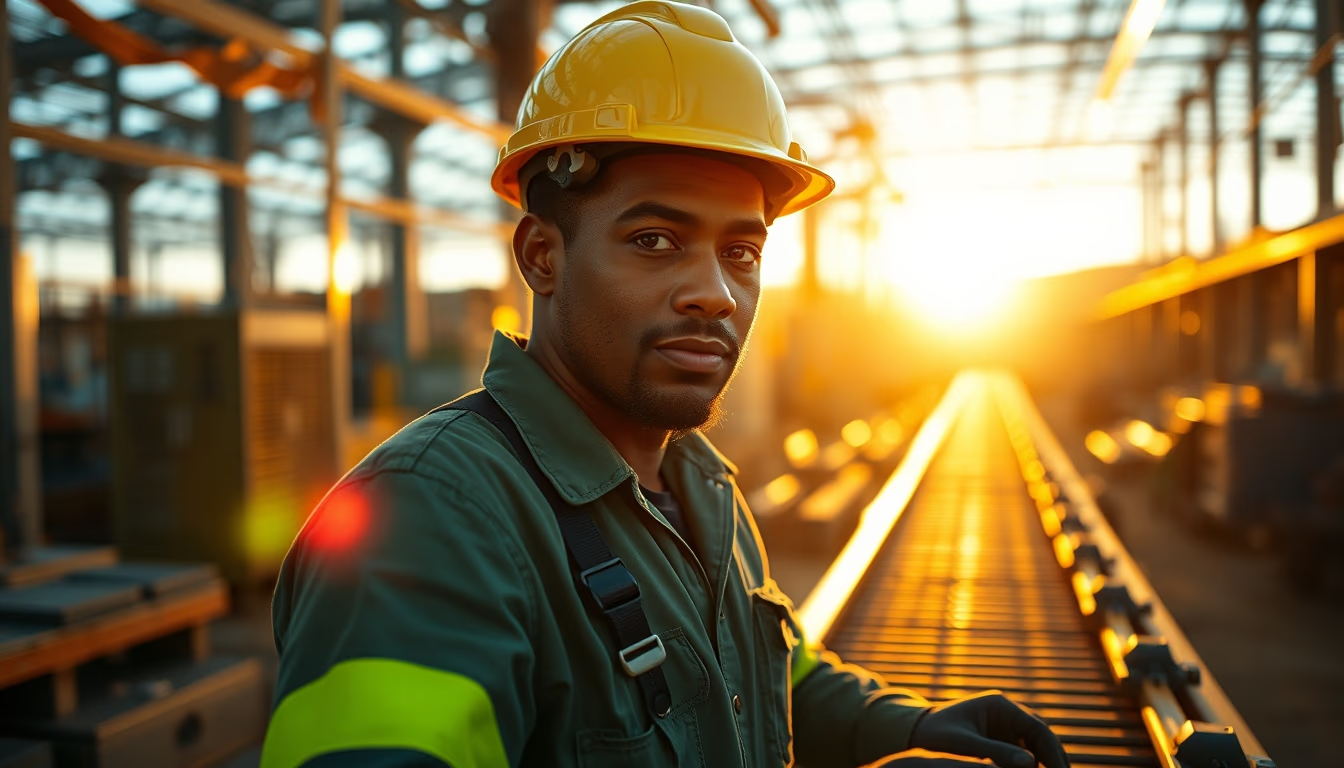
Brazilian factory worker on an assembly line, wearing a safety helmet and industrial uniform, during late afternoon.
About this subject
Brazilian industry employs millions of workers on assembly lines, especially in automotive, metallurgical, and consumer goods sectors. The use of personal protective equipment (PPE), such as helmets, goggles, and earplugs, is mandatory by law (Regulatory Standard 6 of the Ministry of Labor). The worker depicted, wearing a blue uniform and white helmet, represents the workforce driving industrial production in the country.
Late afternoon is common for production shifts, which in Brazil often follow 8-hour schedules with breaks for rest and meals. Workplace safety is a central theme in Brazilian industry, with accident rates that, although decreasing in recent decades, still require constant oversight. In 2022, Brazil recorded about 600,000 workplace accidents, according to the Observatory of Safety and Health at Work.
The assembly line, a concept popularized by Henry Ford in the early 20th century, is widely used in Brazilian factories, such as vehicle assembly plants in São Bernardo do Campo (SP) and electronics industries in the Manaus Free Trade Zone. Specialized assembly workers may operate manual or automated tools, contributing to the manufacture of parts and products for domestic and international markets.
The image captures a routine factory moment, where the attentive posture and correct use of PPE reflect the safety culture companies have been implementing. Periodic training and prevention campaigns are common, aiming to reduce risks such as cuts, falls, and noise exposure. The blurred background suggests the fast pace of production, contrasting with the worker's focus.
Frequently Asked Questions
What are the main PPE required in Brazilian industry?
The main PPE include safety helmets, protective glasses, earplugs, gloves, and safety shoes. Regulatory Standard 6 of the Ministry of Labor establishes rules for use and provision.
What is the typical workday in Brazilian factories?
The typical workday is 8 hours, with breaks for rest and meals. Many factories operate in shifts, including night periods, which have additional pay (night shift premium).
How important is the assembly line in Brazilian industry?
The assembly line is essential for mass production, enabling efficiency and standardization. Sectors such as automotive, electronics, and home appliances rely on this system to meet domestic demand and exports.
Direct URL
https://pub-c7d6a6ea828543ac903a74a341ccb2e1.r2.dev/imagens/brazilian-factory-worker-on-assembly-line-with-safety-helmet-wide-late-afternoon-7.avifHow to credit
Include a visible link back to UtilizAí. Copy one of the snippets below:
<a href="https://xn--utiliza-eza.com/en/midia/imagens/brazilian-factory-worker-on-assembly-line-with-safety-helmet-wide-late-afternoon-7">Brazilian factory worker on assembly line with safety helmet</a> by <a href="https://xn--utiliza-eza.com">UtilizAí</a>, licensed under <a href="https://creativecommons.org/licenses/by/4.0/">CC BY 4.0</a>.
[Brazilian factory worker on assembly line with safety helmet](https://xn--utiliza-eza.com/en/midia/imagens/brazilian-factory-worker-on-assembly-line-with-safety-helmet-wide-late-afternoon-7) by [UtilizAí](https://xn--utiliza-eza.com), CC BY 4.0
License: CC-BY-4.0
Tags
Related images
 Food delivery rider on motorbike in São Paulo traffic
 Food delivery rider on motorbike in São Paulo traffic
 Food delivery rider on motorbike in São Paulo traffic
 Food delivery rider on motorbike in São Paulo traffic
 Food delivery rider on motorbike in São Paulo traffic
 Food delivery rider on motorbike in São Paulo traffic