Brazilian factory worker on assembly line with safety helmet
1344×768 · AVIF · CC BY 4.0
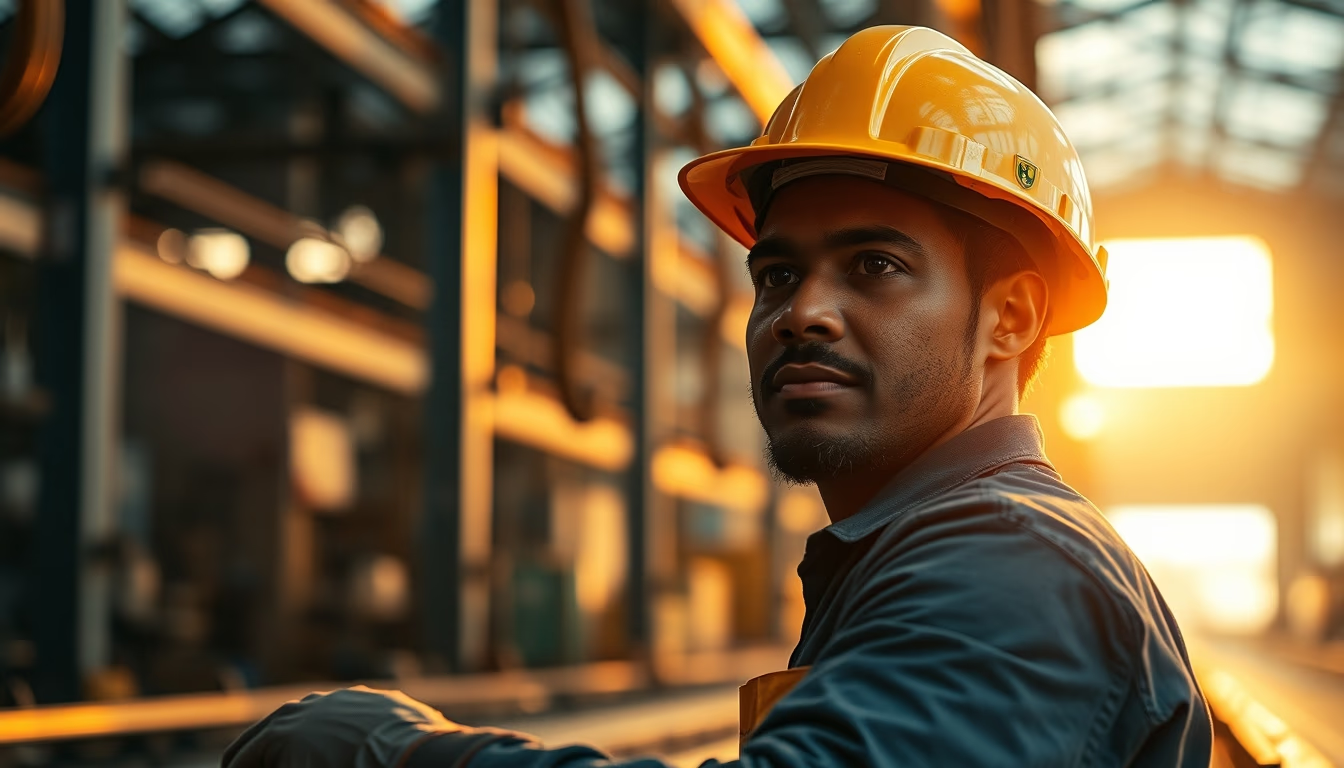
Brazilian factory worker on assembly line wearing a safety helmet, captured during daytime shift on an overcast day.
About this subject
Brazil's manufacturing industry employs about 8.5 million workers, according to 2023 IBGE data, and the assembly line is one of the most representative environments in this sector. The use of Personal Protective Equipment (PPE), such as safety helmets, is mandatory under Regulatory Standard NR-6 of the Ministry of Labor, aiming to reduce risks of accidents like falling objects and impacts. In medium and large factories, especially in the automotive and electronics sectors, assembly lines operate continuously, with shifts ranging from 6 to 8 hours, often in alternating turns.
Photographic records under overcast weather are common in industrial regions of Southeast Brazil, such as the ABC Paulista region and the São Paulo Metropolitan Area, where pollution and cloud cover reduce natural light. Artificial supplementary lighting is essential to maintain productivity and operator visual safety. The safety helmet, usually yellow or white, is made of high-density polyethylene and features an adjustable suspension system, according to ABNT NBR 8221 standards.
Beyond physical protection, the Brazilian factory environment faces challenges such as informality and precarious working conditions in less regulated sectors. However, large companies often follow international safety standards, such as ILO guidelines. The image captures a typical moment of industrial routine, where attention and repetitive movements are constant, reflecting the importance of manual labor even in partially automated lines.
Frequently Asked Questions
What are the main PPE required on assembly lines in Brazil?
The main PPE include safety helmets, protective glasses, gloves, earplugs, and safety shoes. NR-6 of the Ministry of Labor regulates the use and certification of these items.
What is the typical workday like in Brazilian factories?
The standard workday is 8 hours, 44 hours per week, with possible night shifts or 6x1 schedules. Overtime is permitted by law, with a minimum 50% surcharge on the regular hour.
Why is lighting important in factory environments?
Proper lighting is crucial to prevent accidents and visual fatigue. NR-17 establishes minimum illuminance levels for each activity, ranging from 150 to 1000 lux depending on task precision.
Direct URL
https://pub-c7d6a6ea828543ac903a74a341ccb2e1.r2.dev/imagens/brazilian-factory-worker-on-assembly-line-with-safety-helmet-editorial-overcast-daytime-3.avifHow to credit
Include a visible link back to UtilizAí. Copy one of the snippets below:
<a href="https://xn--utiliza-eza.com/en/midia/imagens/brazilian-factory-worker-on-assembly-line-with-safety-helmet-editorial-overcast-daytime-3">Brazilian factory worker on assembly line with safety helmet</a> by <a href="https://xn--utiliza-eza.com">UtilizAí</a>, licensed under <a href="https://creativecommons.org/licenses/by/4.0/">CC BY 4.0</a>.
[Brazilian factory worker on assembly line with safety helmet](https://xn--utiliza-eza.com/en/midia/imagens/brazilian-factory-worker-on-assembly-line-with-safety-helmet-editorial-overcast-daytime-3) by [UtilizAí](https://xn--utiliza-eza.com), CC BY 4.0
License: CC-BY-4.0
Tags
Related images
 Food delivery rider on motorbike in São Paulo traffic
 Food delivery rider on motorbike in São Paulo traffic
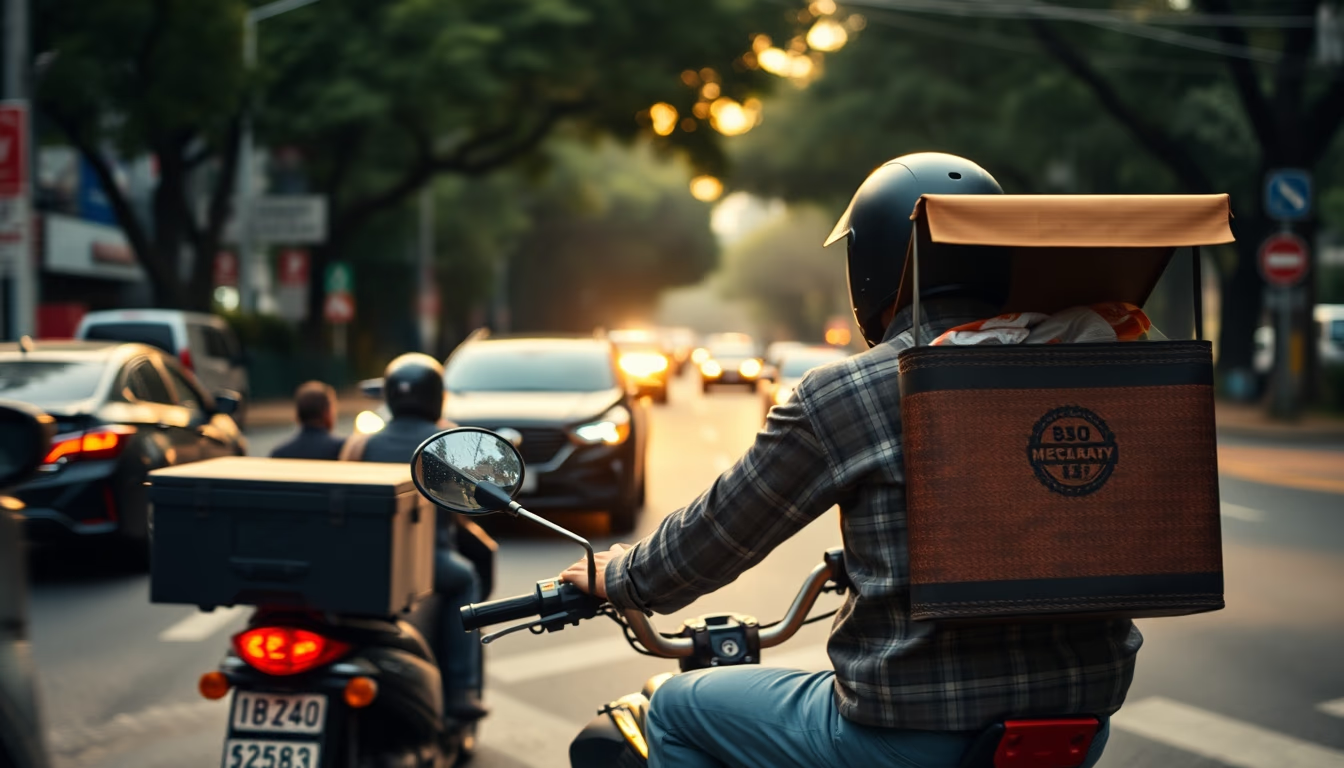 Food delivery rider on motorbike in São Paulo traffic
 Food delivery rider on motorbike in São Paulo traffic
 Food delivery rider on motorbike in São Paulo traffic
 Food delivery rider on motorbike in São Paulo traffic