Brazilian factory worker on assembly line with safety helmet
1344×768 · AVIF · CC BY 4.0
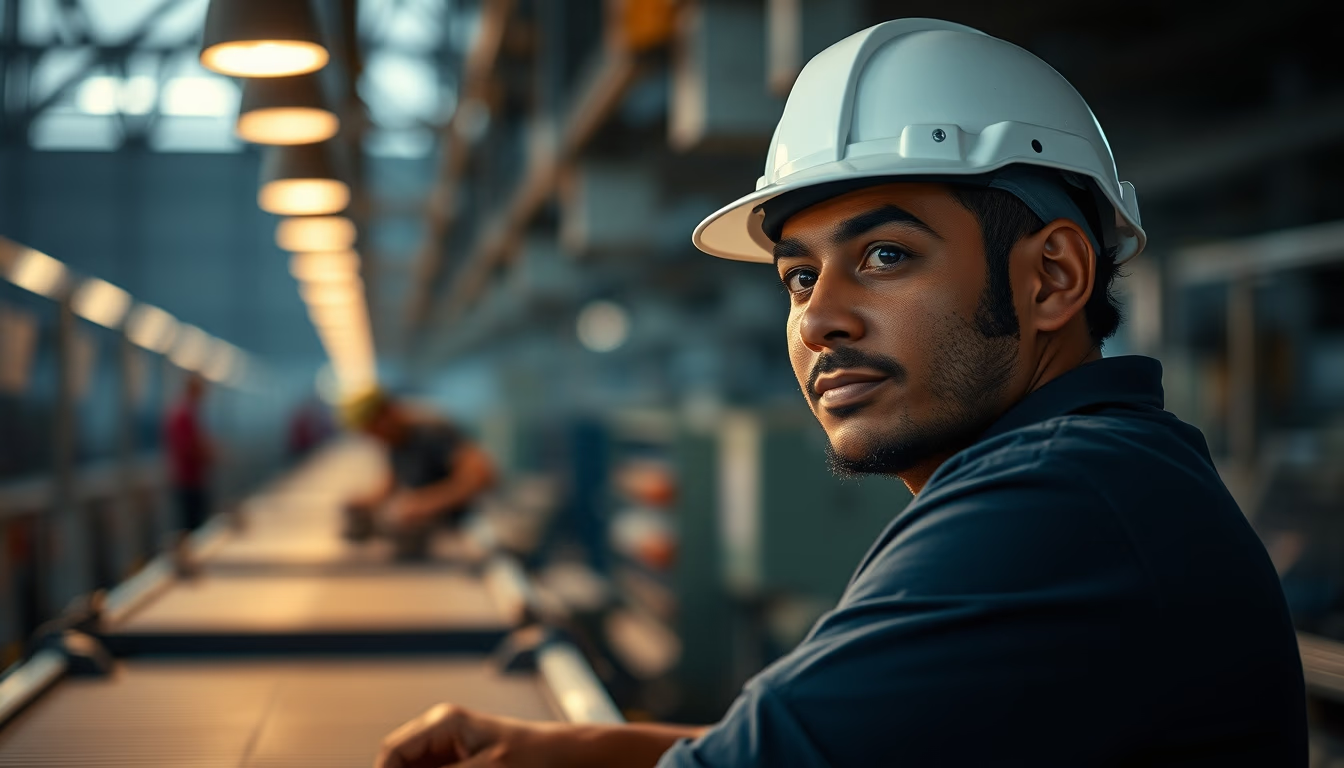
Brazilian factory worker on an assembly line, wearing a safety helmet and uniform, in an industrial setting at twilight.
About this subject
Brazil has one of the largest industrial parks in Latin America, with emphasis on sectors such as automotive, metallurgy, and consumer goods. The assembly line is a mass production method popularized by Henry Ford in the early 20th century, which revolutionized manufacturing by dividing work into sequential steps. In the Brazilian context, the adoption of this system intensified from the 1950s onward, with the installation of foreign automakers and the development of national industry.
The use of personal protective equipment (PPE), such as helmets, goggles, and gloves, is mandatory in Brazil under the Consolidation of Labor Laws (CLT) and regulatory standards from the Ministry of Labor. The safety helmet protects against falling objects and electrical shocks, being essential in environments with accident risks. Yellow or white colors are common to facilitate visibility in low-light conditions, such as at twilight.
Twilight lighting can pose additional safety challenges, such as reduced visibility and increased eye strain. Therefore, many factories adopt artificial lighting systems with adequate lux levels to ensure productivity and worker integrity. Shift work, including night shifts, is regulated by collective agreements and specific legislation, with additional pay for unhealthy or hazardous conditions.
Workers on assembly lines often perform repetitive movements, which can lead to repetitive strain injuries (RSI) or work-related musculoskeletal disorders (WMSDs). Workplace gymnastics programs and scheduled breaks are adopted by companies to mitigate these risks. Productivity and final product quality depend directly on worker training and well-being.
Frequently Asked Questions
Why is the safety helmet important on the assembly line?
The helmet protects against falling objects, electrical shocks, and other common hazards in industrial environments. It is mandatory by law in Brazil and significantly reduces the severity of accidents.
How does twilight lighting affect factory work?
Low visibility can increase accident risk and eye strain. Therefore, factories use artificial lighting with adequate lux levels to maintain safety and productivity.
What are the main health risks for assembly line workers?
Repetitive movements can cause injuries like RSI/WMSDs. Additionally, night shifts and unhealthy conditions require protective measures and breaks to preserve worker health.
Direct URL
https://pub-c7d6a6ea828543ac903a74a341ccb2e1.r2.dev/imagens/brazilian-factory-worker-on-assembly-line-with-safety-helmet-closeup-twilight-6.avifHow to credit
Include a visible link back to UtilizAí. Copy one of the snippets below:
<a href="https://xn--utiliza-eza.com/en/midia/imagens/brazilian-factory-worker-on-assembly-line-with-safety-helmet-closeup-twilight-6">Brazilian factory worker on assembly line with safety helmet</a> by <a href="https://xn--utiliza-eza.com">UtilizAí</a>, licensed under <a href="https://creativecommons.org/licenses/by/4.0/">CC BY 4.0</a>.
[Brazilian factory worker on assembly line with safety helmet](https://xn--utiliza-eza.com/en/midia/imagens/brazilian-factory-worker-on-assembly-line-with-safety-helmet-closeup-twilight-6) by [UtilizAí](https://xn--utiliza-eza.com), CC BY 4.0
License: CC-BY-4.0
Tags
Related images
 Food delivery rider on motorbike in São Paulo traffic
 Food delivery rider on motorbike in São Paulo traffic
 Food delivery rider on motorbike in São Paulo traffic
 Food delivery rider on motorbike in São Paulo traffic
 Food delivery rider on motorbike in São Paulo traffic
 Food delivery rider on motorbike in São Paulo traffic