Brazilian factory worker on assembly line with safety helmet
1344×768 · AVIF · CC BY 4.0
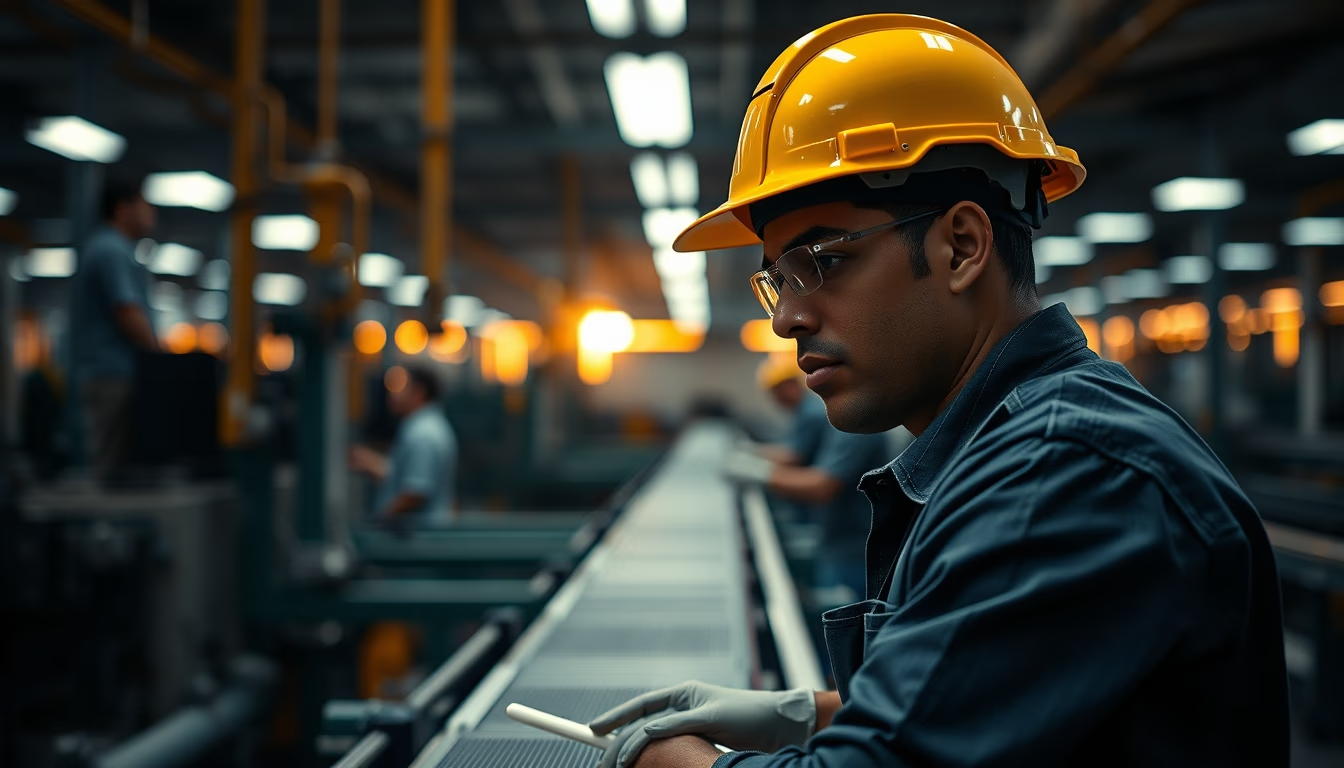
Brazilian factory worker on an assembly line, wearing a safety helmet in an industrial setting.
About this subject
The Brazilian factory worker on an assembly line represents the driving force of the national economy, especially in the automotive, electronics, and consumer goods sectors. According to data from the National Confederation of Industry (CNI), Brazil has over 10 million workers in the transformation industry, with the state of São Paulo accounting for about 30% of this workforce. The use of personal protective equipment, such as safety helmets, is mandatory by law (NR-6 of the Ministry of Labor) and reduces severe accidents on assembly lines by up to 60%.
Modern assembly lines in Brazil incorporate lean manufacturing and automation principles, but still heavily rely on human labor for precision and inspection tasks. The worker depicted, during twilight hours, may be on an afternoon or night shift, a common practice in industries operating 24/7 to maximize productivity. The artificial lighting of the factory floor is designed to reduce shadows and visual fatigue, following ergonomic standards (NR-17).
Beyond safety, technical training is essential: many workers undergo courses at SENAI (National Service for Industrial Learning), which trains about 2 million professionals annually. The Brazilian industry faces challenges such as technological modernization and global competition, but the assembly line worker remains a key player in producing items ranging from cars to home appliances, contributing to an industrial GDP exceeding R$ 2 trillion.
Frequently Asked Questions
What are the main risks on an industrial assembly line?
Risks include machinery accidents, falls, repetitive strain injuries (RSI), and noise exposure. The use of PPE like helmets and earplugs is essential to mitigate them.
What is the typical work schedule for an assembly line operator in Brazil?
It is usually 44 hours per week, with 8-hour shifts, possibly including overtime and night work, which carries a 20% premium over the normal hourly rate.
How important is SENAI for Brazilian industry?
SENAI offers technical and vocational courses that train workers to meet industry demands, contributing to productivity and innovation.
Direct URL
https://pub-c7d6a6ea828543ac903a74a341ccb2e1.r2.dev/imagens/brazilian-factory-worker-on-assembly-line-with-safety-helmet-closeup-twilight-4.avifHow to credit
Include a visible link back to UtilizAí. Copy one of the snippets below:
<a href="https://xn--utiliza-eza.com/en/midia/imagens/brazilian-factory-worker-on-assembly-line-with-safety-helmet-closeup-twilight-4">Brazilian factory worker on assembly line with safety helmet</a> by <a href="https://xn--utiliza-eza.com">UtilizAí</a>, licensed under <a href="https://creativecommons.org/licenses/by/4.0/">CC BY 4.0</a>.
[Brazilian factory worker on assembly line with safety helmet](https://xn--utiliza-eza.com/en/midia/imagens/brazilian-factory-worker-on-assembly-line-with-safety-helmet-closeup-twilight-4) by [UtilizAí](https://xn--utiliza-eza.com), CC BY 4.0
License: CC-BY-4.0
Tags
Related images
 Food delivery rider on motorbike in São Paulo traffic
 Food delivery rider on motorbike in São Paulo traffic
 Food delivery rider on motorbike in São Paulo traffic
 Food delivery rider on motorbike in São Paulo traffic
 Food delivery rider on motorbike in São Paulo traffic
 Food delivery rider on motorbike in São Paulo traffic