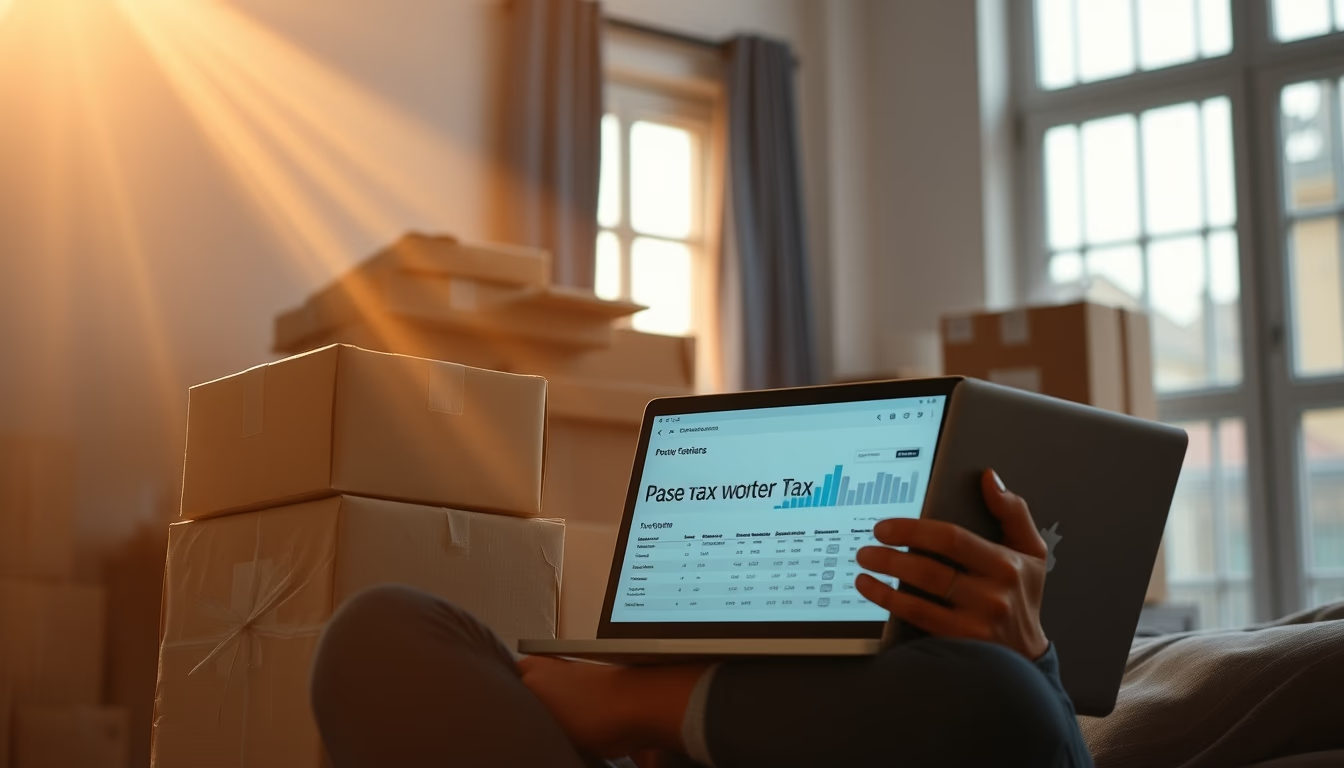
Brazilian e-commerce founder with packages and laptop showing tax software
1344×768 · AVIF · CC BY 4.0

Brazilian e-commerce founder reviews tax software on a laptop, surrounded by packages, in the late afternoon.
About this subject
In Brazil, e-commerce has grown exponentially, with online sales surpassing R$ 200 billion in 2023, according to the Brazilian Association of Electronic Commerce (ABComm). This growth brought complex tax challenges for digital entrepreneurs. The Brazilian tax system is one of the most intricate in the world, with federal, state, and municipal taxes on goods and services, such as ICMS, PIS, COFINS, and ISS. For online retailers, correctly calculating and declaring these taxes is essential to avoid fines and maintain competitiveness.
Tax management software, such as those offered by Conta Azul, Omie, and Nibo, automates calculations and issues electronic invoices (NF-e), integrating with e-commerce platforms like Shopify, WooCommerce, and Magento. These tools allow entrepreneurs to focus on business growth while the system handles ancillary obligations like SPED, EFD, and DCTF. Choosing the right software depends on company size, tax regime (Simples Nacional, Lucro Presumido, or Lucro Real), and sales volume.
In a late-afternoon home office setting common among Brazilian entrepreneurs, the e-commerce founder reviews tax reports while packages await shipment. This scene reflects the daily routine of thousands of micro and small business owners who manage virtual stores, balancing logistics, customer service, and tax bureaucracy. The image symbolizes the digital transformation of commerce, where technology simplifies complex processes and allows businesses to thrive even in a challenging tax environment.
Frequently Asked Questions
What taxes does a Brazilian e-commerce need to pay?
Brazilian e-commerces must pay taxes such as ICMS (state), PIS, COFINS (federal), and ISS (municipal, for services). The tax regime (Simples Nacional, Lucro Presumido, or Lucro Real) determines rates and obligations.
How does tax management software help entrepreneurs?
It automates tax calculations, issues electronic invoices (NF-e), and generates reports for ancillary obligations like SPED and DCTF, reducing errors and time spent on bureaucracy.
Why is late afternoon significant in the image context?
Late afternoon is a common time for entrepreneurs to review administrative tasks, such as tax closing, after sales and logistics operations, optimizing their schedule.
Direct URL
https://pub-c7d6a6ea828543ac903a74a341ccb2e1.r2.dev/imagens/brazilian-e-commerce-founder-with-packages-and-laptop-showing-tax-software-wide-late-afternoon-4.avifHow to credit
Include a visible link back to UtilizAí. Copy one of the snippets below:
<a href="https://xn--utiliza-eza.com/en/midia/imagens/brazilian-e-commerce-founder-with-packages-and-laptop-showing-tax-software-wide-late-afternoon-4">Brazilian e-commerce founder with packages and laptop showing tax software</a> by <a href="https://xn--utiliza-eza.com">UtilizAí</a>, licensed under <a href="https://creativecommons.org/licenses/by/4.0/">CC BY 4.0</a>.
[Brazilian e-commerce founder with packages and laptop showing tax software](https://xn--utiliza-eza.com/en/midia/imagens/brazilian-e-commerce-founder-with-packages-and-laptop-showing-tax-software-wide-late-afternoon-4) by [UtilizAí](https://xn--utiliza-eza.com), CC BY 4.0
License: CC-BY-4.0
Tags
Related images
 Brazilian e-commerce founder with packages and laptop showing tax software
 Brazilian e-commerce founder with packages and laptop showing tax software
 Brazilian e-commerce founder with packages and laptop showing tax software
 Brazilian e-commerce founder with packages and laptop showing tax software
 Brazilian e-commerce founder with packages and laptop showing tax software
 Brazilian e-commerce founder with packages and laptop showing tax software