Bonsai maple autumn red
1344×768 · AVIF · CC BY 4.0
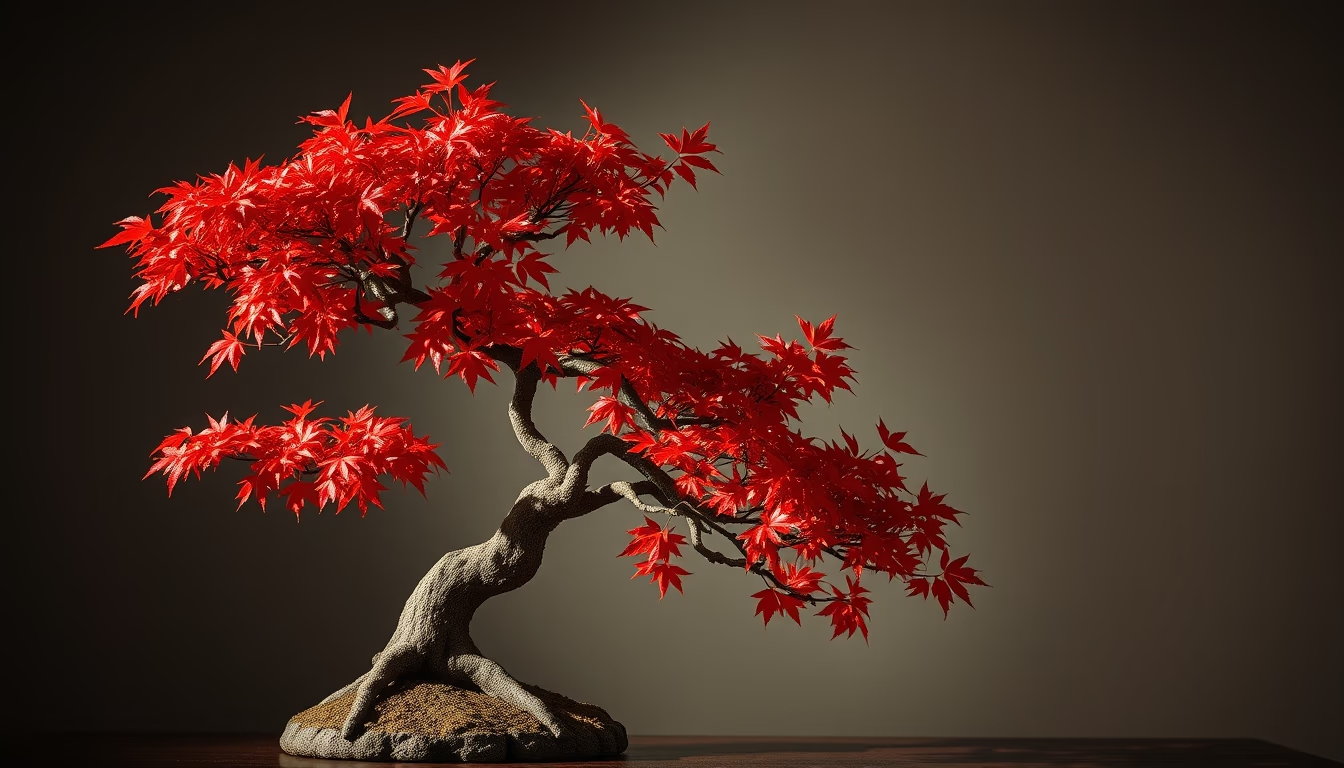
Japanese maples (Acer palmatum) are prized in bonsai for their red autumn leaves, symbolizing the transience of life.
About this subject
The Japanese maple bonsai, particularly the species Acer palmatum, is one of the most iconic trees in the art of bonsai. Native to Japan, Korea, and China, this maple is known for its delicate leaves that change color vibrantly during autumn, transitioning from green to shades of orange, red, and crimson. This seasonal transformation results from the reduction of chlorophyll and the production of anthocyanins, pigments that protect the leaves from intense light and cold.
In bonsai cultivation, the Japanese maple requires specific care, including regular pruning to maintain shape, controlled watering, and protection from severe frost. Techniques such as branch and root pruning are essential to develop a ramified and compact structure characteristic of bonsai. Additionally, the choice of pot and substrate directly influences the tree's health and the overall aesthetic.
Culturally, the maple in autumn is celebrated in Japan as kōyō, a phenomenon comparable to the cherry blossom bloom in spring. During autumn, temples and Japanese gardens attract visitors to appreciate the leaf colors. In bonsai, displaying a maple with autumn foliage is often enhanced by dramatic lighting, such as side or backlighting, to highlight the translucency and shadows of the leaves, creating a contemplative atmosphere.
For bonsai photography, Rembrandt-style lighting with deep shadows and a directed light beam emphasizes the texture of the trunk and the complexity of the branches. This technique, inspired by Baroque painting, enhances the contrast between light and shadow, evoking a sense of depth and drama. Combined with autumn colors, the resulting image conveys the ephemeral beauty of nature, a central concept in the Japanese aesthetic of mono no aware.
Frequently Asked Questions
Why do bonsai maple leaves turn red in autumn?
The leaves turn red due to the reduction of chlorophyll and production of anthocyanins, pigments that protect the leaves from intense light and cold, a common process in Japanese maples.
What specific care does a Japanese maple bonsai require?
It requires regular pruning, controlled watering, protection from frost, and well-draining soil. Root and branch pruning are essential to maintain the small size and desired shape.
What does the term kōyō mean in Japanese culture?
Kōyō refers to the appreciation of autumn colors, especially the red leaves of maples. It is an important cultural phenomenon, comparable to the contemplation of cherry blossoms in spring.
Direct URL
https://pub-c7d6a6ea828543ac903a74a341ccb2e1.r2.dev/imagens/bonsai-maple-autumn-red-rembrandt-lighting-dramatic-shadows-fresh9.avifHow to credit
Include a visible link back to UtilizAí. Copy one of the snippets below:
<a href="https://xn--utiliza-eza.com/en/midia/imagens/bonsai-maple-autumn-red-rembrandt-lighting-dramatic-shadows-fresh9">Bonsai maple autumn red</a> by <a href="https://xn--utiliza-eza.com">UtilizAí</a>, licensed under <a href="https://creativecommons.org/licenses/by/4.0/">CC BY 4.0</a>.
[Bonsai maple autumn red](https://xn--utiliza-eza.com/en/midia/imagens/bonsai-maple-autumn-red-rembrandt-lighting-dramatic-shadows-fresh9) by [UtilizAí](https://xn--utiliza-eza.com), CC BY 4.0
License: CC-BY-4.0