Bonsai ficus aerial roots
1344×768 · AVIF · CC BY 4.0
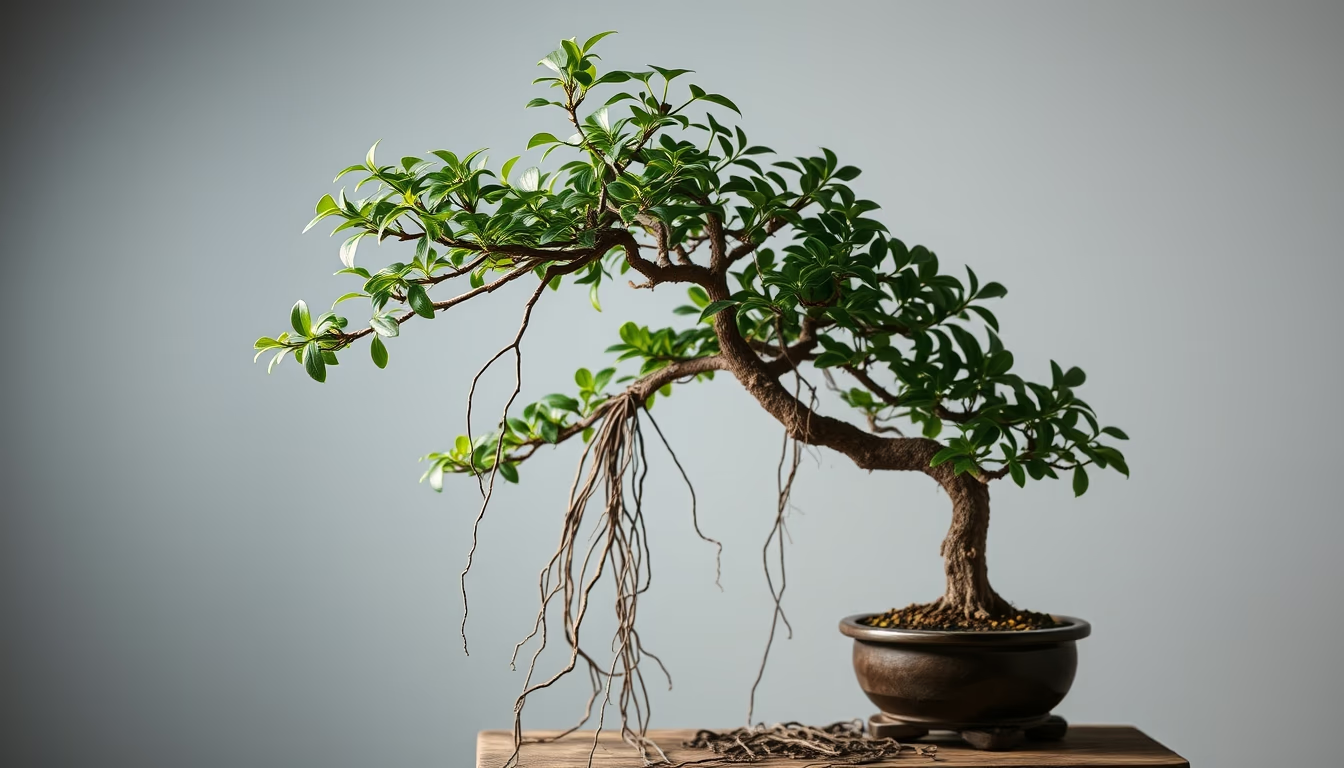
Aerial roots on ficus bonsai are specialized structures that aid nutrient absorption and give an aged appearance, highly valued in the art of bonsai.
About this subject
Aerial roots on ficus trees, especially Ficus retusa and Ficus microcarpa, are evolutionary adaptations for humid tropical environments. Unlike underground roots, they emerge from branches or the trunk to seek moisture and additional support. In nature, these roots can reach the ground and become secondary trunks, a phenomenon known as strangulation in some species. In bonsai art, aerial roots are highly prized for giving an aged and rustic appearance, mimicking ancient miniature trees.
To encourage the growth of aerial roots on a ficus bonsai, growers use techniques such as wrapping the desired branches with moist sphagnum moss or applying transparent plastic to create a high-humidity microenvironment. Frequent misting is also recommended. These roots are more common in environments with relative humidity above 70%, which explains their higher prevalence in greenhouses or coastal regions. In Brazil, ficus cultivation for bonsai is popular due to the favorable tropical climate.
Culturally, the ficus with aerial roots is a symbol of strength and longevity in the Japanese bonsai tradition, often associated with images of ancient trees in tropical forests. In China, the ficus (such as Ficus microcarpa, known as the 'pagoda tree') is considered a plant of good fortune. Well-formed aerial roots in bonsai exhibitions are a hallmark of the grower's skill in controlling microclimate and plant health.
It is important to note that not all ficus varieties readily produce aerial roots. Ficus benjamina, for example, rarely develops them, while Ficus retusa and Ficus microcarpa are the most suitable for those seeking this aesthetic effect. Keeping the plant healthy with regular watering and good drainage is essential to prevent aerial roots from drying out or rotting.
Frequently Asked Questions
Why doesn't my ficus bonsai produce aerial roots?
Aerial root production depends on high humidity (above 70%) and species. Ficus retusa and microcarpa are more prone. Techniques like using moist sphagnum moss or frequent misting can encourage development.
How to stimulate aerial roots on ficus bonsai?
Increase humidity around the plant with misting or a humidifier. Wrap moist sphagnum moss and plastic wrap around selected branches, keeping it moist for weeks. Ensure good drainage and avoid overwatering.
What is the function of aerial roots on ficus?
In nature, aerial roots absorb moisture and nutrients from the air and provide structural support. In bonsai, they are mainly ornamental, giving an aged and naturalistic appearance.
Direct URL
https://pub-c7d6a6ea828543ac903a74a341ccb2e1.r2.dev/imagens/bonsai-ficus-aerial-roots-studio-editorial-portrait-fresh11.avifHow to credit
Include a visible link back to UtilizAí. Copy one of the snippets below:
<a href="https://xn--utiliza-eza.com/en/midia/imagens/bonsai-ficus-aerial-roots-studio-editorial-portrait-fresh11">Bonsai ficus aerial roots</a> by <a href="https://xn--utiliza-eza.com">UtilizAí</a>, licensed under <a href="https://creativecommons.org/licenses/by/4.0/">CC BY 4.0</a>.
[Bonsai ficus aerial roots](https://xn--utiliza-eza.com/en/midia/imagens/bonsai-ficus-aerial-roots-studio-editorial-portrait-fresh11) by [UtilizAí](https://xn--utiliza-eza.com), CC BY 4.0
License: CC-BY-4.0