Bonsai ficus aerial roots
1344×768 · AVIF · CC BY 4.0
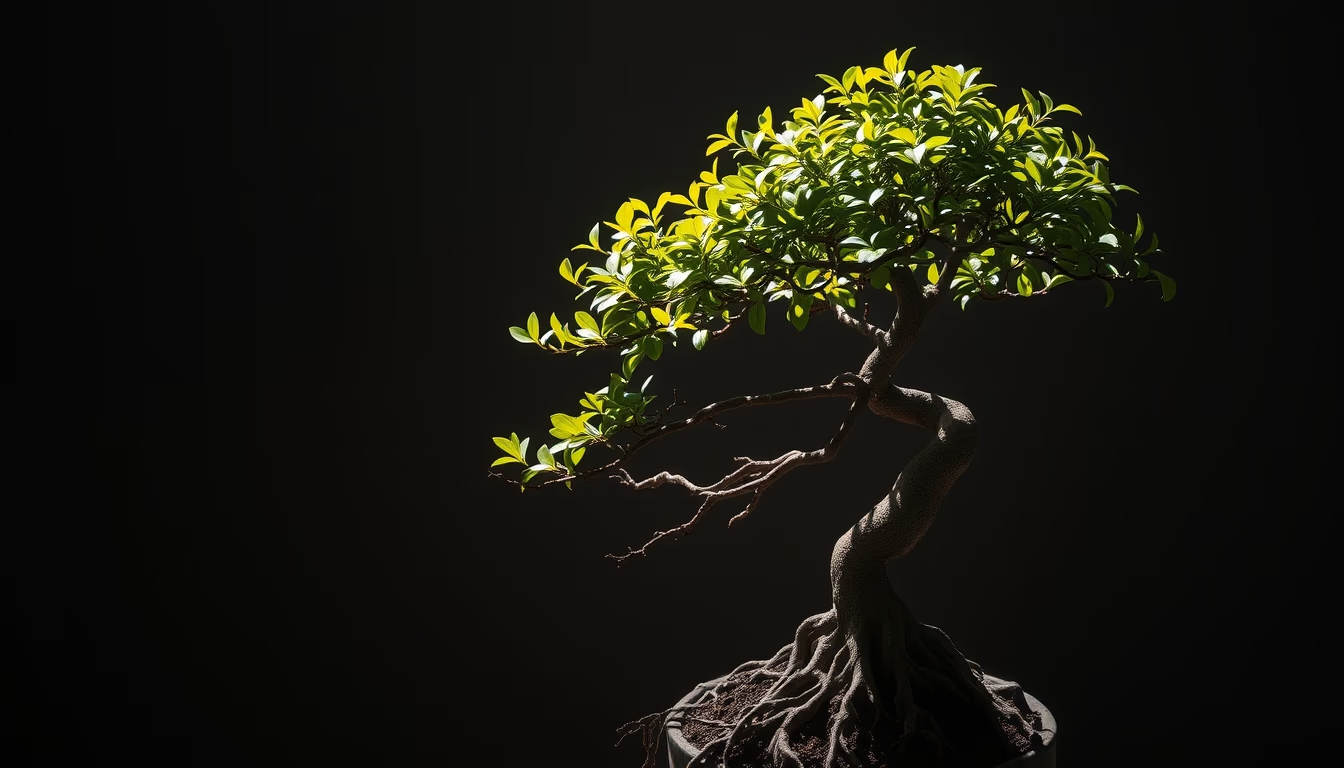
Ficus bonsai with aerial roots: characteristics, care, and cultural significance in miniature tree cultivation.
About this subject
The ficus bonsai with aerial roots is one of the most appreciated and symbolic forms within the art of bonsai. The most common species for this style is Ficus benghalensis, also known as the Bengal fig or strangler fig. In nature, these aerial roots descend from branches to the ground, forming auxiliary trunks that allow the tree to expand its canopy over large areas. In pot cultivation, aerial roots require high relative humidity, often achieved with water trays and regular misting. The formation of these roots is stimulated by proper crown pruning and aeration techniques of the substrate.
Managing aerial roots in ficus bonsai demands patience and knowledge. Aerial rooting can be induced by grafting moist sphagnum moss around a selected branch and wrapping it in plastic. After a few months, roots form and the branch can be separated from the mother plant. Additionally, regular maintenance with root and leaf pruning maintains the aesthetic balance and health of the tree. The species Ficus retusa (small-leaf fig) is also widely used for its ease of adaptation to interiors and ability to develop aerial roots relatively easily.
Culturally, aerial roots in bonsai symbolize the passage of time and the strength of nature. In exhibitions, a ficus bonsai with well-developed aerial roots is considered a sign of maturity and refined technique by the grower. In Japan, this style is called "neagari" when roots are exposed above the soil, but for true aerial roots, the closest term is "banian" or "strangler fig style." The species Ficus microcarpa, known as the Chinese banyan, is another popular choice for beginners wanting to experiment with aerial root cultivation.
For successful cultivation, a well-drained substrate rich in organic matter, frequent watering without waterlogging, and balanced fertilization during the growing season are essential. Aerial roots must not dry out, as they are sensitive to desiccation. Bright indirect light is ideal, avoiding full sun that burns leaves and dries roots. With proper care, a ficus bonsai with aerial roots can live for decades, becoming a living heirloom.
Frequently Asked Questions
Why do aerial roots form on a ficus bonsai?
Aerial roots form as a natural adaptation to seek moisture and additional support. In cultivation, they are stimulated by high humidity and strategic pruning, being a desired aesthetic trait.
How can I stimulate aerial root growth on a ficus bonsai?
To stimulate aerial roots, maintain high humidity with water trays and misting, perform canopy pruning to redirect energy, and use the sphagnum moss wrapping technique on a selected branch covered in plastic.
Which ficus species is best for beginners in bonsai with aerial roots?
Ficus retusa (small-leaf fig) and Ficus microcarpa (Chinese banyan) are excellent for beginners as they tolerate indoor environments, are resilient, and develop aerial roots relatively easily.
Direct URL
https://pub-c7d6a6ea828543ac903a74a341ccb2e1.r2.dev/imagens/bonsai-ficus-aerial-roots-rembrandt-lighting-dramatic-shadows-fresh8.avifHow to credit
Include a visible link back to UtilizAí. Copy one of the snippets below:
<a href="https://xn--utiliza-eza.com/en/midia/imagens/bonsai-ficus-aerial-roots-rembrandt-lighting-dramatic-shadows-fresh8">Bonsai ficus aerial roots</a> by <a href="https://xn--utiliza-eza.com">UtilizAí</a>, licensed under <a href="https://creativecommons.org/licenses/by/4.0/">CC BY 4.0</a>.
[Bonsai ficus aerial roots](https://xn--utiliza-eza.com/en/midia/imagens/bonsai-ficus-aerial-roots-rembrandt-lighting-dramatic-shadows-fresh8) by [UtilizAí](https://xn--utiliza-eza.com), CC BY 4.0
License: CC-BY-4.0