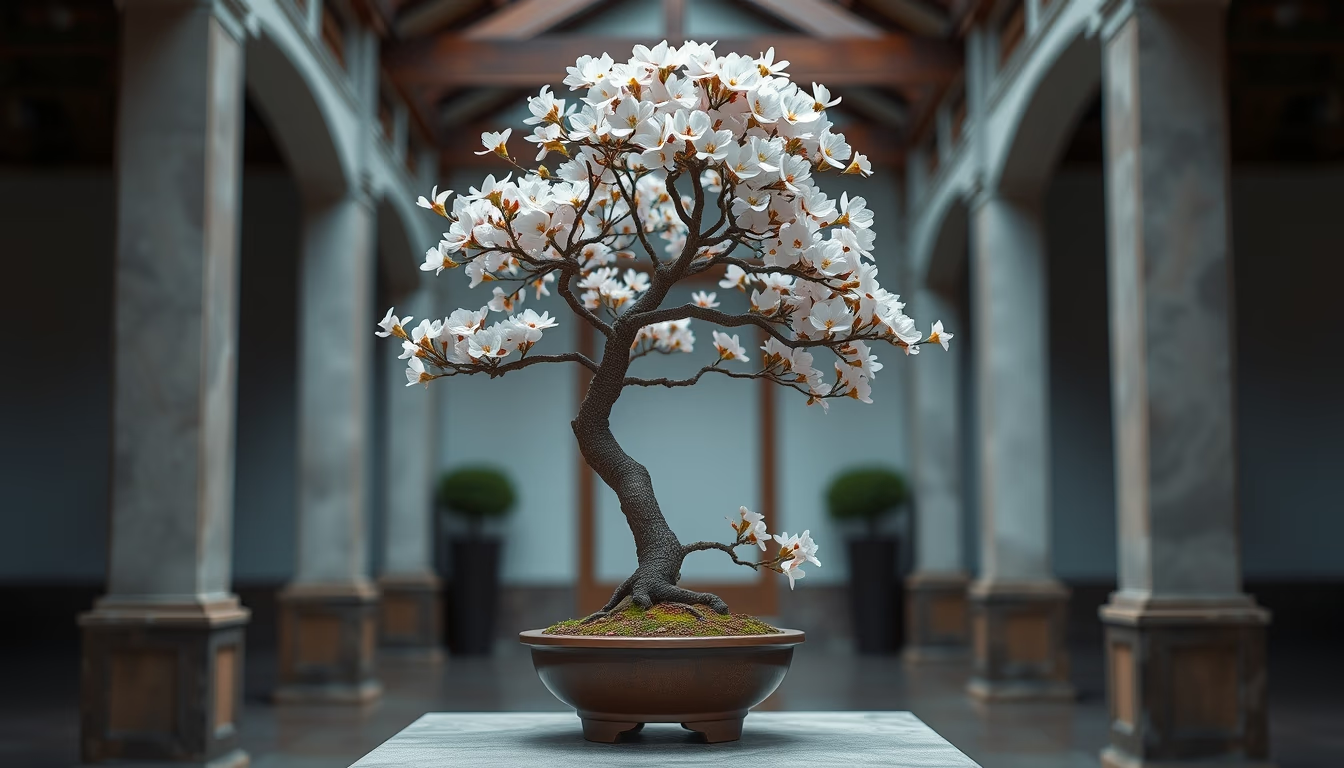
Bonsai ficus aerial roots
1344×768 · AVIF · CC BY 4.0

Aerial roots are a striking feature of ficus bonsai, giving these miniature trees an ancient look and tropical structure.
About this subject
Ficus bonsai, particularly species like Ficus microcarpa and Ficus retusa, are renowned for developing aerial roots that grow from branches down to the soil. In the wild, these roots help stabilize the tree on unstable ground and absorb moisture from the air in humid tropical environments. In bonsai cultivation, aerial roots are prized for their dramatic aesthetic, evoking ancient trees found in Asian forests.
To encourage aerial root growth on a ficus bonsai, growers create high-humidity environments, such as using humidity chambers or wrapping branches with moist sphagnum moss. Techniques like applying rooting hormones and maintaining a stuffy atmosphere are also common. The process can take months or years, with roots gradually thickening and becoming woody.
In bonsai art, aerial roots are especially prominent in the banyan style, inspired by banyan trees that form multiple trunks from adventitious roots. This style aims to replicate the grandeur and complexity of tropical trees in miniature. Beyond aesthetics, aerial roots also indicate plant health: a ficus producing many aerial roots is generally well adapted and vigorous.
Interestingly, some ficus bonsai specimens with aerial roots are over a hundred years old, passed down through generations of growers. These plants require regular pruning and careful maintenance to maintain their desired shape, but their resilience makes them a popular choice for bonsai beginners. The presence of aerial roots adds an element of maturity and naturalism to the composition, distinguishing ficus bonsai from other varieties.
Frequently Asked Questions
How can I encourage aerial root growth on a ficus bonsai?
Increase humidity around the plant by misting, covering the pot with a plastic bag, or wrapping branches with moist sphagnum moss. Applying rooting hormones can speed up the process.
How long does it take for a ficus bonsai to develop aerial roots?
It can take from a few months to years, depending on humidity, temperature, and plant health. Thicker, woodier roots take longer to form.
Are aerial roots necessary for the survival of a ficus bonsai?
No, they are not essential. In nature, they aid in water absorption and stability, but in cultivation the plant can thrive without them. They are mainly grown for aesthetic purposes.
Direct URL
https://pub-c7d6a6ea828543ac903a74a341ccb2e1.r2.dev/imagens/bonsai-ficus-aerial-roots-film-grain-authentic-fresh1.avifHow to credit
Include a visible link back to UtilizAí. Copy one of the snippets below:
<a href="https://xn--utiliza-eza.com/en/midia/imagens/bonsai-ficus-aerial-roots-film-grain-authentic-fresh1">Bonsai ficus aerial roots</a> by <a href="https://xn--utiliza-eza.com">UtilizAí</a>, licensed under <a href="https://creativecommons.org/licenses/by/4.0/">CC BY 4.0</a>.
[Bonsai ficus aerial roots](https://xn--utiliza-eza.com/en/midia/imagens/bonsai-ficus-aerial-roots-film-grain-authentic-fresh1) by [UtilizAí](https://xn--utiliza-eza.com), CC BY 4.0
License: CC-BY-4.0