Blue mosque istanbul
1344×768 · AVIF · CC BY 4.0
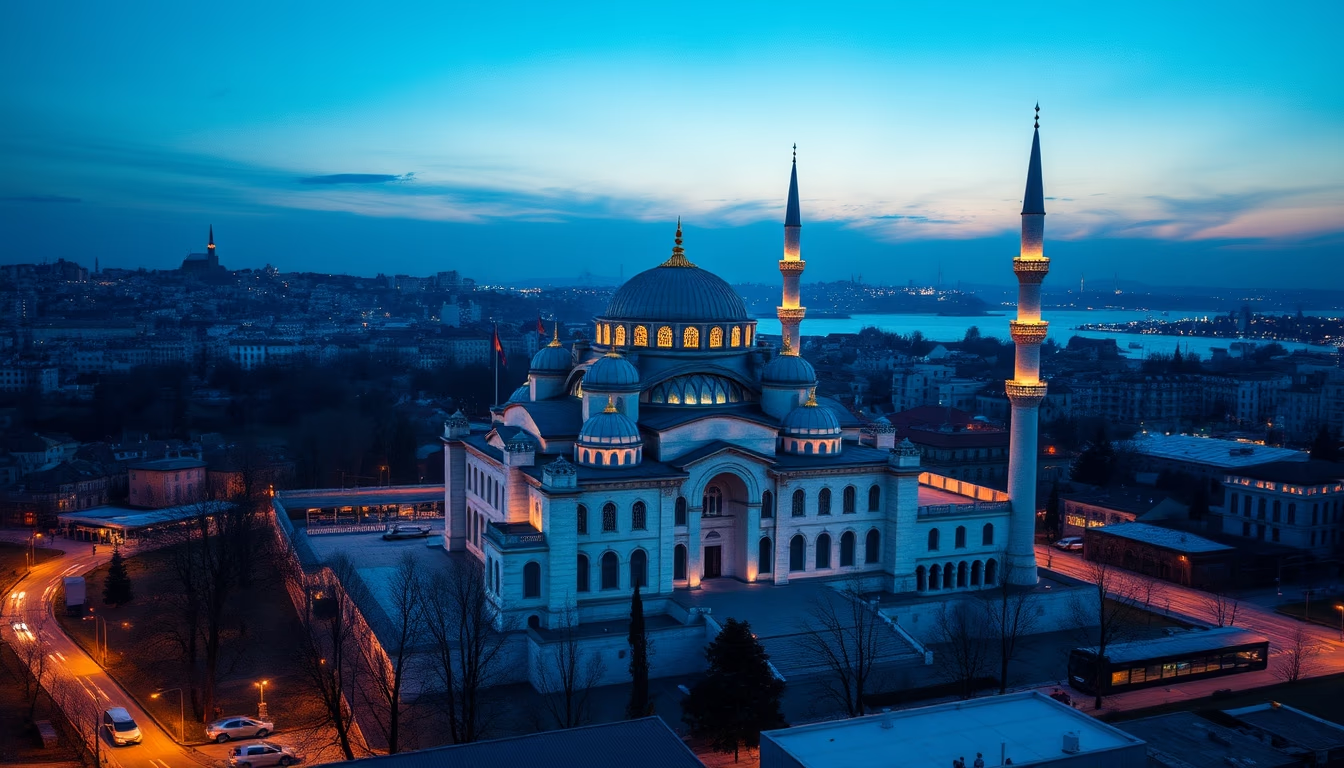
The Blue Mosque, or Sultanahmet Camii, is one of Istanbul's most iconic landmarks, renowned for its six minarets and stunning Iznik tiles.
About this subject
The Blue Mosque, officially named Sultanahmet Camii, was built between 1609 and 1616 during the reign of Sultan Ahmed I. Located in the historic heart of Istanbul, Turkey, it stands opposite Hagia Sophia, forming one of the most iconic architectural ensembles in the world. The project was commissioned to rival Hagia Sophia and assert Ottoman power, designed by architect Sedefkar Mehmed Ağa, a student of the legendary Mimar Sinan.
The mosque is called Blue because of the more than 20,000 Iznik tiles that adorn its interior, predominantly in shades of blue and green. These tiles feature intricate floral and geometric patterns typical of 17th-century Ottoman ceramics. The structure features a massive central dome 23.5 meters in diameter, supported by four pillars and flanked by semidomes. Unlike most mosques, which have one to four minarets, the Sultanahmet has six, which caused controversy at the time because only the mosque in Mecca could have six. The sultan resolved the issue by funding the construction of a seventh minaret at the mosque in Mecca.
The mosque remains active for daily prayers but is also a major tourist attraction, receiving millions of visitors annually. Its location in the Sultanahmet district, near Topkapi Palace and the Hippodrome, makes it a focal point of historical tourism. Entry is free but requires adherence to dress code and prayer times. The mosque was declared a UNESCO World Heritage Site in 1985 as part of the Historic Areas of Istanbul, recognizing its architectural and cultural significance.
Interestingly, the Blue Mosque inspired replicas in other countries, such as the Sultanahmet Mosque in Baku, Azerbaijan, and served as a reference for late Ottoman religious architecture. Its silhouette with six minarets is instantly recognizable and frequently photographed from various angles, from hilltops or the Bosphorus Strait. The popular name Blue only became established in the 20th century after a visit by British writer Robert Byron in 1930, who described the tiles as blue.
Frequently Asked Questions
Why does the Blue Mosque have six minarets?
The mosque was built with six minarets by order of Sultan Ahmed I. This caused controversy because the Great Mosque of Mecca, the holiest in Islam, also had six. To resolve the dispute, the sultan funded the construction of a seventh minaret at the Mecca mosque.
What is the difference between the Blue Mosque and Hagia Sophia?
The Blue Mosque is a 17th-century Ottoman mosque, while Hagia Sophia was originally a 6th-century Byzantine cathedral, later converted into a mosque and now a museum. The Blue Mosque is famous for its blue tiles and six minarets, while Hagia Sophia is known for its massive dome and Christian mosaics.
Is the Blue Mosque still used for prayers?
Yes, the Blue Mosque is an active mosque with five daily prayers. Visitors are allowed outside prayer times, and must respect the dress code, covering shoulders and knees, and remove shoes before entering.
Direct URL
https://pub-c7d6a6ea828543ac903a74a341ccb2e1.r2.dev/imagens/blue-mosque-istanbul-aerial-drone-shot-p9.avifHow to credit
Include a visible link back to UtilizAí. Copy one of the snippets below:
<a href="https://xn--utiliza-eza.com/en/midia/imagens/blue-mosque-istanbul-aerial-drone-shot-p9">Blue mosque istanbul</a> by <a href="https://xn--utiliza-eza.com">UtilizAí</a>, licensed under <a href="https://creativecommons.org/licenses/by/4.0/">CC BY 4.0</a>.
[Blue mosque istanbul](https://xn--utiliza-eza.com/en/midia/imagens/blue-mosque-istanbul-aerial-drone-shot-p9) by [UtilizAí](https://xn--utiliza-eza.com), CC BY 4.0
License: CC-BY-4.0