Biryani aromatic spice
1344×768 · AVIF · CC BY 4.0
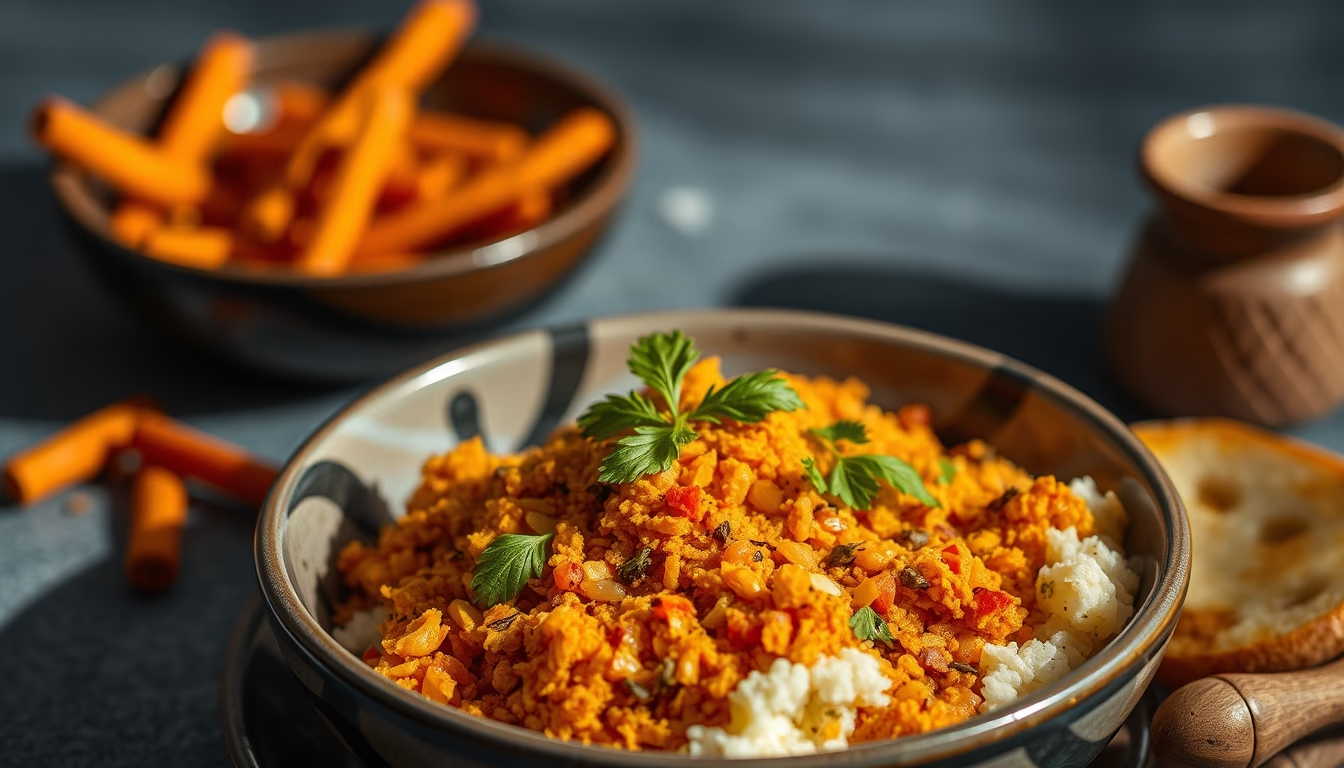
Biryani is an aromatic dish from Indian cuisine, renowned for its complex blend of spices such as cardamom, cinnamon, and cloves.
About this subject
Biryani is a rice dish originating from the Indian subcontinent, prepared with a rich blend of spices that gives it an unmistakable aroma and flavor. Essential ingredients include green and black cardamom, cinnamon, cloves, nutmeg, cumin, coriander, and saffron. Each region of India has its variations: Hyderabadi biryani is known for using mutton and long-grain basmati rice, while Lucknowi biryani employs the dum technique (slow steam cooking).
The preparation of biryani involves alternate layers of partially cooked rice and spiced meat or vegetables, sealed and cooked over low heat. Spices are often heated in ghee (clarified butter) to release their essential oils, resulting in a fragrant dish. The history of biryani dates back to the Mughal Empire, which brought Persian influences to Indian cuisine in the 16th century.
Today, biryani is enjoyed globally and adapted to local ingredients. In Brazil, versions with chicken, nuts, and regional spices are found in Indian and fusion restaurants. The spice blend is crucial: excessive chili can overpower subtle cardamom and cinnamon flavors, while saffron adds color and earthy aroma. Basmati rice, with its long grains and distinctive fragrance, is preferred for its ability to absorb spices without becoming sticky.
Studies indicate that many biryani spices have antioxidant and anti-inflammatory properties. Cardamom, for instance, is used in Ayurvedic medicine to aid digestion. Cinnamon may help control blood sugar. Cloves are rich in eugenol, a compound with analgesic effects. Thus, biryani is not only flavorful but also carries cultural tradition and potential health benefits when consumed in moderation.
Frequently Asked Questions
What are the most common spices in biryani?
Typical spices include green and black cardamom, cinnamon, cloves, nutmeg, cumin, coriander, saffron, as well as bay leaves and black pepper. The blend varies according to regional recipes.
What is the difference between biryani and pulao?
In biryani, rice is cooked separately and then layered with spices and meat or vegetables, followed by slow steaming (dum). Pulao is cooked with all ingredients together, resulting in a more uniform texture.
Is biryani a healthy dish?
It depends on ingredients and preparation. Rich in spices like turmeric, cardamom, and cinnamon, it provides antioxidants. However, versions with high amounts of ghee or fatty meat can be calorie-dense. Balance is key.
Direct URL
https://pub-c7d6a6ea828543ac903a74a341ccb2e1.r2.dev/imagens/biryani-aromatic-spice-magazine-editorial-p5.avifHow to credit
Include a visible link back to UtilizAí. Copy one of the snippets below:
<a href="https://xn--utiliza-eza.com/en/midia/imagens/biryani-aromatic-spice-magazine-editorial-p5">Biryani aromatic spice</a> by <a href="https://xn--utiliza-eza.com">UtilizAí</a>, licensed under <a href="https://creativecommons.org/licenses/by/4.0/">CC BY 4.0</a>.
[Biryani aromatic spice](https://xn--utiliza-eza.com/en/midia/imagens/biryani-aromatic-spice-magazine-editorial-p5) by [UtilizAí](https://xn--utiliza-eza.com), CC BY 4.0
License: CC-BY-4.0