Birth of venus botticelli
1344×768 · AVIF · CC BY 4.0
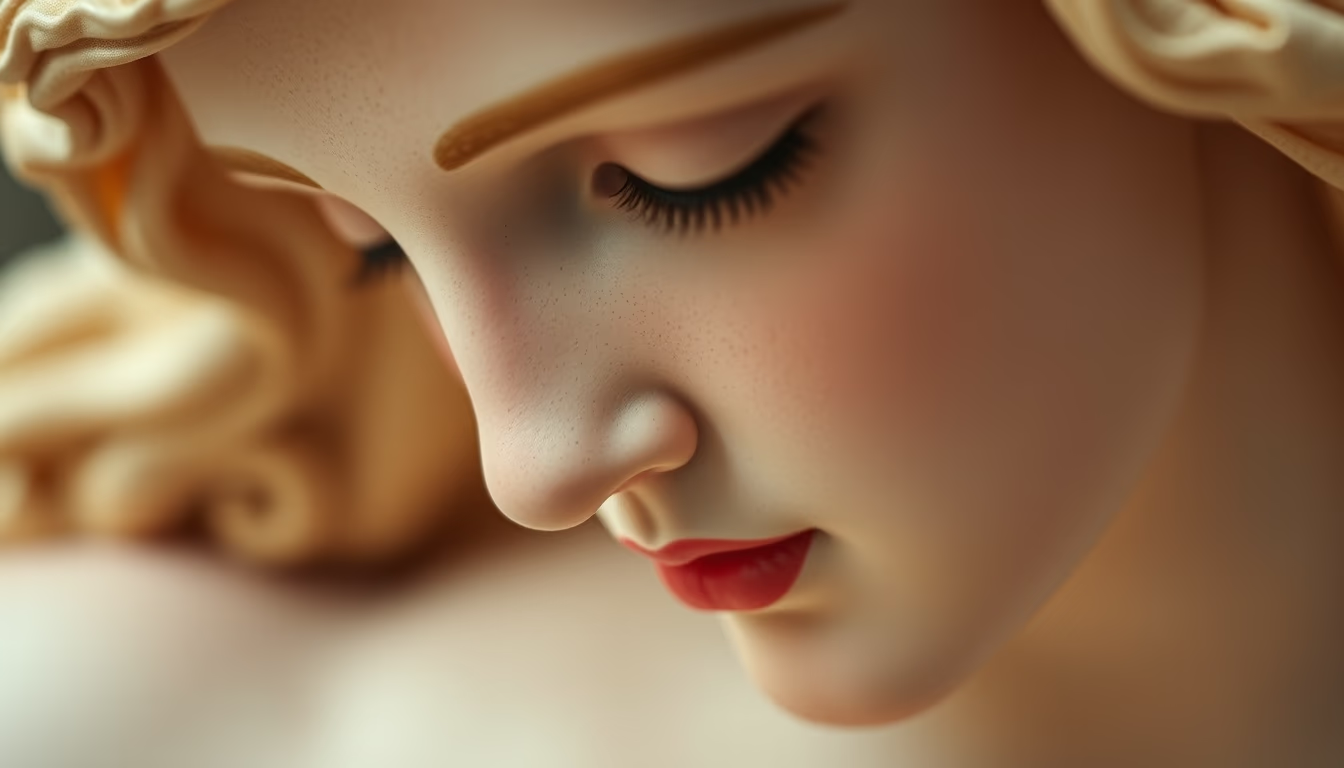
A macro closeup of the Venus flower basket sponge (Euplectella aspergillum) reveals the intricate silica lattice that has inspired artists and scientists.
About this subject
The Venus flower basket sponge (Euplectella aspergillum) is a marine organism belonging to the class Hexactinellida, known as glass sponges. It inhabits depths of 100 to 1,000 meters, primarily in the Pacific Ocean, attached to rocky substrates or sediments. Its skeleton is composed of silica spicules (biological glass) forming a cylindrical lattice, often compared to a basket or a work of art. This structure not only provides mechanical support but also houses symbiotic shrimp of the genus Spongicola, which live inside the sponge cavity and feed on captured particles. The common name refers to the goddess Venus, associated with beauty and birth, echoing Botticelli's masterpiece. The sponge is an example of biomineralization, where organisms produce minerals to build complex structures. Its radial symmetry and geometric patterns have been studied for inspiration in biomimetics, especially in creating lightweight and strong materials. The association with birth derives from the sponge's initial development from a larva that settles and grows into the adult form. Each spicule is secreted by specialized cells called sclerocytes, involving proteins and dissolved silica from seawater. The macro closeup image emphasizes the intricate beauty of this natural architecture, often invisible to the naked eye.
Frequently Asked Questions
Where is the Venus flower basket sponge found?
It inhabits deep waters of the Pacific Ocean, mainly around Japan and the Philippines, at depths between 100 and 1,000 meters.
Why is it called a Venus flower basket?
The name derives from its elegant basket-like shape, associated with the Roman goddess Venus, symbol of beauty and love, echoing Botticelli's 'The Birth of Venus'.
What is the relationship between the shrimp and this sponge?
Shrimp of the genus Spongicola live inside the sponge cavity, growing until they are too large to exit, forming a symbiotic relationship.
Direct URL
https://pub-c7d6a6ea828543ac903a74a341ccb2e1.r2.dev/imagens/birth-of-venus-botticelli-macro-closeup-p10.avifHow to credit
Include a visible link back to UtilizAí. Copy one of the snippets below:
<a href="https://xn--utiliza-eza.com/en/midia/imagens/birth-of-venus-botticelli-macro-closeup-p10">Birth of venus botticelli</a> by <a href="https://xn--utiliza-eza.com">UtilizAí</a>, licensed under <a href="https://creativecommons.org/licenses/by/4.0/">CC BY 4.0</a>.
[Birth of venus botticelli](https://xn--utiliza-eza.com/en/midia/imagens/birth-of-venus-botticelli-macro-closeup-p10) by [UtilizAí](https://xn--utiliza-eza.com), CC BY 4.0
License: CC-BY-4.0