Biomedical lab clean
1344×768 · AVIF · CC BY 4.0
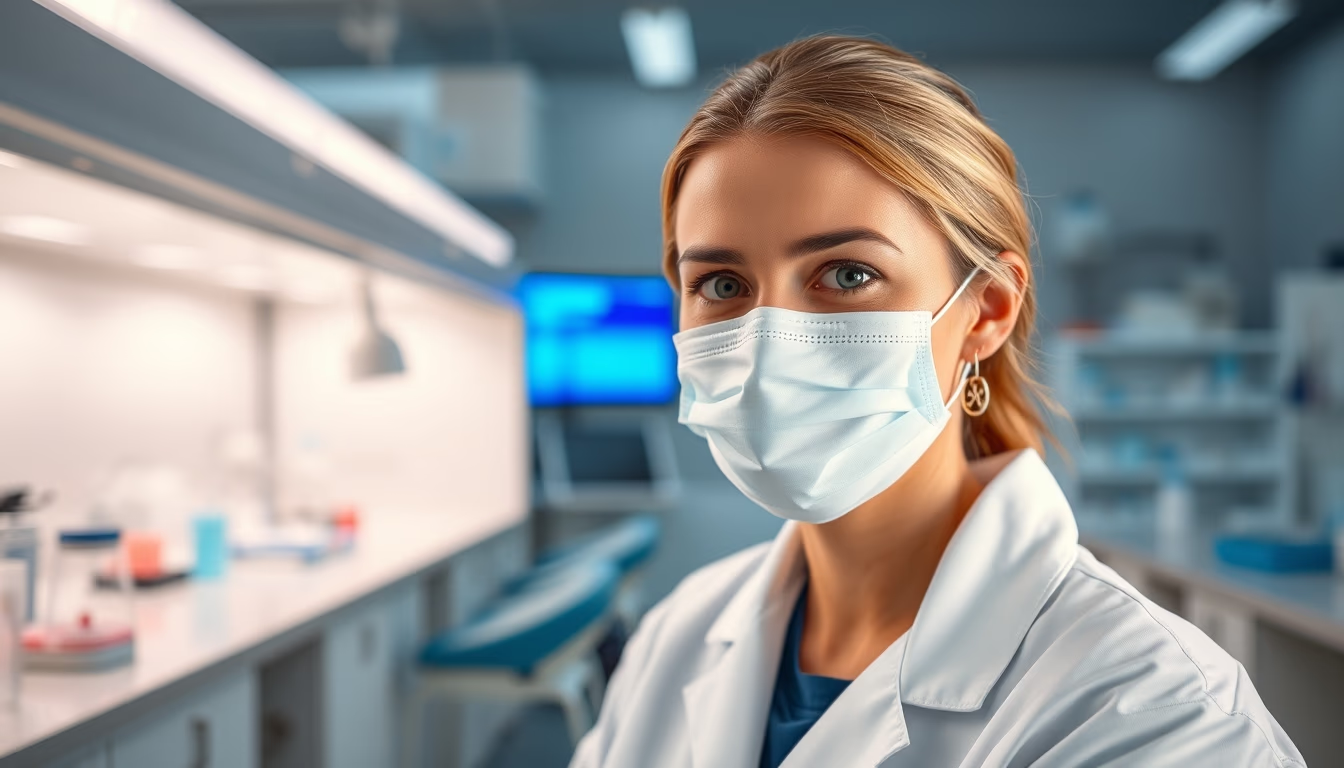
Biomedical labs demand rigorous cleanliness levels to ensure experimental accuracy and researcher safety.
About this subject
Cleanliness in biomedical labs is not merely aesthetic but a fundamental requirement for the validity of scientific results. These environments follow strict biosafety protocols, ranging from surface disinfection to airborne particle control. Common standards include those from Brazil's National Health Surveillance Agency (Anvisa) and international Good Laboratory Practices (GLP).
Laboratories are classified into biosafety levels (BSL-1 to BSL-4); the higher the level, the stricter the cleaning and sterilization procedures. For instance, a BSL-3 lab handling pathogens like Mycobacterium tuberculosis requires chemical decontamination of all surfaces and use of autoclaves for waste. A BSL-4 lab, such as those studying Ebola virus, demands physical barriers and specialized ventilation systems.
Daily cleaning routines include wiping bench surfaces with 70% alcohol or hydrogen peroxide, sanitizing equipment like pipettes and centrifuges, and frequent changes of lab coats and gloves. Floors are cleaned with germicidal solutions, and air passes through HEPA filters to remove particulates. Failures in this process can compromise experiments, cause cross-contamination, and lead to laboratory-acquired infections.
Interestingly, biomedical lab cleanliness also covers proper disposal of sharps and segregation of chemical and biological waste. Ongoing technician training is vital to maintain standards, and many institutions conduct regular internal audits. The pursuit of a "clean" environment goes beyond technique, reflecting a culture of responsibility and scientific ethics.
Frequently Asked Questions
Why is cleanliness so important in biomedical labs?
Cleanliness prevents contamination of samples and reagents, ensures experimental reproducibility, and protects researchers from infectious agents.
What are the main disinfection methods used?
Common methods include 70% alcohol, hydrogen peroxide, sodium hypochlorite, and UV light. The choice depends on the microorganism and surface.
What does BSL-3 mean in a lab?
It is a biosafety level indicating the required containment. BSL-3 is for agents that can cause serious diseases, requiring protective equipment and strict decontamination procedures.
Direct URL
https://pub-c7d6a6ea828543ac903a74a341ccb2e1.r2.dev/imagens/biomedical-lab-clean-studio-editorial-portrait-p2.avifHow to credit
Include a visible link back to UtilizAí. Copy one of the snippets below:
<a href="https://xn--utiliza-eza.com/en/midia/imagens/biomedical-lab-clean-studio-editorial-portrait-p2">Biomedical lab clean</a> by <a href="https://xn--utiliza-eza.com">UtilizAí</a>, licensed under <a href="https://creativecommons.org/licenses/by/4.0/">CC BY 4.0</a>.
[Biomedical lab clean](https://xn--utiliza-eza.com/en/midia/imagens/biomedical-lab-clean-studio-editorial-portrait-p2) by [UtilizAí](https://xn--utiliza-eza.com), CC BY 4.0
License: CC-BY-4.0