Biomedical lab clean
1344×768 · AVIF · CC BY 4.0
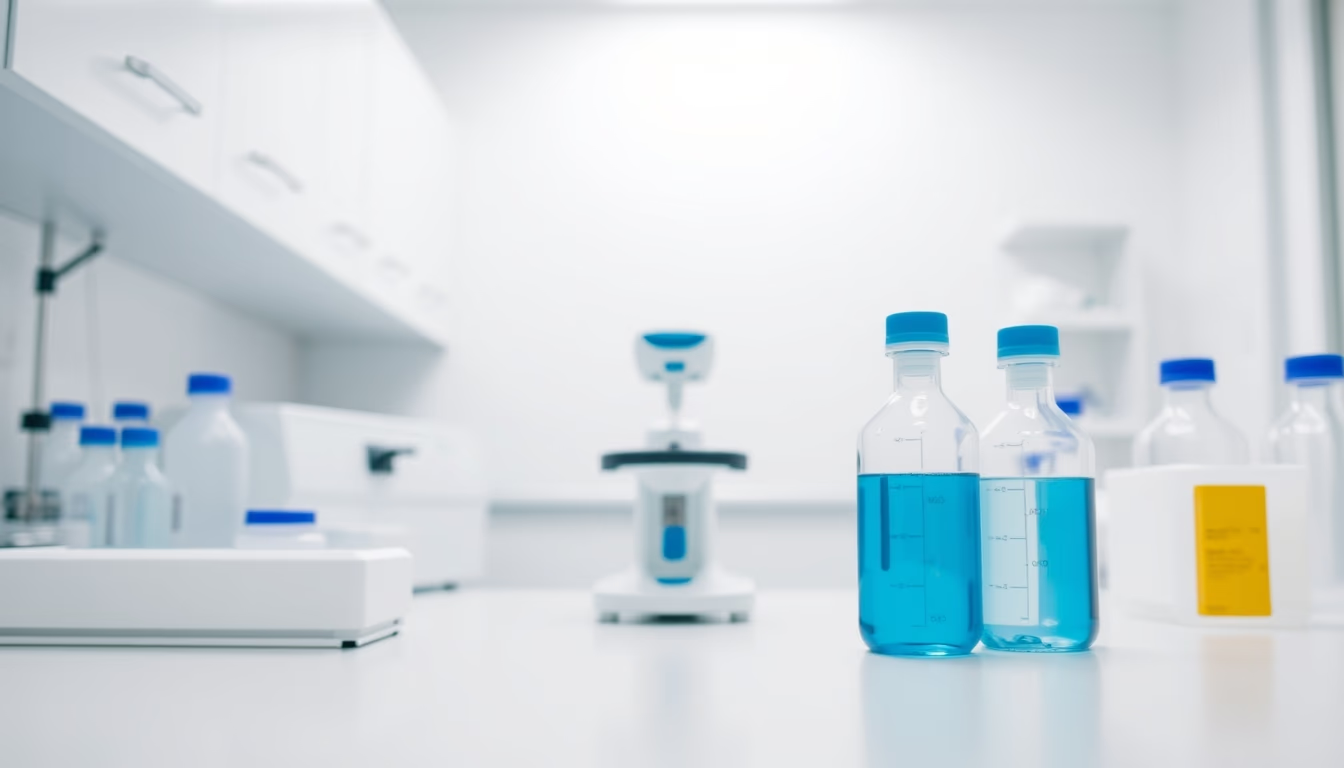
Biomedical labs demand sterile and organized environments to ensure accuracy in research and diagnostics.
About this subject
Rigorous cleanliness in biomedical labs is not just an aesthetic concern but a fundamental requirement for experimental integrity and professional safety. These spaces are designed with smooth, non-porous surfaces like stainless steel and epoxy countertops that facilitate disinfection and prevent contaminant buildup. Positive pressure airflow systems with HEPA filters maintain particle-free air, while biological safety cabinets protect both the user and samples from pathogenic agents.
Layout follows strict regulations, such as those from ANVISA in Brazil, which establish separate areas for receiving, processing, and discarding materials. Common equipment includes autoclaves, centrifuges, microscopes, and thermocyclers, each requiring specific cleaning protocols. For instance, pipettes and tips are often autoclaved before use to eliminate residual DNA or RNA.
Daily cleaning routines involve disinfection with 70% alcohol or sodium hypochlorite, along with periodic contamination monitoring using settle plates. Failure to maintain sterility can compromise decades of research or result in incorrect clinical diagnoses. Therefore, professionals wear full personal protective equipment like lab coats, gloves, and masks, and follow strict movement rules between clean and dirty zones.
Interestingly, the cleanroom concept was developed in the 1960s for the aerospace industry and later adapted for biomedicine. Today, ISO Class 5 or higher labs are standard in institutions working with cell culture or handling infectious agents.
Frequently Asked Questions
Why is cleanliness vital in biomedical labs?
Contamination can invalidate experiments, cause false diagnoses, and expose professionals to biological hazards. Sterile environments ensure reproducibility and safety.
What equipment is common in these labs?
Autoclaves for sterilization, biological safety cabinets, microscopes, centrifuges, PCR thermocyclers, and ultra-low temperature freezers are typical examples.
How is sterility maintained on a daily basis?
Use of disinfectants like 70% alcohol and bleach, scheduled surface cleaning, monitoring with settle plates, and continuous staff training in good practices.
Direct URL
https://pub-c7d6a6ea828543ac903a74a341ccb2e1.r2.dev/imagens/biomedical-lab-clean-commercial-product-photography-p8.avifHow to credit
Include a visible link back to UtilizAí. Copy one of the snippets below:
<a href="https://xn--utiliza-eza.com/en/midia/imagens/biomedical-lab-clean-commercial-product-photography-p8">Biomedical lab clean</a> by <a href="https://xn--utiliza-eza.com">UtilizAí</a>, licensed under <a href="https://creativecommons.org/licenses/by/4.0/">CC BY 4.0</a>.
[Biomedical lab clean](https://xn--utiliza-eza.com/en/midia/imagens/biomedical-lab-clean-commercial-product-photography-p8) by [UtilizAí](https://xn--utiliza-eza.com), CC BY 4.0
License: CC-BY-4.0