Biomedical lab clean
1344×768 · AVIF · CC BY 4.0
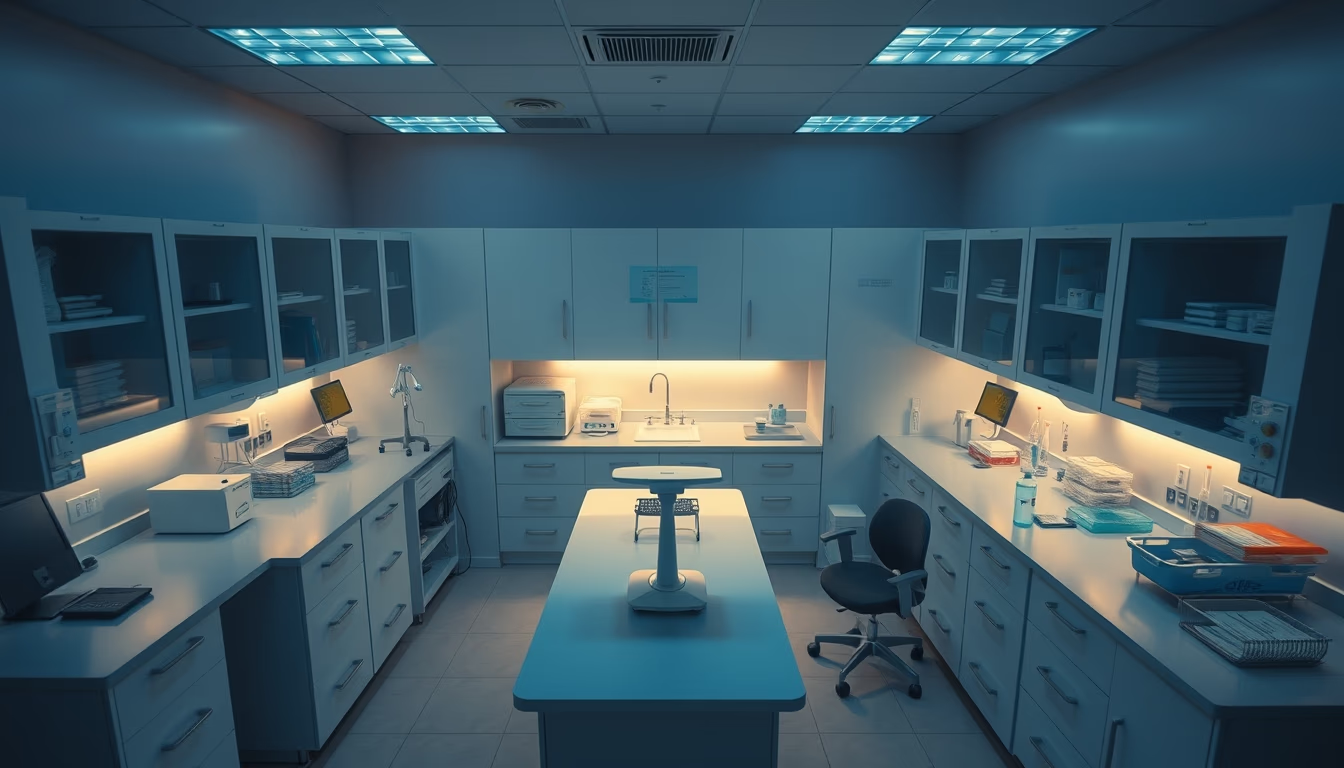
Biomedical labs follow strict cleaning and sterilization protocols to ensure research safety and prevent cross contamination.
About this subject
Cleaning in biomedical labs is one of the pillars of safety and reliability of experimental results. These environments must maintain controlled levels of particles, microorganisms, and other contaminants, especially in areas classified as clean rooms. The ISO 14644 standard defines air purity levels, ranging from ISO 1 (cleanest) to ISO 9 (least clean). Research labs working with stem cells, bacterial cultures, or DNA manipulation often operate at ISO 5 or higher, requiring HEPA filters, laminar flow, and physical barriers.
Cleaning protocols include the use of specific disinfectants such as 70% alcohol, sodium hypochlorite, and vaporized hydrogen peroxide. Frequency can be daily or before each procedure, depending on criticality. Technicians wear sterile clothing, gloves, masks, and shoe covers, and access is controlled via anterooms with positive pressure. Cleaning validation is performed using swabs and contact plates for colony forming unit (CFU) counts.
The importance of these procedures extends beyond scientific research. Hospitals and clinics that perform laboratory tests rely on the same aseptic chain to diagnose diseases accurately. A contamination error can lead to false positives or negatives, impacting treatments and public health. The World Health Organization (WHO) and the Brazilian Health Regulatory Agency (ANVISA) set strict biosafety guidelines for clinical and research laboratories.
Innovations such as automated cleaning robots, continuous particle monitoring systems, and antimicrobial surfaces are being adopted to increase efficiency and reduce human error. The trend is for artificial intelligence to help in predictive control of air quality and identification of critical contamination points, making biomedical labs increasingly safe and reliable.
Frequently Asked Questions
Why is cleaning in biomedical labs so rigorous?
Rigorous cleaning prevents contamination of samples and cultures, ensuring the validity of experimental results and the safety of personnel. Any contamination can compromise research and diagnostics.
What is a clean room in a laboratory?
It is an environment with strict control of airborne particles and microorganisms, following ISO classifications. Entry of people and materials is controlled to maintain space purity.
What are the main disinfectants used in biomedical labs?
70% alcohol, sodium hypochlorite, and hydrogen peroxide are common. The choice depends on the target microorganism and compatibility with surfaces and equipment.
Direct URL
https://pub-c7d6a6ea828543ac903a74a341ccb2e1.r2.dev/imagens/biomedical-lab-clean-aerial-drone-shot-p3.avifHow to credit
Include a visible link back to UtilizAí. Copy one of the snippets below:
<a href="https://xn--utiliza-eza.com/en/midia/imagens/biomedical-lab-clean-aerial-drone-shot-p3">Biomedical lab clean</a> by <a href="https://xn--utiliza-eza.com">UtilizAí</a>, licensed under <a href="https://creativecommons.org/licenses/by/4.0/">CC BY 4.0</a>.
[Biomedical lab clean](https://xn--utiliza-eza.com/en/midia/imagens/biomedical-lab-clean-aerial-drone-shot-p3) by [UtilizAí](https://xn--utiliza-eza.com), CC BY 4.0
License: CC-BY-4.0