Bengal tiger in jungle
1344×768 · AVIF · CC BY 4.0
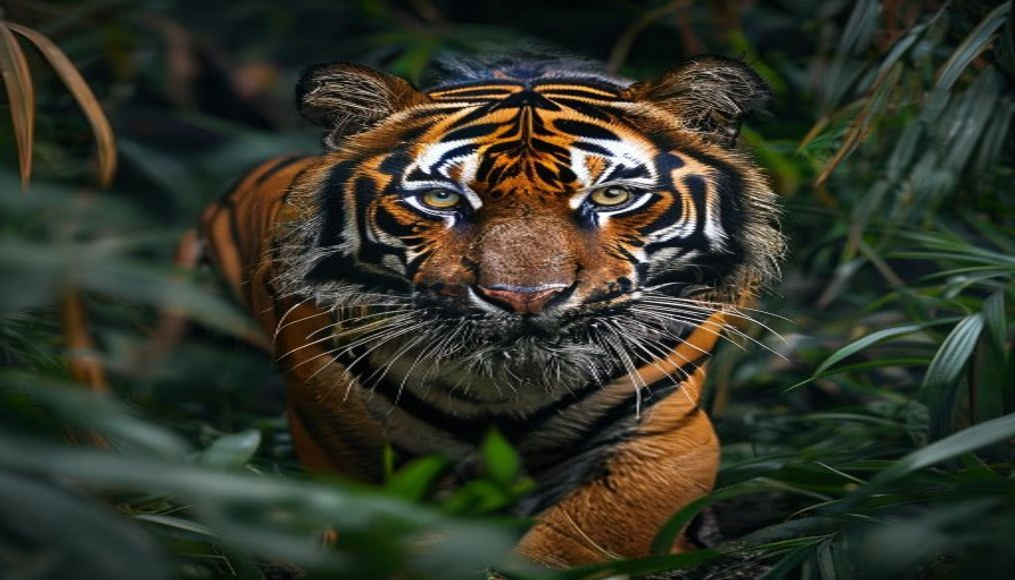
Bengal tiger in the jungle: learn about Asia's largest feline, its habitat in India and Bangladesh, and facts about its hunting and conservation.
About this subject
The Bengal tiger (Panthera tigris tigris) is one of the largest tiger subspecies, primarily found in India, Bangladesh, Nepal, and Bhutan. An estimated 2,500 individuals remain in the wild, with most concentrated in Indian reserves such as Sundarbans National Park and Bandhavgarh Tiger Reserve. This subspecies is known for its orange coat with dark stripes, providing effective camouflage in the dense vegetation of tropical forests and mangroves.
Habitat ranges from dry forests to mangrove swamps, with the Sundarbans, the world's largest mangrove forest, shared between India and Bangladesh, being a crucial refuge. There, tigers have developed unique adaptations like swimming long distances between islands and hunting prey such as deer, wild boar, and even crocodiles. An adult tiger can consume up to 40 kg of meat in a single meal but may go days without eating after a successful hunt.
Conservation of the Bengal tiger faces challenges including habitat loss due to deforestation and human population growth, as well as poaching for fur and body parts used in traditional medicine. Initiatives like Project Tiger, launched by India in 1973, helped boost the population from about 1,800 to over 3,000 tigers by the 2020s, though recent data shows a slight decline. The subspecies is listed as Endangered by the IUCN, and efforts continue to protect ecological corridors connecting isolated populations.
Frequently Asked Questions
What is the difference between a Bengal tiger and a Siberian tiger?
The Bengal tiger is smaller than the Siberian tiger, with males weighing between 200 and 260 kg, while Siberians can reach 300 kg. Bengal tigers also have narrower and closer stripes, and their habitat is mainly tropical, unlike the Siberian which lives in the cold forests of eastern Russia.
How many Bengal tigers are in captivity?
An estimated 3,000 Bengal tigers live in captivity worldwide, many in zoos and sanctuaries. This number exceeds the wild population, but genetic diversity is limited due to inbreeding in some breeding programs.
Are Bengal tigers aggressive towards humans?
Attacks on humans are rare but can occur when tigers are sick, injured, or when natural habitat is scarce. In the Sundarbans, about 30 to 50 deaths are recorded annually, often due to territorial conflict and prey scarcity. Prevention measures include wearing masks on the back of the head to confuse the tiger.
Direct URL
https://pub-c7d6a6ea828543ac903a74a341ccb2e1.r2.dev/imagens/bengal-tiger-in-jungle-commercial-product-photography-v9.avifHow to credit
Include a visible link back to UtilizAí. Copy one of the snippets below:
<a href="https://xn--utiliza-eza.com/en/midia/imagens/bengal-tiger-in-jungle-commercial-product-photography-v9">Bengal tiger in jungle</a> by <a href="https://xn--utiliza-eza.com">UtilizAí</a>, licensed under <a href="https://creativecommons.org/licenses/by/4.0/">CC BY 4.0</a>.
[Bengal tiger in jungle](https://xn--utiliza-eza.com/en/midia/imagens/bengal-tiger-in-jungle-commercial-product-photography-v9) by [UtilizAí](https://xn--utiliza-eza.com), CC BY 4.0
License: CC-BY-4.0