Belle epoque ring rose cut
1344×768 · AVIF · CC BY 4.0
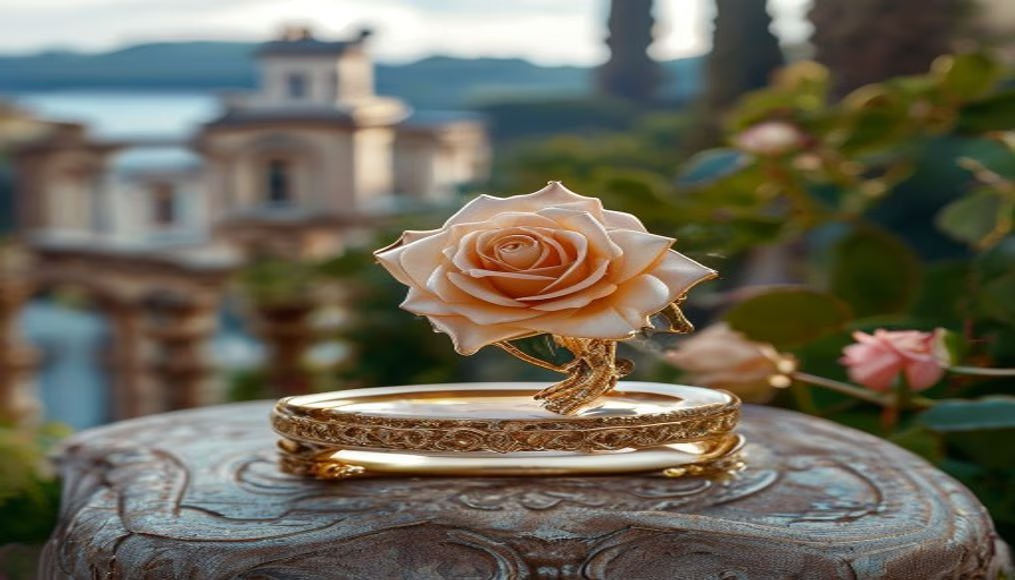
Belle Époque ring with rose cut diamond, symbol of elegance and jewelry craftsmanship from the early 20th century.
About this subject
The Belle Époque ring with a rose cut diamond harkens back to a period of refinement and innovation in European goldsmithing, between 1871 and 1914, particularly in France. The Belle Époque was characterized by the extensive use of platinum, a metal that allowed for lighter and more delicate settings, and motifs such as flowers, ribbons, and bows. The rose cut diamond, with its flat base and faceted top resembling a rose petal, was one of the most common cuts of the era, before the development of the modern brilliant cut. This cut produces a soft, diffuse brilliance, prized in antique pieces that emphasized a gem's inner luminosity. Rings from this period often feature details like filigree, milgrain, and arabesque tracings, hallmarks of the Edwardian style influenced by French designs. The setting of a Tuscan villa terrace, though geographically distant from the French origin of these pieces, evokes the luxury and vacation atmosphere of European aristocracy, who often acquired jewelry during travels across the continent. Today, authentic Belle Époque rings with rose cuts are highly collectible, valued not only for their gems but for the artisanal technique and the history they carry. Each piece is a testament to the apogee of jewelry craftsmanship before World War I, when handcrafting and exclusive design were the norm.
Frequently Asked Questions
What characterizes a Belle Époque ring?
Belle Époque rings are characterized by the use of platinum, delicate designs with floral and geometric motifs, and cuts like the rose cut. Details such as filigree and milgrain are common, along with frequent use of diamonds and pearls.
How to identify a genuine rose cut diamond?
A rose cut diamond has a flat base and a faceted dome with no pavilion, usually round or oval in shape. Its facets are triangular and tend to form a symmetrical pattern. The gem exhibits a softer brilliance than the brilliant cut, with less fire.
Why is the Belle Époque considered the golden age of jewelry?
The Belle Époque (1871-1914) was a period of peace, prosperity, and technical innovation. The use of platinum and the development of new goldsmithing techniques allowed for extremely lightweight and detailed creations, elevating jewelry to an artistic level never before achieved.
Direct URL
https://pub-c7d6a6ea828543ac903a74a341ccb2e1.r2.dev/imagens/belle-epoque-ring-rose-cut-tuscan-villa-terrace-backdrop-luxo1.avifHow to credit
Include a visible link back to UtilizAí. Copy one of the snippets below:
<a href="https://xn--utiliza-eza.com/en/midia/imagens/belle-epoque-ring-rose-cut-tuscan-villa-terrace-backdrop-luxo1">Belle epoque ring rose cut</a> by <a href="https://xn--utiliza-eza.com">UtilizAí</a>, licensed under <a href="https://creativecommons.org/licenses/by/4.0/">CC BY 4.0</a>.
[Belle epoque ring rose cut](https://xn--utiliza-eza.com/en/midia/imagens/belle-epoque-ring-rose-cut-tuscan-villa-terrace-backdrop-luxo1) by [UtilizAí](https://xn--utiliza-eza.com), CC BY 4.0
License: CC-BY-4.0