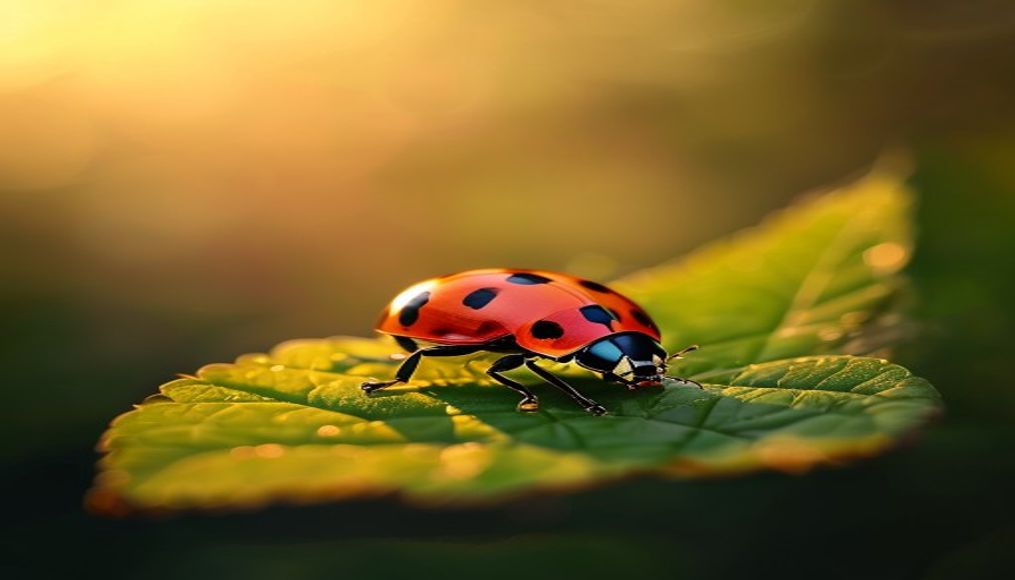
Beetle iridescent green
1344×768 · AVIF · CC BY 4.0
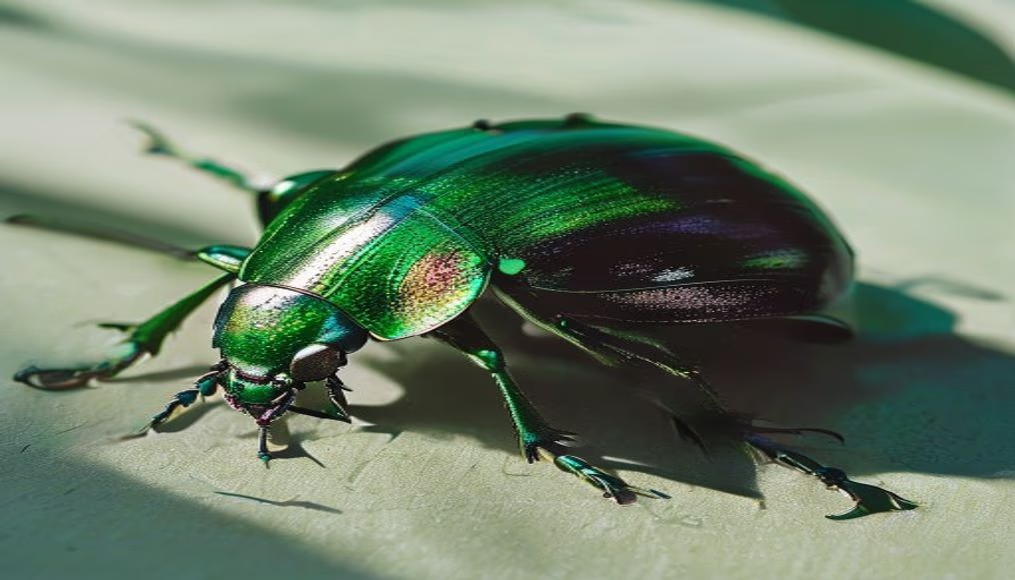
Iridescent green beetles display bright colors due to nanostructures in their shells, a phenomenon known as structural coloration, used in biomimetic research.
About this subject
The iridescent green coloration in beetles results from nanostructures in their cuticle that refract light. This phenomenon, called structural coloration, is common in several families, such as Scarabaeidae and Buprestidae. Unlike pigments that absorb certain wavelengths, these structures produce colors through optical interference and can shift depending on the viewing angle.
In Brazil, species like the green beetle (Cetonia aurata) and those from the genus Plusiotis (now Chrysina) are notable examples. Iridescence serves not only visual attraction but also camouflage, thermoregulation, and intraspecific communication. Studies show that the helical structure of chitin fibers, similar to a liquid crystal, is responsible for the metallic hue.
Culturally, iridescent green beetles appear in jewelry and indigenous Amazonian artifacts, the Mebêngôkre (Kayapó) use jade-colored beetles in ceremonial adornments. In science, these insects inspire photonic materials, optical sensors, and pigment-free paints. Biomimetic research has already developed self-cleaning surfaces and more efficient solar panels based on the microstructure of beetle scales.
Ecologically, many green beetle species are pollinators or organic matter recyclers. The green June beetle (Cotinis nitida), for instance, feeds on fruit and is essential for seed dispersal. Despite their beauty, some are considered pests in monocultures, like the Japanese beetle (Popillia japonica), an invasive species in temperate regions. Habitat preservation is crucial to maintain these insects and the ecosystem services they provide.
Frequently Asked Questions
What causes iridescent color in beetles?
Iridescence is caused by nanostructures in the beetle's cuticle that reflect light at different wavelengths. This phenomenon is called structural coloration and does not rely on pigments.
Are iridescent green beetles common in Brazil?
Yes, many species occur in Brazil, such as beetles from the genera Chrysina and Cetonia. The Amazon and Cerrado host a great diversity of these insects.
How does science use beetle coloration?
Biomimetics studies beetle nanostructures to create materials like pigment-free paints, optical sensors, and self-cleaning surfaces.
Direct URL
https://pub-c7d6a6ea828543ac903a74a341ccb2e1.r2.dev/imagens/beetle-iridescent-green-magazine-editorial-p1.avifHow to credit
Include a visible link back to UtilizAí. Copy one of the snippets below:
<a href="https://xn--utiliza-eza.com/en/midia/imagens/beetle-iridescent-green-magazine-editorial-p1">Beetle iridescent green</a> by <a href="https://xn--utiliza-eza.com">UtilizAí</a>, licensed under <a href="https://creativecommons.org/licenses/by/4.0/">CC BY 4.0</a>.
[Beetle iridescent green](https://xn--utiliza-eza.com/en/midia/imagens/beetle-iridescent-green-magazine-editorial-p1) by [UtilizAí](https://xn--utiliza-eza.com), CC BY 4.0
License: CC-BY-4.0