Beaker with colored chemicals
1344×768 · AVIF · CC BY 4.0
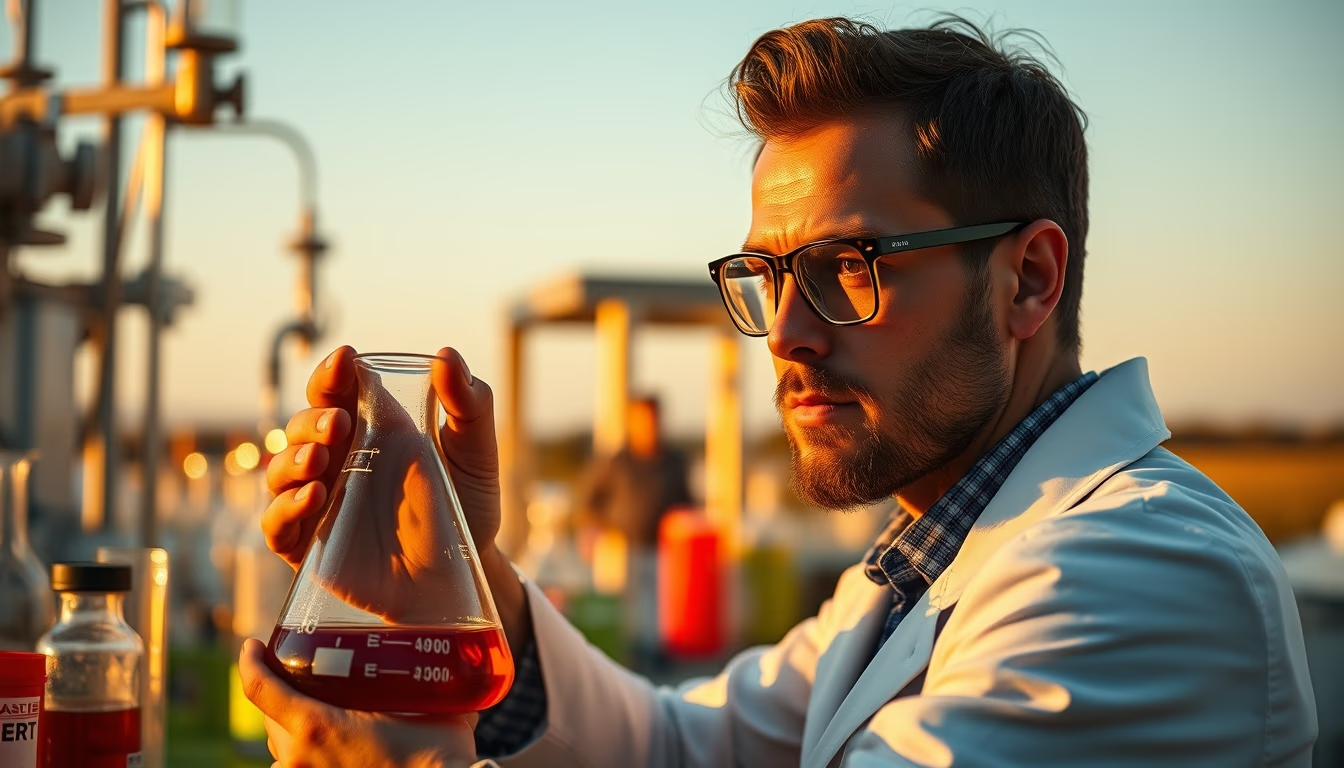
Glass beaker containing colorful liquids in a chemical laboratory, representing scientific experiments and reactions.
About this subject
The beaker is one of the most basic and versatile utensils in chemistry, biology, and pharmacy laboratories. Usually made of borosilicate glass (like Pyrex), it withstands thermal variations and chemical attacks, making it ideal for heating, mixing, and measuring approximate volumes. The colored liquids in the image may represent solutions with acid-base indicators (such as phenolphthalein, which turns pink in basic medium), transition metal salts (blue copper sulfate, pink cobalt chloride), or food dyes used in educational demonstrations.
In Brazil, teaching and research laboratories use beakers extensively. Universities like USP, Unicamp, and UFRJ have chemistry labs where these containers are routine. The coloration of solutions is not merely aesthetic: each color can indicate properties such as pH, concentration, or the presence of specific ions. For example, potassium permanganate solutions are violet, while potassium dichromate is orange.
Laboratory safety requires care when handling beakers with chemicals. Safety goggles, lab coat, and gloves are essential. Additionally, heating should be done with a wire gauze or heating mantle to avoid thermal shock. The beaker is also used in titrations, where the color change of the indicator marks the reaction endpoint.
Curiosity: the shape of the beaker (cylindrical with a spout) was standardized in the 19th century by German chemist Friedrich August Kekulé. Its graduated scale is approximate and should not be used for precise measurements, for that, a graduated cylinder or pipette is used. The beaker's versatility makes it indispensable in any laboratory, from schools to pharmaceutical industries.
Frequently Asked Questions
What is the difference between a beaker and an Erlenmeyer flask?
A beaker has a cylindrical shape with a spout and is used for mixing and heating liquids, while an Erlenmeyer flask has a conical shape, ideal for titrations and swirling without splashing.
Why are the liquids in the beaker colored?
The colors may come from acid-base indicators (like phenolphthalein), transition metal salts (blue copper, pink cobalt), or dyes for educational demonstrations, helping to visualize reactions.
Can a beaker be heated directly on a Bunsen burner?
Yes, if it is made of borosilicate glass and with a wire gauze to distribute heat. Common glass beakers may crack due to thermal shock.
Direct URL
https://pub-c7d6a6ea828543ac903a74a341ccb2e1.r2.dev/imagens/beaker-with-colored-chemicals-cinematic-wide-shot-v2.avifHow to credit
Include a visible link back to UtilizAí. Copy one of the snippets below:
<a href="https://xn--utiliza-eza.com/en/midia/imagens/beaker-with-colored-chemicals-cinematic-wide-shot-v2">Beaker with colored chemicals</a> by <a href="https://xn--utiliza-eza.com">UtilizAí</a>, licensed under <a href="https://creativecommons.org/licenses/by/4.0/">CC BY 4.0</a>.
[Beaker with colored chemicals](https://xn--utiliza-eza.com/en/midia/imagens/beaker-with-colored-chemicals-cinematic-wide-shot-v2) by [UtilizAí](https://xn--utiliza-eza.com), CC BY 4.0
License: CC-BY-4.0