Bayon temple faces
1344×768 · AVIF · CC BY 4.0
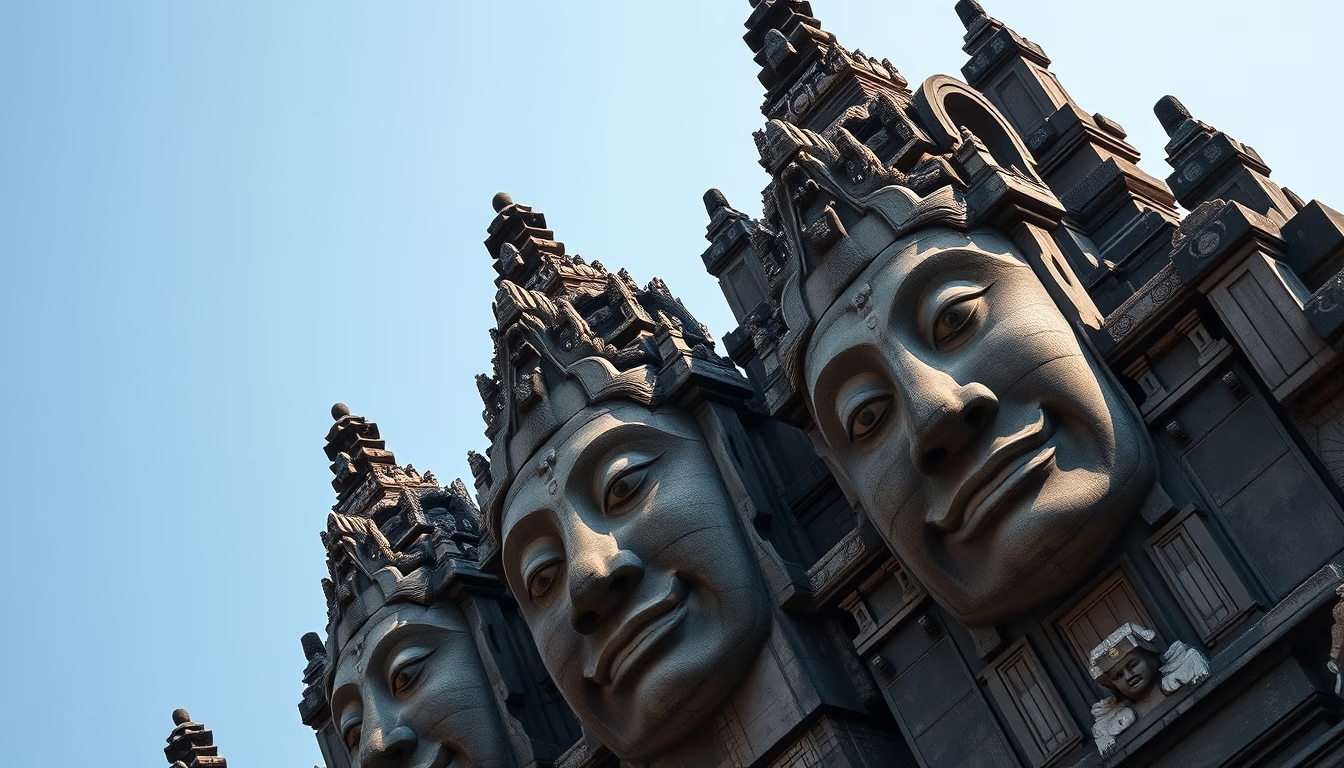
The giant carved faces at the Bayon temple in Angkor, Cambodia, are one of the greatest architectural enigmas of Southeast Asia.
About this subject
The Bayon temple, located at the center of the Angkor Thom complex in Cambodia, is renowned for its countless stone faces adorning its towers. Built in the late 12th century by King Jayavarman VII, Bayon was the last great state temple of the Khmer Empire and represents the pinnacle of Mahayana Buddhist architecture in the country. It is estimated that the temple has over 200 faces, each about 2 meters tall, carved from sandstone and arranged across 54 towers. The identity of the faces is debated: many believe they represent the bodhisattva Avalokiteshvara, a compassionate deity, while others suggest they are portraits of King Jayavarman VII himself, who considered himself a divine incarnation.
The Bayon's location was strategic: it was the religious and administrative center of Angkor Thom, a fortified city covering 9 km². The temple is famous for its elaborate bas-reliefs depicting daily life, battles, and processions, offering a rare record of life in the Khmer Empire. The faces are oriented to the four cardinal points, forming a geometric mandala that symbolizes the connection between heaven and earth. The state of conservation is fragile due to erosion and moss growth, but Bayon is one of the most visited archaeological sites in Cambodia, attracting millions of tourists annually.
Interestingly, the Bayon faces have a serene and enigmatic expression, with lips slightly curved into a smile that some interpret as benevolent and others as ironic. This ambiguity is characteristic of Khmer art, blending Hindu and Buddhist influences. The temple was declared a UNESCO World Heritage site in 1992, along with the entire Angkor complex, and is subject to ongoing restoration efforts led by international teams. For visitors, Bayon offers a unique experience: walking among the towers and feeling the gaze of the faces from every angle, as if they were silent guardians.
Frequently Asked Questions
How many faces are there at the Bayon temple?
The Bayon temple has over 200 carved faces, distributed across 54 towers. Each face is about 2 meters tall.
Who built the Bayon temple and what was its purpose?
It was built by King Jayavarman VII in the late 12th century as a Mahayana Buddhist state temple and administrative center of Angkor Thom.
What do the Bayon faces represent?
They are believed to represent the bodhisattva Avalokiteshvara or King Jayavarman VII himself, but the true identity remains a mystery.
Direct URL
https://pub-c7d6a6ea828543ac903a74a341ccb2e1.r2.dev/imagens/bayon-temple-faces-isometric-flat-lay-p8.avifHow to credit
Include a visible link back to UtilizAí. Copy one of the snippets below:
<a href="https://xn--utiliza-eza.com/en/midia/imagens/bayon-temple-faces-isometric-flat-lay-p8">Bayon temple faces</a> by <a href="https://xn--utiliza-eza.com">UtilizAí</a>, licensed under <a href="https://creativecommons.org/licenses/by/4.0/">CC BY 4.0</a>.
[Bayon temple faces](https://xn--utiliza-eza.com/en/midia/imagens/bayon-temple-faces-isometric-flat-lay-p8) by [UtilizAí](https://xn--utiliza-eza.com), CC BY 4.0
License: CC-BY-4.0