Bassoon double reed
1344×768 · AVIF · CC BY 4.0
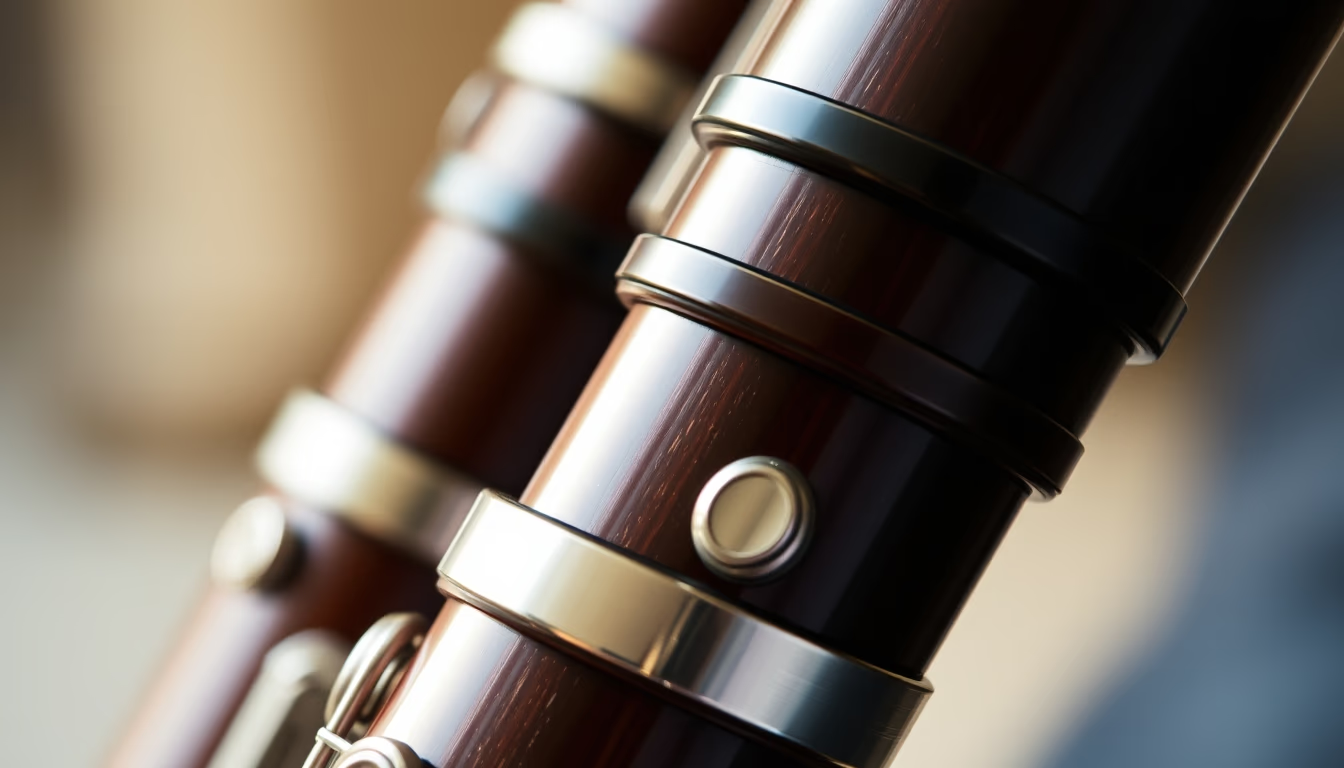
The bassoon double reed is made of two blades of cane (Arundo donax) that vibrate against each other to produce the instrument's characteristic sound.
About this subject
The bassoon double reed is the heart of the instrument, responsible for producing sound through the vibration of two thin blades of Arundo donax cane. Unlike single reeds used on clarinets or saxophones, the double reed has no fixed mouthpiece: the bassoonist wraps their lips directly around the two blades, controlling pressure and embouchure to extract deep low notes and penetrating high notes.
The handcrafting process is meticulous and takes hours. The cane is first cut into tubes, then processed by gouging (thinning the thickness) and shaping (giving the form). The artisan then binds the two halves with nylon thread onto a metal tube called a staple, which fits into the bassoon's bocal. The final stage is scraping: removing microscopic layers of plant fiber from the tip and sides to balance resistance and response.
Each reed has its own personality. Factors such as cane density, blade curvature, and edge thickness directly influence tuning, timbre, and ease of articulation. For this reason, most professional bassoonists make their own reeds or maintain several adjusted for different repertoires (orchestral, chamber, or solo). Relative humidity and ambient temperature also alter the cane's behavior, requiring constant adjustments before each performance.
Historically, the modern bassoon descends from the Renaissance dulcian and the Spanish bajón, both double-reed instruments. Reed construction evolved empirically for centuries, and only in the 20th century did acoustic studies explain the complex interaction between the musician's breath and the cane's vibration. Even today, the double reed is considered the most fragile and unpredictable link in the bassoon's sound chain, demanding patience and craftsmanship from those who master it.
Frequently Asked Questions
Why does a bassoonist need to constantly adjust the reed?
Because the cane's vibration is extremely sensitive to changes in humidity, temperature, and even the musician's own saliva. A reed that sounds fine one day may become too resistant or too soft the next, requiring minor scraping or cutting to restore balance.
What material is the bassoon double reed made of?
It is made of two blades of Arundo donax cane, a grass cultivated mainly in the Mediterranean region (France, Italy, Spain). The cane is selected for density and straightness of fibers, and different parts of the tube produce different sound qualities.
What is the difference between a bassoon reed and an oboe reed?
The bassoon reed is much larger and wider than the oboe reed, with thicker blades. It is mounted on a metal tube (staple) and fits entirely inside the player's mouth, while the oboe reed has a small cork base that remains partially outside.
Direct URL
https://pub-c7d6a6ea828543ac903a74a341ccb2e1.r2.dev/imagens/bassoon-double-reed-macro-closeup-p9.avifHow to credit
Include a visible link back to UtilizAí. Copy one of the snippets below:
<a href="https://xn--utiliza-eza.com/en/midia/imagens/bassoon-double-reed-macro-closeup-p9">Bassoon double reed</a> by <a href="https://xn--utiliza-eza.com">UtilizAí</a>, licensed under <a href="https://creativecommons.org/licenses/by/4.0/">CC BY 4.0</a>.
[Bassoon double reed](https://xn--utiliza-eza.com/en/midia/imagens/bassoon-double-reed-macro-closeup-p9) by [UtilizAí](https://xn--utiliza-eza.com), CC BY 4.0
License: CC-BY-4.0