Bacterial colony petri dish
1344×768 · AVIF · CC BY 4.0
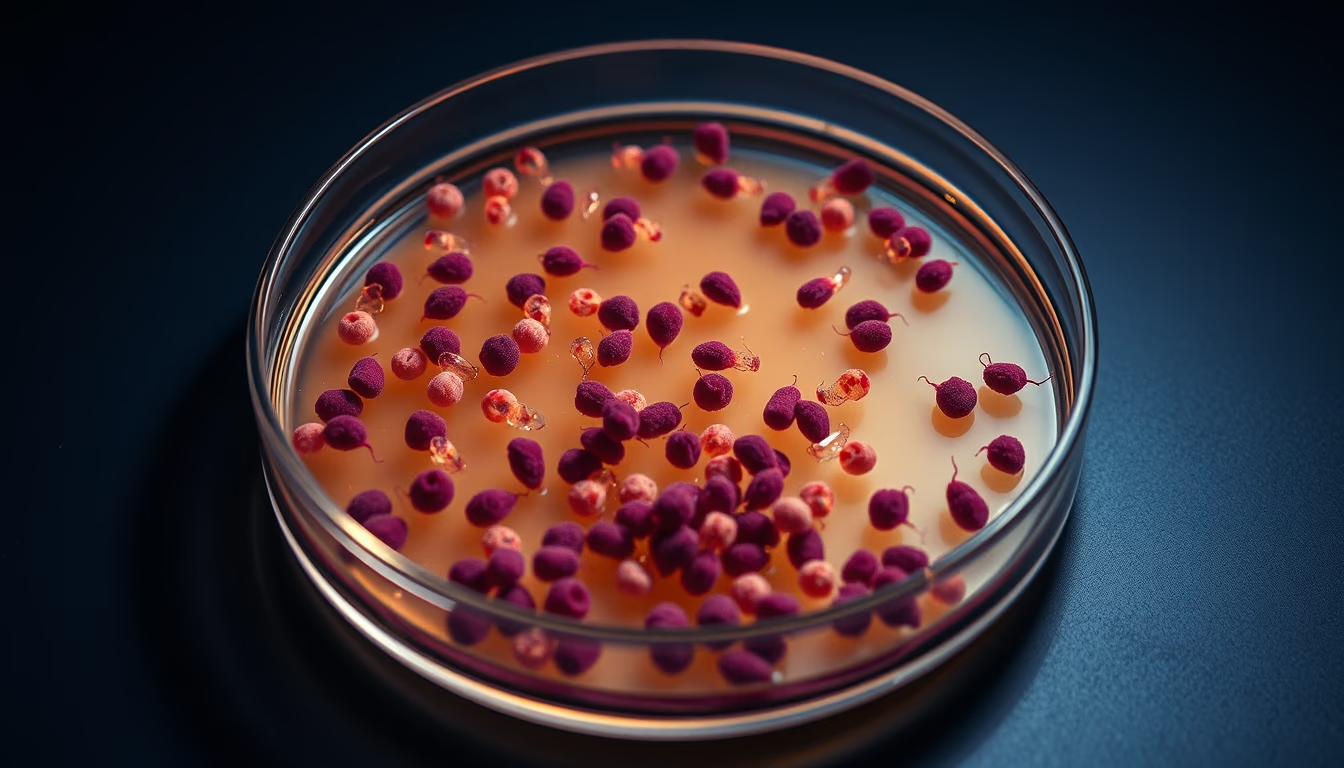
Bacterial colonies cultured in petri dishes are essential tools for microbiological research, diagnosis, and education.
About this subject
A bacterial colony is a visible cluster of microorganisms arising from a single cell that multiplies on a solid medium. The Petri dish, invented by German bacteriologist Julius Richard Petri in 1887 while working with Robert Koch, revolutionized microbiology by allowing isolation and culture of bacteria under controlled conditions. Each colony represents a genetic clone, facilitating analysis of characteristics such as size, shape, margin, elevation, color, and texture, traits collectively known as colonial morphology.
Preliminary identification of pathogenic bacteria in hospitals often depends on this observation. For instance, colonies of Staphylococcus aureus are typically golden and smooth, while Escherichia coli appears pink on MacConkey agar due to lactose fermentation. Beyond clinical diagnosis, plate culture is crucial for antibiotic susceptibility testing (antibiograms), quality control in the food industry, and biotechnological research.
Interestingly, some bacteria produce natural pigments or antimicrobial substances visible in the colonies. The very discovery of penicillin by Alexander Fleming in 1928 occurred when he noticed a zone of inhibition around a contaminating mold on a Petri dish. In Brazil, microbiology laboratories use these techniques to monitor disease outbreaks and ensure the safety of products such as water and food, following standards set by Anvisa.
Fine art photography of bacterial colonies has gained prominence recently, combining science and aesthetics. High-contrast images and special lighting reveal the hidden beauty of these microorganisms, turning laboratory data into striking visual compositions. This approach helps popularize microbiology and demonstrates that art can emerge from the most unexpected settings.
Frequently Asked Questions
What is a bacterial colony?
A bacterial colony is a visible cluster of bacteria that originates from a single mother cell, growing on a solid medium such as a Petri dish. Each colony contains thousands or millions of genetically identical cells.
How do bacterial colonies help identify species?
Colonial morphology, size, shape, color, texture, margin, and elevation, provides initial clues for bacterial identification. Combined with staining and biochemical tests, it enables precise classification of microorganisms.
Why is cultivation in Petri dishes important?
Cultivation in Petri dishes is essential for isolating microorganisms, performing clinical diagnoses, testing antibiotic susceptibility, controlling quality of food and medicines, and advancing research in microbiology and biotechnology.
Direct URL
https://pub-c7d6a6ea828543ac903a74a341ccb2e1.r2.dev/imagens/bacterial-colony-petri-dish-fine-art-photography-p7.avifHow to credit
Include a visible link back to UtilizAí. Copy one of the snippets below:
<a href="https://xn--utiliza-eza.com/en/midia/imagens/bacterial-colony-petri-dish-fine-art-photography-p7">Bacterial colony petri dish</a> by <a href="https://xn--utiliza-eza.com">UtilizAí</a>, licensed under <a href="https://creativecommons.org/licenses/by/4.0/">CC BY 4.0</a>.
[Bacterial colony petri dish](https://xn--utiliza-eza.com/en/midia/imagens/bacterial-colony-petri-dish-fine-art-photography-p7) by [UtilizAí](https://xn--utiliza-eza.com), CC BY 4.0
License: CC-BY-4.0