Autumn leaves falling
1344×768 · AVIF · CC BY 4.0
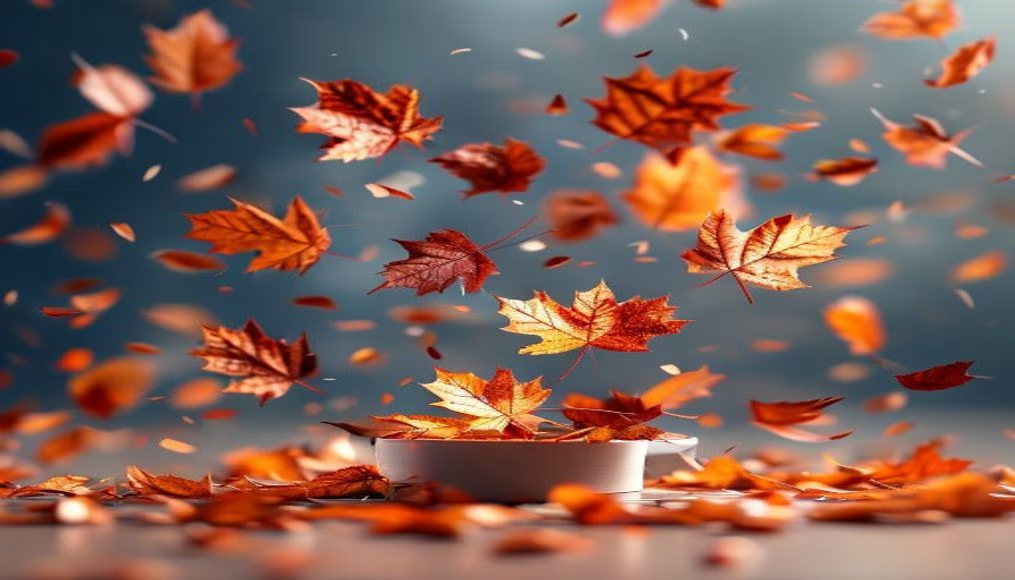
Autumn leaves falling: a natural phenomenon that transforms landscapes, driven by plant chemistry and seasonal light changes.
About this subject
The falling of autumn leaves is one of nature's most iconic spectacles, especially in temperate climate zones. This process, known as leaf abscission, occurs when deciduous trees reduce chlorophyll production, revealing pigments such as carotenoids (yellow and orange) and anthocyanins (red and purple). Color intensity depends on factors like temperature, sunlight, and soil moisture. For example, a dry, sunny autumn tends to produce more vivid hues, while early frosts can darken leaves.
In the Northern Hemisphere, peak leaf fall occurs between September and November, with highlights in regions like New England (USA), eastern Canada, parts of Europe (especially Germany, France, and the Czech Republic), and East Asia (Japan and Korea). In the Southern Hemisphere, the phenomenon happens from March to May, in countries such as Argentina, Chile, and southern Brazil (states like Rio Grande do Sul and Santa Catarina). Species like sycamore, maple, oak, and ginkgo biloba are stars of the show.
Culturally, leaf fall inspires haikus, paintings, and festivals. In Japan, momijigari (red leaf hunting) is a tradition dating back to the Heian period. In the United States, “leaf peeping” drives rural tourism. Ecologically, fallen leaves play a crucial role: as they decompose, they recycle nutrients like nitrogen and phosphorus, enriching the soil for the next growing season.
Interestingly, some trees retain dead leaves through winter to protect buds (a phenomenon called marcescence), such as oaks and young beeches. In contrast, evergreens (conifers and many tropicals) shed leaves gradually year-round. The duration of the autumn show can be affected by climate change: warmer autumns delay leaf fall, while prolonged droughts can trigger early shedding, reducing color intensity.
Frequently Asked Questions
Why do leaves change color in autumn?
The color change happens because chlorophyll (green pigment) breaks down due to reduced light, unmasking other pigments like carotenoids (yellow, orange) and anthocyanins (red, purple) that were present all along.
Which trees have the most colorful autumn leaves?
Species such as sugar maple (Acer saccharum), red oak (Quercus rubra), sweetgum (Liquidambar styraciflua), and ginkgo biloba are renowned for their vibrant fall colors.
Does autumn in Brazil have falling leaves?
Yes, especially in the southern region and high-altitude areas of the Southeast, where species like the London plane (Platanus × acerifolia) and cherry blossom (Prunus serrulata) shed leaves between March and May.
Direct URL
https://pub-c7d6a6ea828543ac903a74a341ccb2e1.r2.dev/imagens/autumn-leaves-falling-commercial-product-photography-v9.avifHow to credit
Include a visible link back to UtilizAí. Copy one of the snippets below:
<a href="https://xn--utiliza-eza.com/en/midia/imagens/autumn-leaves-falling-commercial-product-photography-v9">Autumn leaves falling</a> by <a href="https://xn--utiliza-eza.com">UtilizAí</a>, licensed under <a href="https://creativecommons.org/licenses/by/4.0/">CC BY 4.0</a>.
[Autumn leaves falling](https://xn--utiliza-eza.com/en/midia/imagens/autumn-leaves-falling-commercial-product-photography-v9) by [UtilizAí](https://xn--utiliza-eza.com), CC BY 4.0
License: CC-BY-4.0