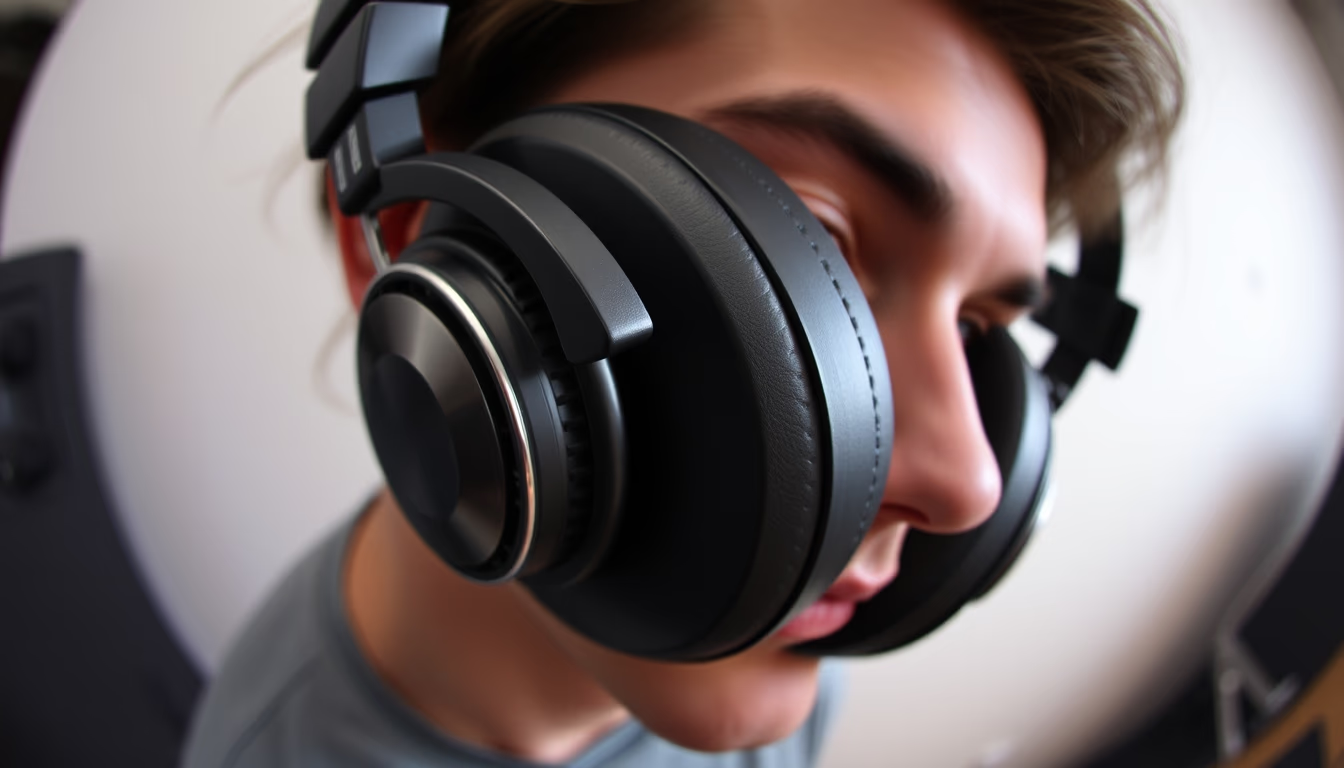
Audiophile headphones planar
1344×768 · AVIF · CC BY 4.0

Planar magnetic headphones deliver high-fidelity sound for audiophiles, featuring ultra-low distortion and superior transient response.
About this subject
Planar magnetic headphones, also known as orthodynamic or isodynamic drivers, use a technology distinct from conventional moving-coil dynamic drivers. Instead of a cone, they employ a thin, flat diaphragm with conductive traces suspended between powerful magnets. This arrangement allows the electromagnetic force to act uniformly over the entire diaphragm surface, resulting in near-perfect piston-like motion, extremely low harmonic distortion, and very fast transient response.
These headphones are popular among audiophiles and audio professionals for their ability to reproduce subtle details and maintain clarity even in complex musical passages. Iconic models like the Audeze LCD-4 and Hifiman Susvara exemplify top-tier planar engineering, with prices often exceeding $6,000. More affordable options such as the Hifiman Sundara and Monolith M1060 have made the technology accessible to a wider audience.
A major advantage of planars is their exceptional bass performance. The large diaphragm area moves enough air to produce deep, controlled bass without the compression typical of dynamic drivers. Additionally, the generally flat impedance across the frequency range simplifies matching with amplifiers, though the low sensitivity often requires dedicated high-power amps.
Build quality is typically robust and heavy, with metal frames and generous padding, ensuring comfort during long listening sessions. Despite the weight, many users find the immersive sound worth it. The technology also appears in studio headphones like the Audeze LCD-X, widely used in mastering.
Frequently Asked Questions
What are planar magnetic headphones?
Planar magnetic headphones use a thin, flat diaphragm with conductive traces suspended between magnets. Sound is produced by uniform electromagnetic interaction, reducing distortion and improving transient response.
How do planars compare to dynamic headphones?
Planars have lower distortion and faster transient response than dynamics. They offer more precise bass and superior detail retrieval, but are generally heavier and less sensitive, requiring powerful amplifiers.
Are planar headphones worth the high price?
For audiophiles seeking maximum fidelity and detail, yes. Entry-level models like Hifiman Sundara offer good value. The investment is often justified by sound quality, durability, and listening experience.
Direct URL
https://pub-c7d6a6ea828543ac903a74a341ccb2e1.r2.dev/imagens/audiophile-headphones-planar-film-grain-authentic-fresh13.avifHow to credit
Include a visible link back to UtilizAí. Copy one of the snippets below:
<a href="https://xn--utiliza-eza.com/en/midia/imagens/audiophile-headphones-planar-film-grain-authentic-fresh13">Audiophile headphones planar</a> by <a href="https://xn--utiliza-eza.com">UtilizAí</a>, licensed under <a href="https://creativecommons.org/licenses/by/4.0/">CC BY 4.0</a>.
[Audiophile headphones planar](https://xn--utiliza-eza.com/en/midia/imagens/audiophile-headphones-planar-film-grain-authentic-fresh13) by [UtilizAí](https://xn--utiliza-eza.com), CC BY 4.0
License: CC-BY-4.0