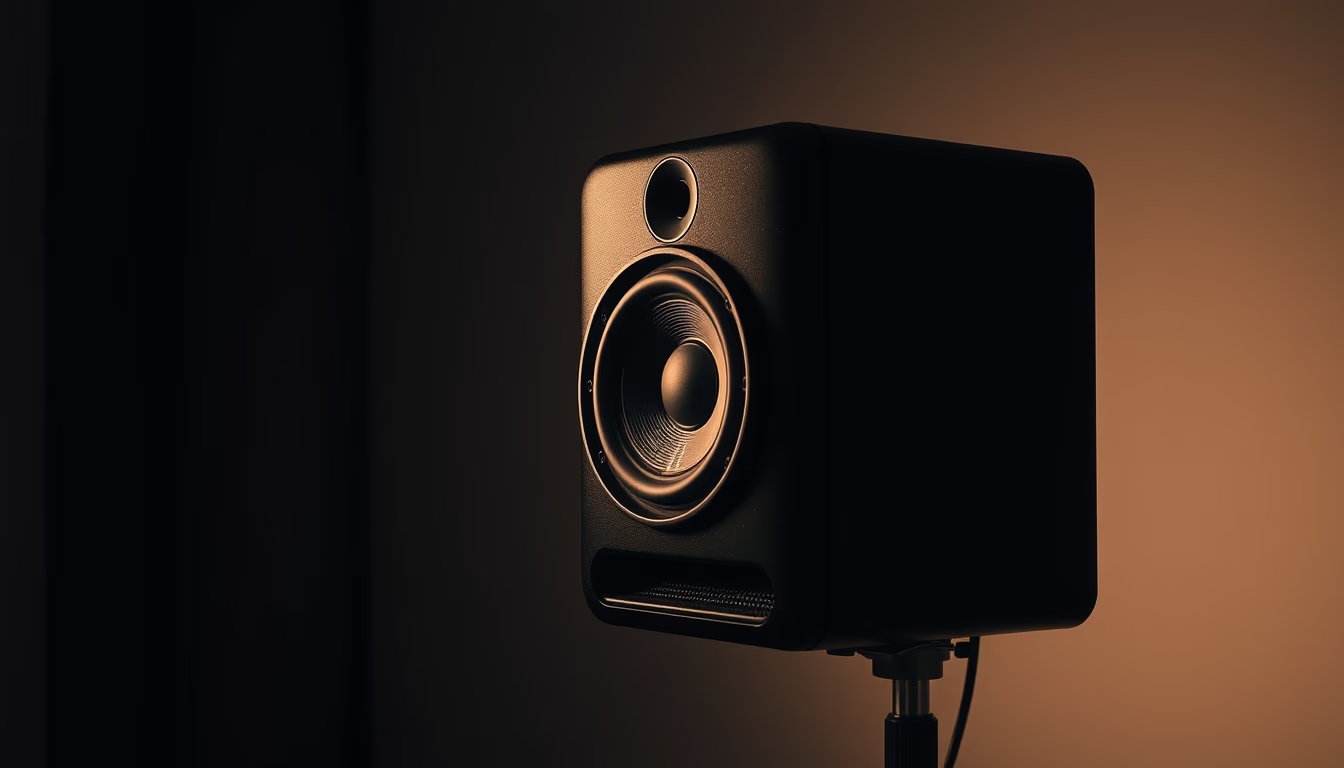
Audiophile headphones planar
1344×768 · AVIF · CC BY 4.0

Planar magnetic headphones: technology offering low distortion, fast response, and detailed sound, essential for audiophiles.
About this subject
Planar magnetic headphones operate on a different principle than traditional dynamic drivers. Instead of a moving coil, they feature a thin diaphragm with conductive traces suspended between two magnetic fields. When an electrical current passes through, the diaphragm moves uniformly, producing sound with extreme precision. This technology was first commercialized by Yamaha in 1975 with the HP-1 model, but gained prominence in recent decades with brands like Audeze, Hifiman, and Fostex.
The main advantage of planar headphones is low harmonic distortion, especially at high volumes. Since force is evenly distributed across the diaphragm surface, transient response is very fast, capturing subtle details in recordings. This makes them ideal for critical listening, mastering, and complex music genres like classical and jazz.
However, they tend to be heavier and bulkier than dynamic headphones, often requiring dedicated amplifiers to reach full potential. Impedance varies by model, but many have low sensitivity, needing significant current. The robust build and natural sound make them centerpieces in high-fidelity audiophile setups.
Interestingly, planar magnetic technology is also used in high-quality tweeters and loudspeakers, but its headphone application has become an enthusiast niche. Brands like Dan Clark Audio and Kennerton refine designs with ergonomic pads and optimized drivers, while Chinese manufacturers offer affordable options, popularizing planar sound.
Frequently Asked Questions
What are planar magnetic headphones?
They are headphones that use a thin diaphragm with conductive traces between magnets, moving in a planar motion to produce sound, resulting in low distortion and fast response.
How do planar headphones differ from dynamic ones?
Dynamic headphones use a coil attached to a cone, while planars have force evenly distributed on the diaphragm, offering lower distortion and greater detail.
Why do audiophiles prefer planar magnetic headphones?
For their sonic accuracy, fast transients, and ability to reveal nuances in recordings, ideal for critical listening and professional mastering.
Direct URL
https://pub-c7d6a6ea828543ac903a74a341ccb2e1.r2.dev/imagens/audiophile-headphones-planar-aerial-drone-shot-fresh4.avifHow to credit
Include a visible link back to UtilizAí. Copy one of the snippets below:
<a href="https://xn--utiliza-eza.com/en/midia/imagens/audiophile-headphones-planar-aerial-drone-shot-fresh4">Audiophile headphones planar</a> by <a href="https://xn--utiliza-eza.com">UtilizAí</a>, licensed under <a href="https://creativecommons.org/licenses/by/4.0/">CC BY 4.0</a>.
[Audiophile headphones planar](https://xn--utiliza-eza.com/en/midia/imagens/audiophile-headphones-planar-aerial-drone-shot-fresh4) by [UtilizAí](https://xn--utiliza-eza.com), CC BY 4.0
License: CC-BY-4.0