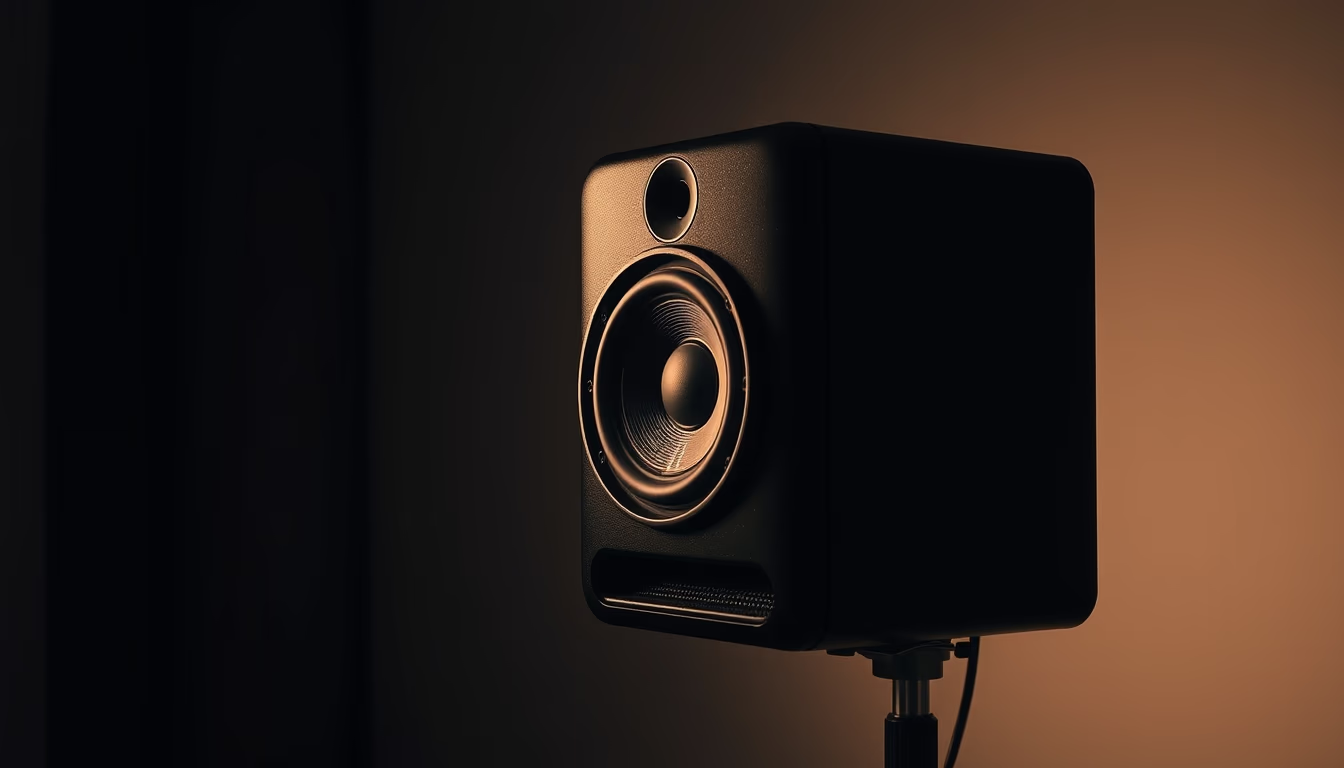
Audio interface knobs
1344×768 · AVIF · CC BY 4.0

Audio interface knobs blend technical functionality and design, essential for precise control in mixing and music production.
About this subject
Audio interface knobs are rotary components that allow precise adjustment of parameters such as volume, gain, equalization, and panning. They convert physical rotation into electrical signals, typically through potentiometers or rotary encoders. In professional studios, knob quality directly affects operator experience: metal knobs with smooth resistance enable fine adjustments, while plastic versions are common in budget equipment.
There are two main types: analog potentiometers with limited rotation (270° or 300°) and digital rotary encoders allowing continuous rotation. The latter are typical in MIDI controllers and modern interfaces, where the value is transmitted digitally. The choice depends on the application: gain faders often use fixed-range potentiometers, while effects parameters benefit from continuous encoders.
In the high fashion editorial context, knob design has become a stylistic differentiator. Brands like API, Neve, and SSL are known for custom knobs that evoke luxury and tradition. Anodized, knurled, or backlit knobs not only improve readability in dark studios but also give equipment a distinct visual identity. This trend reflects a convergence of technical functionality and artistic expression, valuing touch and appearance as much as sound.
Interestingly, knob ergonomics follow historical standards: the 19 mm rack spacing and 15 mm height are legacies from 1950s radio panels. Tactile feel can be measured in gram-force, with common values between 20 and 50 gf. For cleaning, compressed air and isopropyl alcohol are recommended, avoiding lubricants that alter resistance.
Frequently Asked Questions
What is the difference between continuous and detented knobs?
Continuous knobs rotate infinitely without stops, common in MIDI controllers and digital parameters like pan or effects. Detented knobs have fixed positions with clicks, ideal for discrete values such as graphic EQ or channel selection.
How to clean audio interface knobs?
Use compressed air to remove surface dust. For stubborn dirt, apply isopropyl alcohol with a cotton swab at the knob base, rotating to distribute. Avoid excess liquid and never use lubricants or WD-40, as they can damage electrical contacts.
Why are some knobs metal and others plastic?
Metal knobs offer greater durability, a premium feel, and better heat dissipation, common in high-end gear. Plastic is lighter, cheaper, and can be molded into complex shapes, prevailing in entry-level interfaces and consumer controllers.
Direct URL
https://pub-c7d6a6ea828543ac903a74a341ccb2e1.r2.dev/imagens/audio-interface-knobs-high-fashion-editorial-fresh5.avifHow to credit
Include a visible link back to UtilizAí. Copy one of the snippets below:
<a href="https://xn--utiliza-eza.com/en/midia/imagens/audio-interface-knobs-high-fashion-editorial-fresh5">Audio interface knobs</a> by <a href="https://xn--utiliza-eza.com">UtilizAí</a>, licensed under <a href="https://creativecommons.org/licenses/by/4.0/">CC BY 4.0</a>.
[Audio interface knobs](https://xn--utiliza-eza.com/en/midia/imagens/audio-interface-knobs-high-fashion-editorial-fresh5) by [UtilizAí](https://xn--utiliza-eza.com), CC BY 4.0
License: CC-BY-4.0