Art deco diamond earrings geometric
1344×768 · AVIF · CC BY 4.0
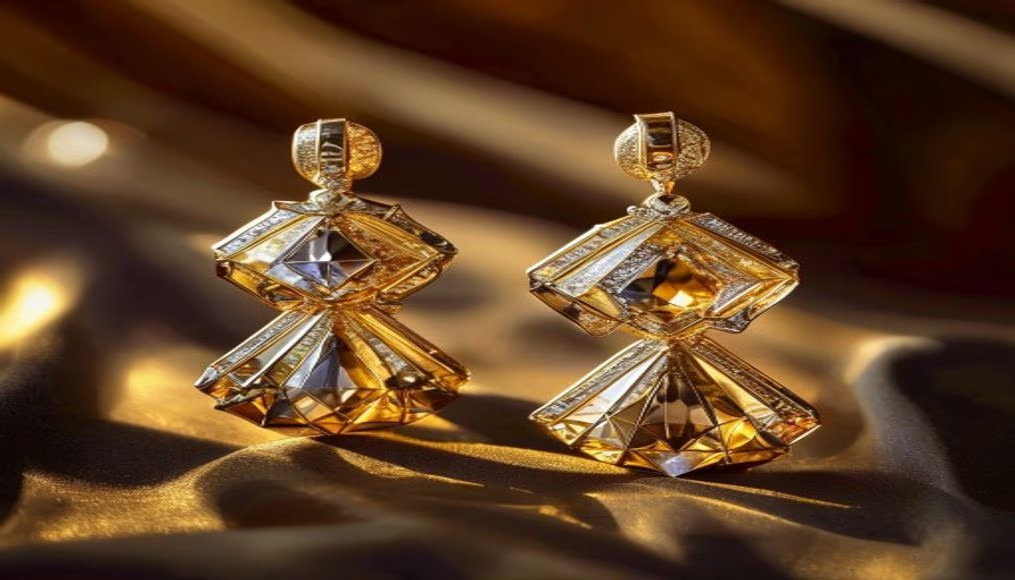
Art deco geometric diamond earrings: iconic 1920s-30s design combining precise geometric forms with faceted diamonds.
About this subject
Art deco diamond earrings represent one of the most distinctive chapters in modern jewelry. Emerging after the 1925 International Exhibition of Modern Decorative and Industrial Arts in Paris, these adornments broke away from the flowing curves of Art Nouveau and embraced symmetry, right angles, and stepped forms. The Art Deco movement influenced architecture, fashion, and jewelry design, with geometric diamond earrings becoming one of its most coveted expressions.
The geometric aesthetic of these earrings often employs shapes like trapezoids, rectangles, lozenges, and concentric circles, creating visual patterns reminiscent of New York skyscrapers and the speed of the Jazz Age. Diamonds are cut in forms such as baguette (rectangular) and emerald (square), which accentuate straight lines and controlled brilliance. The contrast between white diamonds and metals like platinum or white gold is typical, with platinum dominating due to its strength and ability to enhance sparkle.
Historically, these earrings were worn by high-society women at evening events, symbolizing modernity and sophistication. Geometric design also reflected influences from archaeological discoveries in Ancient Egypt and African art, which prized abstract and repetitive forms. Today, original Art Deco pieces are collector's items at auctions, while contemporary jewelers reinterpret the style using modern techniques, preserving the essence of the golden years.
Interestingly, the term "Art Deco" derives from "Arts Décoratifs" and was coined only in the 1960s, decades after the movement's peak. Geometric diamond earrings continue to inspire designers and fascinate fine jewelry connoisseurs, proving that 1920s geometry remains timeless.
Frequently Asked Questions
Which diamond cuts are typical of geometric Art Deco earrings?
Baguette (rectangular) and emerald (square) cuts are most common, as they emphasize straight lines and geometric aesthetics. Round brilliant and trapezoid cuts are also used.
Why was platinum preferred in Art Deco jewelry?
Platinum was valued for its strength, malleability, and white color that does not yellow over time, enhancing the diamonds' brilliance without altering their hue.
How to identify an original Art Deco earring?
Look for strict symmetry, invisible settings (which hide prongs), and baguette cuts. Hallmarks and certificates of authenticity are essential to guarantee provenance.
Direct URL
https://pub-c7d6a6ea828543ac903a74a341ccb2e1.r2.dev/imagens/art-deco-diamond-earrings-geometric-studio-lighting-golden-hour-glow-luxo0.avifHow to credit
Include a visible link back to UtilizAí. Copy one of the snippets below:
<a href="https://xn--utiliza-eza.com/en/midia/imagens/art-deco-diamond-earrings-geometric-studio-lighting-golden-hour-glow-luxo0">Art deco diamond earrings geometric</a> by <a href="https://xn--utiliza-eza.com">UtilizAí</a>, licensed under <a href="https://creativecommons.org/licenses/by/4.0/">CC BY 4.0</a>.
[Art deco diamond earrings geometric](https://xn--utiliza-eza.com/en/midia/imagens/art-deco-diamond-earrings-geometric-studio-lighting-golden-hour-glow-luxo0) by [UtilizAí](https://xn--utiliza-eza.com), CC BY 4.0
License: CC-BY-4.0