Archaea extremophile
1344×768 · AVIF · CC BY 4.0

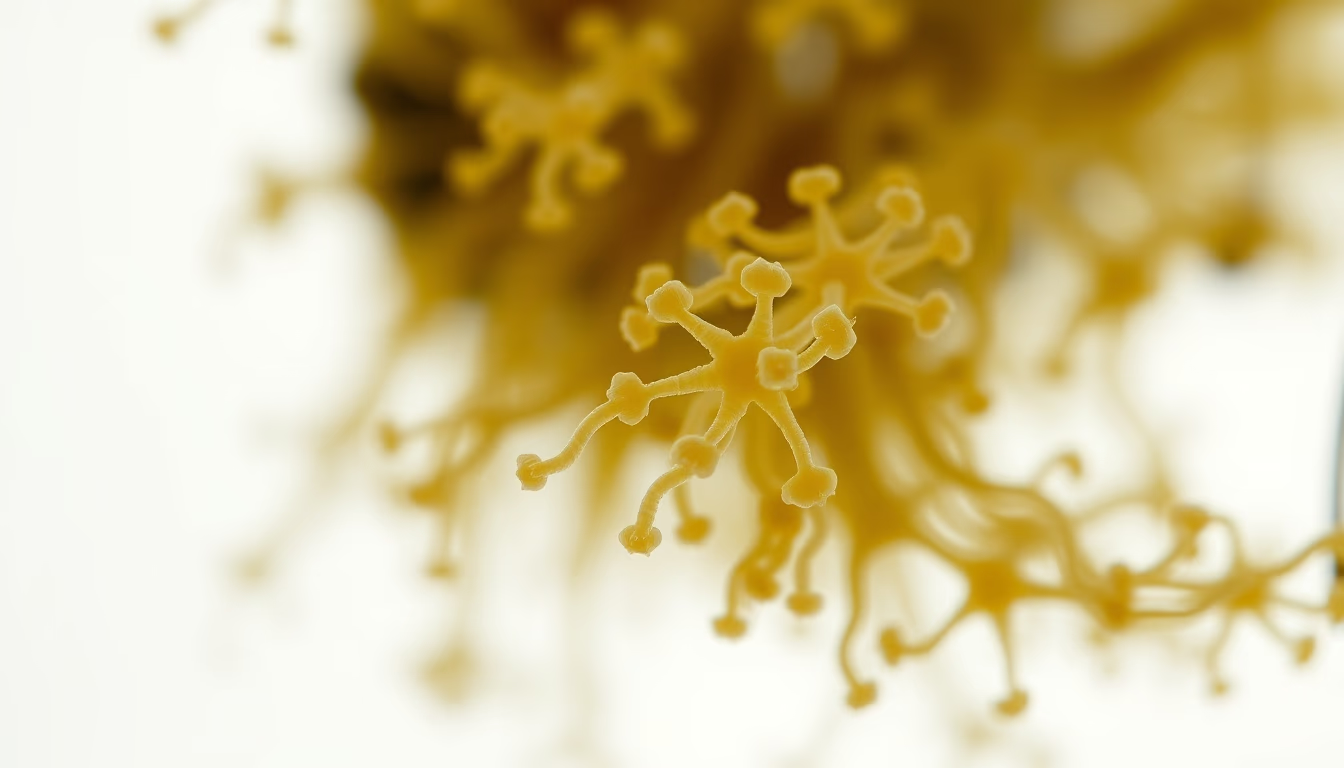
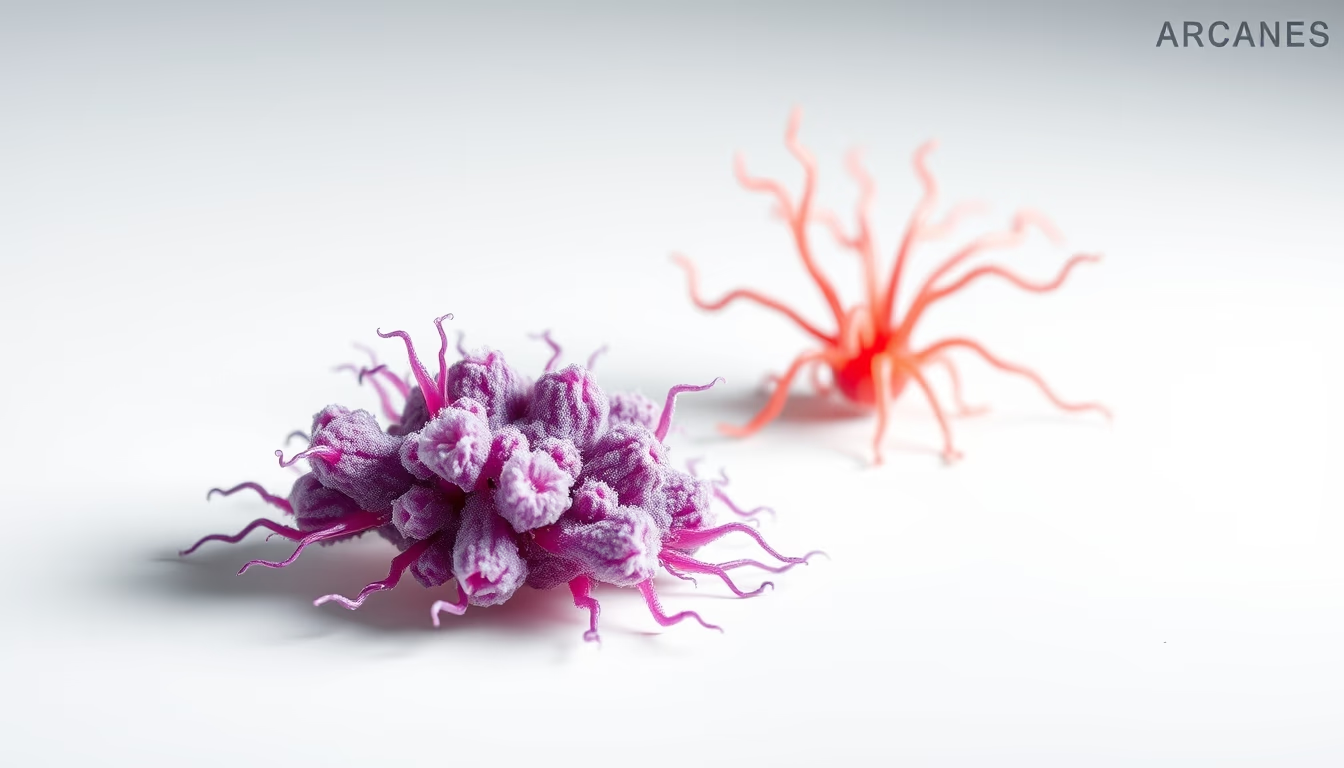
Extremophilic archaea are microorganisms that thrive in extreme conditions such as hot springs, hypersaline lakes, and deep-sea hydrothermal vents, revealing the limits of life on Earth.
About this subject
Archaea constitute one of the three domains of life, alongside Bacteria and Eukaryotes. Many archaea species are extremophiles, adapted to environments lethal to most organisms. They thrive in hot springs above 100°C, such as those in Yellowstone National Park, and in hypersaline lakes like the Dead Sea, where salinity reaches 34%. They also inhabit deep-sea hydrothermal vents under crushing pressures and complete darkness.
Their survival in such harsh conditions relies on unique molecular adaptations. Archaeal cell membranes contain ether-linked lipids, providing stability at high temperatures and extreme pH. Their enzymes, called extremozymes, remain active in environments that would denature common proteins. These traits are of great biotechnological interest: archaeal enzymes are used in detergents, biofuel production, and the food industry.
Ecologically, archaea play crucial roles. Methanogens produce methane in swamps and ruminant guts, contributing to the global carbon cycle. Other archaea oxidize ammonia in soils and oceans, influencing the nitrogen cycle. Genomic studies reveal these organisms are far more diverse and abundant than once thought, inhabiting nearly every Earth ecosystem.
The study of extremophilic archaea also has astrobiological implications. Their presence in environments analogous to Mars or icy moons like Europa suggests life could exist beyond Earth. Scientists investigate these microbes to understand the limits of the biosphere and search for signs of life on other planets. Thus, archaea are not just biological curiosities but keys to unraveling life's history and its cosmic potential.
Frequently Asked Questions
What are extremophilic archaea?
They are microorganisms from the domain Archaea that thrive in extreme conditions such as high temperatures, high salinity, acidic or alkaline pH, and intense pressure. Examples include thermophiles in hot springs and halophiles in salt lakes.
Why are archaea important for biotechnology?
Their enzymes (extremozymes) are stable under harsh conditions, used in industrial processes like biofuel production, detergents, and food processing. They also have potential in bioremediation and chemical synthesis.
What is the connection between archaea and astrobiology?
Extremophilic archaea serve as models for life on other planets, as they inhabit environments similar to those on Mars or Jupiter and Saturn's moons. Studying them helps define life's limits and search for biosignatures in space.
Direct URL
https://pub-c7d6a6ea828543ac903a74a341ccb2e1.r2.dev/imagens/archaea-extremophile-aerial-drone-shot-fresh12.avifHow to credit
Include a visible link back to UtilizAí. Copy one of the snippets below:
<a href="https://xn--utiliza-eza.com/en/midia/imagens/archaea-extremophile-aerial-drone-shot-fresh12">Archaea extremophile</a> by <a href="https://xn--utiliza-eza.com">UtilizAí</a>, licensed under <a href="https://creativecommons.org/licenses/by/4.0/">CC BY 4.0</a>.
[Archaea extremophile](https://xn--utiliza-eza.com/en/midia/imagens/archaea-extremophile-aerial-drone-shot-fresh12) by [UtilizAí](https://xn--utiliza-eza.com), CC BY 4.0
License: CC-BY-4.0