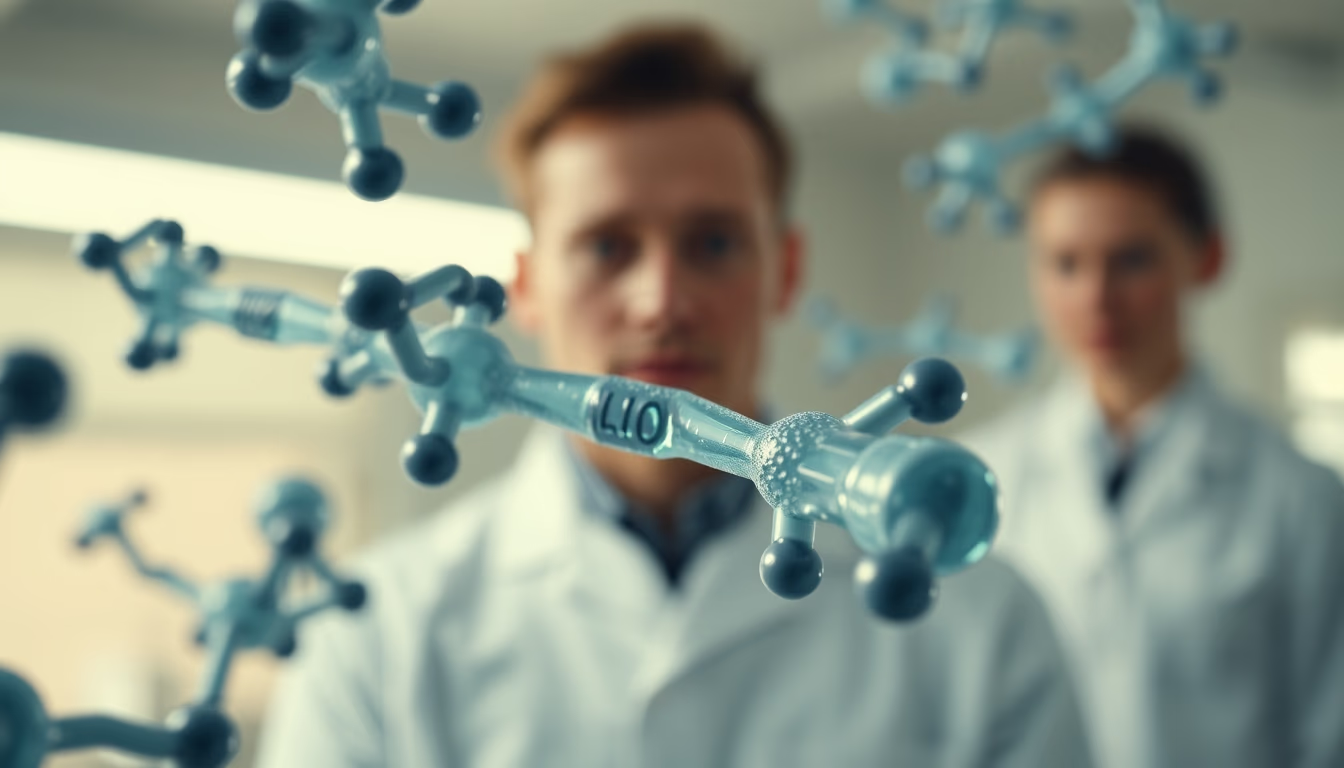
Antibody structure render
1344×768 · AVIF · CC BY 4.0
Antibodies, also known as immunoglobulins, are Y-shaped proteins produced by the immune system to neutralize pathogens such as viruses and bacteria.
About this subject
Antibodies are glycoproteins central to the adaptive immune system, classified as immunoglobulins (Ig). Their classic Y-shaped structure consists of two heavy chains and two light chains linked by disulfide bonds. This architecture allows the variable region (Fab) to bind specific antigens, while the constant region (Fc) interacts with immune cell receptors, such as those on macrophages and lymphocytes, triggering effector responses.
There are five main classes of antibodies in mammals: IgG, IgA, IgM, IgE, and IgD. IgG is the most abundant in blood and tissues, responsible for long-term immunological memory. IgA predominates in mucous membranes, such as those of the respiratory and digestive tracts, acting as a first barrier against infections. IgM is the first produced in recent infections, forming pentamers to increase avidity for antigens. IgE is associated with allergic reactions and defense against parasites. IgD primarily functions as a receptor on immature B cells.
The diversity of antibodies is generated through somatic recombination and hypermutation mechanisms, allowing the immune system to recognize a wide range of pathogens. Each antibody can neutralize toxins, opsonize microorganisms for phagocytosis, activate the complement system, or prevent viral adhesion to host cells. This versatility makes antibodies essential for vaccines and therapies, such as monoclonal antibodies used in cancer and autoimmune disease treatments.
The three-dimensional structure of antibodies has been elucidated by X-ray crystallography and cryo-electron microscopy, revealing details about binding sites. Computational depictions, like the one in this render, help researchers visualize molecular interactions and design more effective drugs or vaccines. The study of antibodies remains a cornerstone of immunology and modern biotechnology.
Frequently Asked Questions
What are antibodies and what is their main function?
Antibodies are proteins produced by B lymphocytes that recognize and neutralize pathogens such as viruses, bacteria, and toxins, marking them for destruction by other immune cells.
How are antibodies generated?
They are generated through genetic recombination in B cells, combining V(D)J gene segments to create a vast diversity of antigen specificities, a process known as somatic recombination.
What are the types of antibodies and their differences?
The five main classes are IgG (memory), IgA (mucous membranes), IgM (first response), IgE (allergy and parasites), and IgD (B cell receptor). Each has distinct structure and functions in the immune system.
Direct URL
https://pub-c7d6a6ea828543ac903a74a341ccb2e1.r2.dev/imagens/antibody-structure-render-documentary-photography-p10.avifHow to credit
Include a visible link back to UtilizAí. Copy one of the snippets below:
<a href="https://xn--utiliza-eza.com/en/midia/imagens/antibody-structure-render-documentary-photography-p10">Antibody structure render</a> by <a href="https://xn--utiliza-eza.com">UtilizAí</a>, licensed under <a href="https://creativecommons.org/licenses/by/4.0/">CC BY 4.0</a>.
[Antibody structure render](https://xn--utiliza-eza.com/en/midia/imagens/antibody-structure-render-documentary-photography-p10) by [UtilizAí](https://xn--utiliza-eza.com), CC BY 4.0
License: CC-BY-4.0