Antarctica ice shelf aerial
1344×768 · AVIF · CC BY 4.0
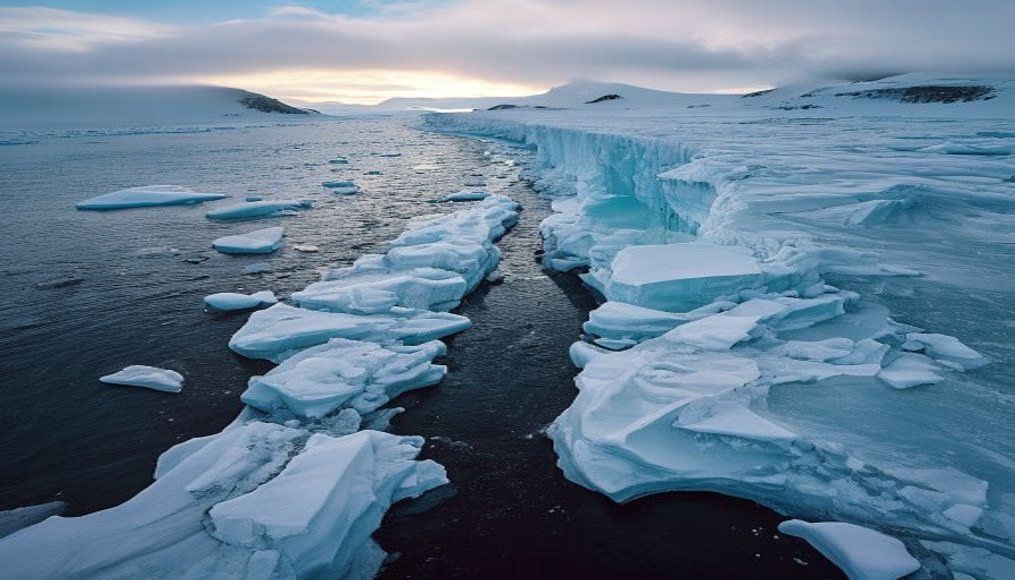
Antarctica's ice shelves, such as the Ross and Filchner-Ronne, are vast floating extensions that play a crucial role in the global climate balance.
About this subject
Antarctica's ice shelves are large floating masses of ice that extend from the continental ice sheet into the ocean. They act as natural barriers, slowing the flow of land glaciers towards the sea. The largest, the Ross Ice Shelf, is roughly the size of France, covering about 487,000 km². Another giant, the Filchner-Ronne Ice Shelf, also exceeds 400,000 km².
These structures are critical for the stability of the West Antarctic ice sheet, which contains enough ice to raise global sea levels by several meters. When ice shelves collapse, as occurred with Larsen B in 2002, the glaciers behind them accelerate their flow, contributing to sea level rise. Melting is also driven by warmer ocean currents that erode the underside of the shelves.
Scientists constantly monitor these regions via satellite and expeditions. The Antarctic Peninsula, where warming is most intense, has already lost several smaller shelves. Recent data indicate that the Thwaites Ice Shelf, known as the 'doomsday glacier,' is rapidly disintegrating. Understanding the behavior of these shelves is vital for predicting future climate change scenarios.
Interestingly, ice shelves also host unique ecosystems. Beneath the ice, microbial communities and organisms like sponges and crustaceans have been discovered, adapted to extreme darkness and cold. Additionally, the ice preserves precious paleoclimate records, trapping air bubbles from thousands of years ago.
Frequently Asked Questions
What is an ice shelf?
An ice shelf is a thick floating layer of ice that forms where continental glaciers or ice sheets meet the ocean. They are mainly found in Antarctica and Greenland.
Why are ice shelves important?
They act as buttresses, slowing the flow of land glaciers into the sea. Their loss accelerates the discharge of continental ice, contributing to sea level rise.
What is the largest ice shelf in Antarctica?
The Ross Ice Shelf is the largest, covering about 487,000 km², followed by the Filchner-Ronne Ice Shelf at over 400,000 km².
Direct URL
https://pub-c7d6a6ea828543ac903a74a341ccb2e1.r2.dev/imagens/antarctica-ice-shelf-aerial-street-photography-v11.avifHow to credit
Include a visible link back to UtilizAí. Copy one of the snippets below:
<a href="https://xn--utiliza-eza.com/en/midia/imagens/antarctica-ice-shelf-aerial-street-photography-v11">Antarctica ice shelf aerial</a> by <a href="https://xn--utiliza-eza.com">UtilizAí</a>, licensed under <a href="https://creativecommons.org/licenses/by/4.0/">CC BY 4.0</a>.
[Antarctica ice shelf aerial](https://xn--utiliza-eza.com/en/midia/imagens/antarctica-ice-shelf-aerial-street-photography-v11) by [UtilizAí](https://xn--utiliza-eza.com), CC BY 4.0
License: CC-BY-4.0