Antarctica ice shelf aerial
1344×768 · AVIF · CC BY 4.0
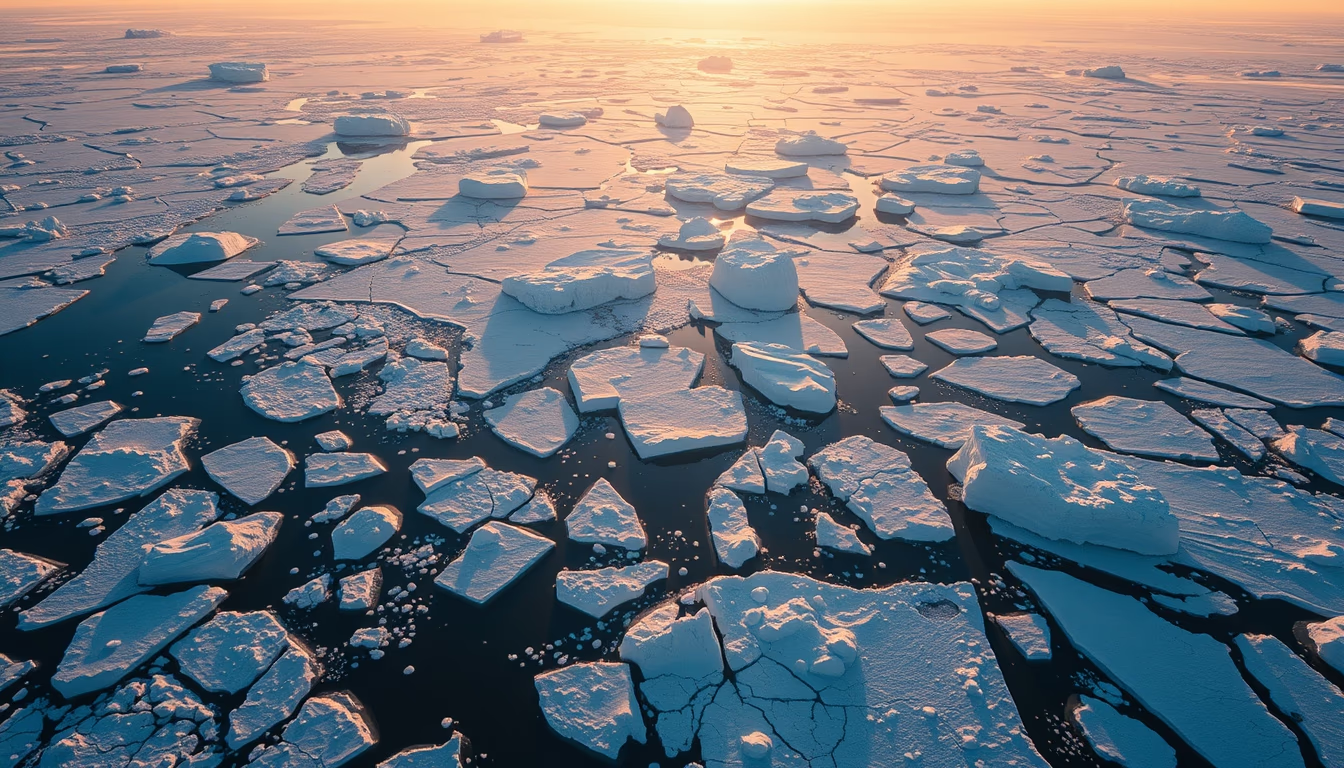
Aerial view of an Antarctic ice shelf, showing crevasses and ice blocks drifting in the frozen sea.
About this subject
Antarctic ice shelves are floating extensions of the continental ice sheet, covering about 75% of the continent's coastline. The largest, the Ross Ice Shelf, is roughly the size of France. These structures act as natural barriers, slowing the flow of glaciers into the ocean. When they collapse, as the Larsen B Ice Shelf did in 2002, melting accelerates and sea levels rise.
The visible fissures on the surface are crevasses, formed by constant ice movement over uneven terrain. Antarctic ice stores about 70% of the planet's fresh water, and its complete melting would raise sea levels by approximately 60 meters. The region also regulates global climate by reflecting solar radiation back into space.
Life in Antarctica is adapted to extreme cold, with species like emperor penguins, seals, and krill. Ice shelves serve as habitat for penguin colonies and breeding grounds for seals. Scientific research at Antarctic stations constantly monitors changes in these ice masses, providing crucial data on climate change.
Fun fact: Antarctica has no official time zone; research stations use the time of their home countries. It is also the driest continent, with annual precipitation below 50 mm in some areas, technically making it a frozen desert.
Frequently Asked Questions
What causes cracks in Antarctic ice shelves?
Cracks, or crevasses, are caused by ice movement over uneven terrain and internal stresses. They can expand with warming and contribute to iceberg calving.
Why are ice shelves important for global climate?
They reflect solar radiation (albedo), helping cool the planet. They also act as barriers that slow glacier flow into the ocean, preventing sea level rise.
Is there visible animal life on Antarctic ice shelves?
Yes, emperor penguins and seals use ice shelves for breeding and resting. Krill, the base of the food chain, lives in the waters beneath the ice.
Direct URL
https://pub-c7d6a6ea828543ac903a74a341ccb2e1.r2.dev/imagens/antarctica-ice-shelf-aerial-cinematic-wide-shot-v2.avifHow to credit
Include a visible link back to UtilizAí. Copy one of the snippets below:
<a href="https://xn--utiliza-eza.com/en/midia/imagens/antarctica-ice-shelf-aerial-cinematic-wide-shot-v2">Antarctica ice shelf aerial</a> by <a href="https://xn--utiliza-eza.com">UtilizAí</a>, licensed under <a href="https://creativecommons.org/licenses/by/4.0/">CC BY 4.0</a>.
[Antarctica ice shelf aerial](https://xn--utiliza-eza.com/en/midia/imagens/antarctica-ice-shelf-aerial-cinematic-wide-shot-v2) by [UtilizAí](https://xn--utiliza-eza.com), CC BY 4.0
License: CC-BY-4.0