Antarctic ozone hole
1344×768 · AVIF · CC BY 4.0
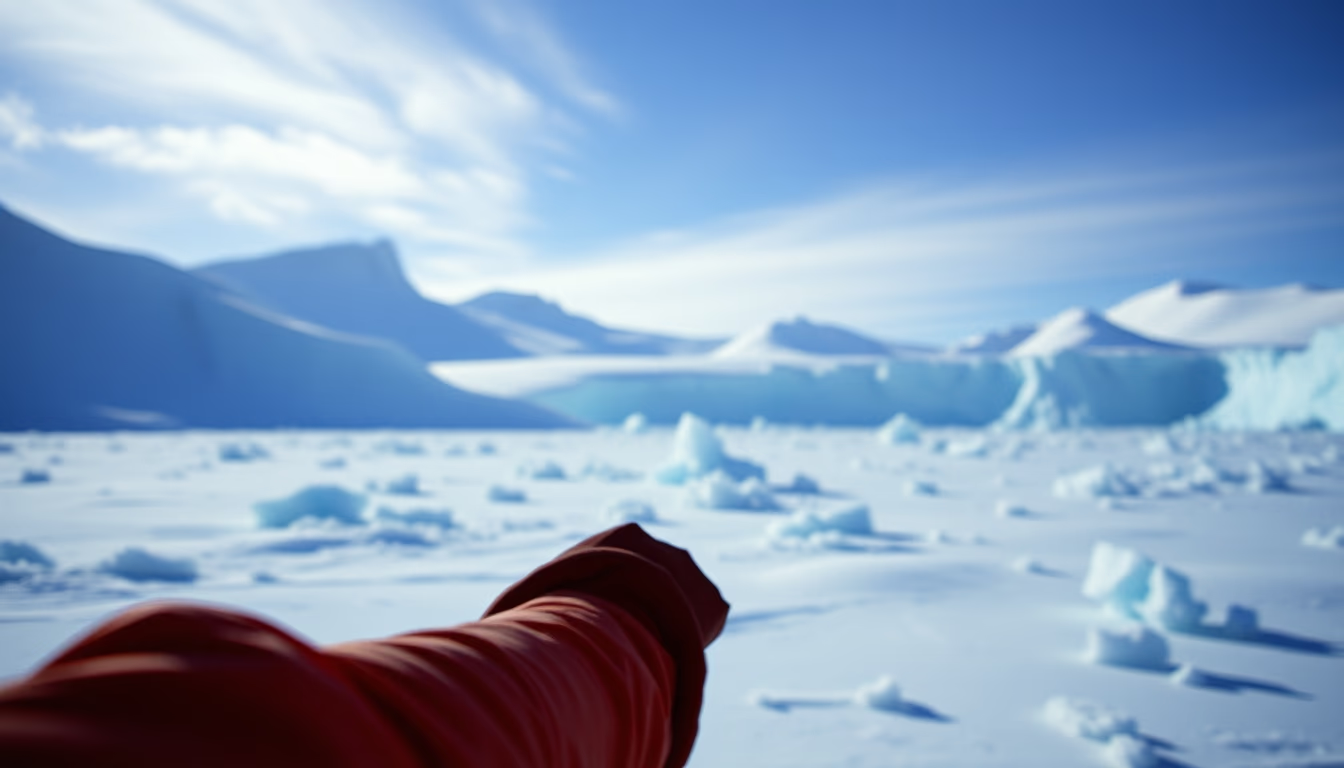
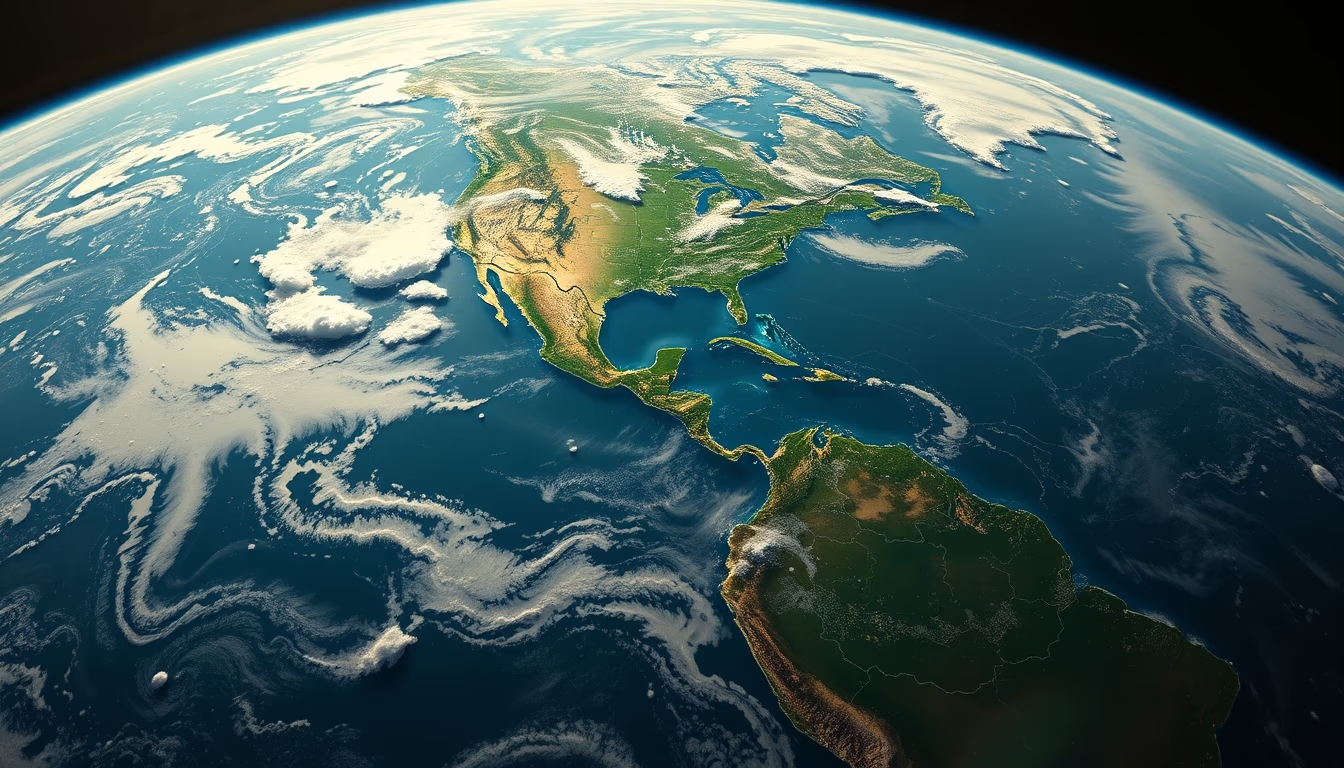
The Antarctic ozone hole, a thinning of the ozone layer discovered in 1985, leading to the Montreal Protocol.
About this subject
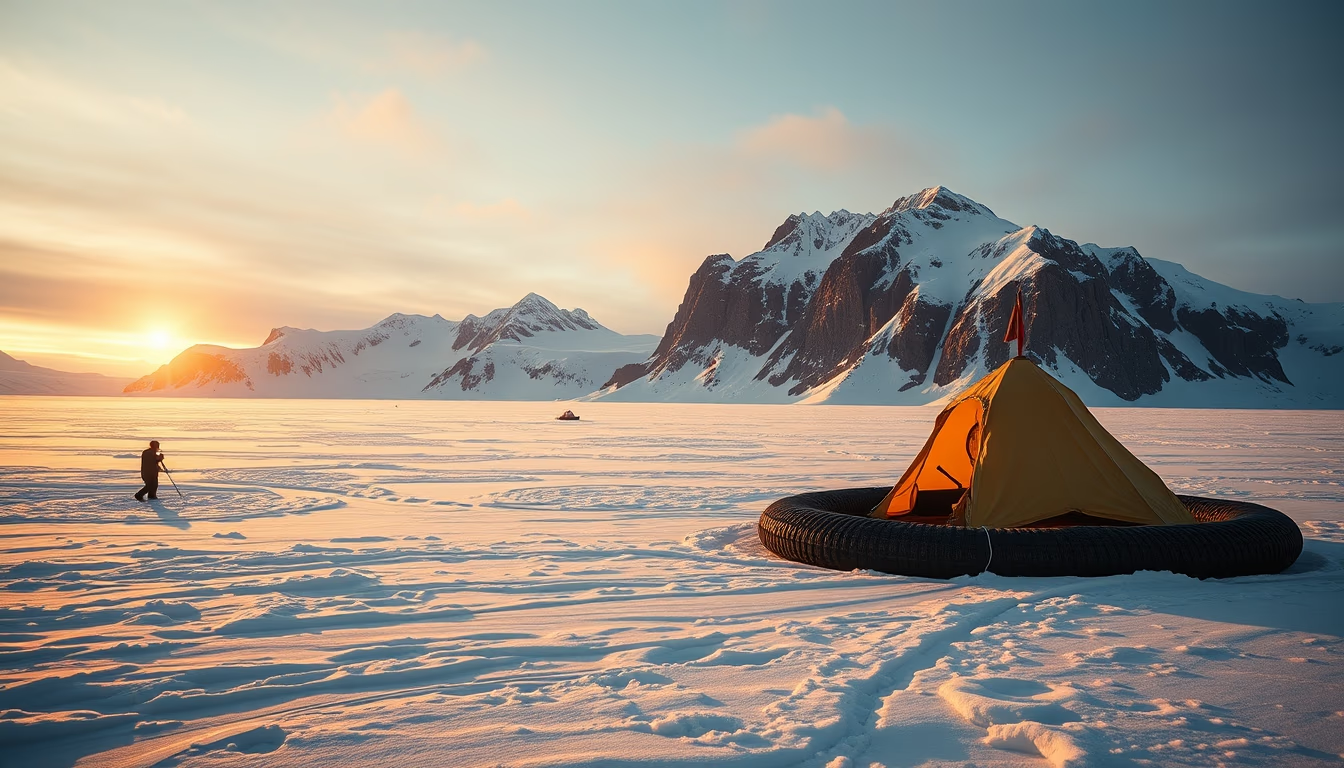
The Antarctic ozone hole is a region of severe thinning of the stratospheric ozone layer that occurs annually during the austral spring (September to November). First identified in 1985 by scientists at the British Antarctic Survey, who observed a dramatic drop in ozone concentrations over Halley Station, the phenomenon is primarily caused by chlorofluorocarbons (CFCs), chemicals used in refrigerants, aerosols, and solvents. These compounds rise into the stratosphere, where ultraviolet light releases chlorine atoms that catalytically destroy ozone molecules, with reactions amplified by polar stratospheric clouds (PSCs) formed in the extreme cold of the Antarctic winter.
The ozone layer protects life on Earth by absorbing most of the Sun's harmful ultraviolet B (UV-B) radiation. Without it, increased UV-B exposure would lead to higher rates of skin cancer, cataracts, and damage to ecosystems. The discovery of the ozone hole spurred unprecedented global action: the 1987 Montreal Protocol, which progressively banned CFCs and other ozone-depleting substances. This treaty is widely considered one of the most successful environmental agreements in history.
Since the ban on CFCs, the ozone layer has been slowly recovering. The Antarctic ozone hole still forms each year, but its maximum area has been shrinking by about 1% to 3% per decade since 2000. NASA projections suggest that the ozone layer over Antarctica will return to 1980 levels by around 2066 to 2070. Recovery, however, remains sensitive to factors such as climate change and volcanic eruptions, which can inject particles into the stratosphere and accelerate ozone destruction.
Frequently Asked Questions
What causes the Antarctic ozone hole?
The ozone hole is primarily caused by chlorofluorocarbons (CFCs), which release chlorine in the stratosphere. This chlorine catalytically destroys ozone molecules, especially in the presence of polar stratospheric clouds that form during the Antarctic winter.
Is the ozone hole recovering?
Yes, since the ban on CFCs under the Montreal Protocol, the ozone layer has been slowly recovering. The Antarctic ozone hole's area is decreasing by about 1% to 3% per decade, and it is expected to return to 1980 levels between 2066 and 2070.
Why is the ozone layer important for life on Earth?
It absorbs most of the Sun's harmful ultraviolet B (UV-B) radiation, which can cause skin cancer, cataracts, and damage to ecosystems. Without it, life on the surface would be exposed to much higher levels of harmful radiation.
Direct URL
https://pub-c7d6a6ea828543ac903a74a341ccb2e1.r2.dev/imagens/antarctic-ozone-hole-lo-fi-disposable-camera-fresh9.avifHow to credit
Include a visible link back to UtilizAí. Copy one of the snippets below:
<a href="https://xn--utiliza-eza.com/en/midia/imagens/antarctic-ozone-hole-lo-fi-disposable-camera-fresh9">Antarctic ozone hole</a> by <a href="https://xn--utiliza-eza.com">UtilizAí</a>, licensed under <a href="https://creativecommons.org/licenses/by/4.0/">CC BY 4.0</a>.
[Antarctic ozone hole](https://xn--utiliza-eza.com/en/midia/imagens/antarctic-ozone-hole-lo-fi-disposable-camera-fresh9) by [UtilizAí](https://xn--utiliza-eza.com), CC BY 4.0
License: CC-BY-4.0