Antarctic ozone hole
1344×768 · AVIF · CC BY 4.0

The Antarctic ozone hole is a seasonal phenomenon caused by industrial chemicals, discovered in 1985 and monitored by satellites.
About this subject
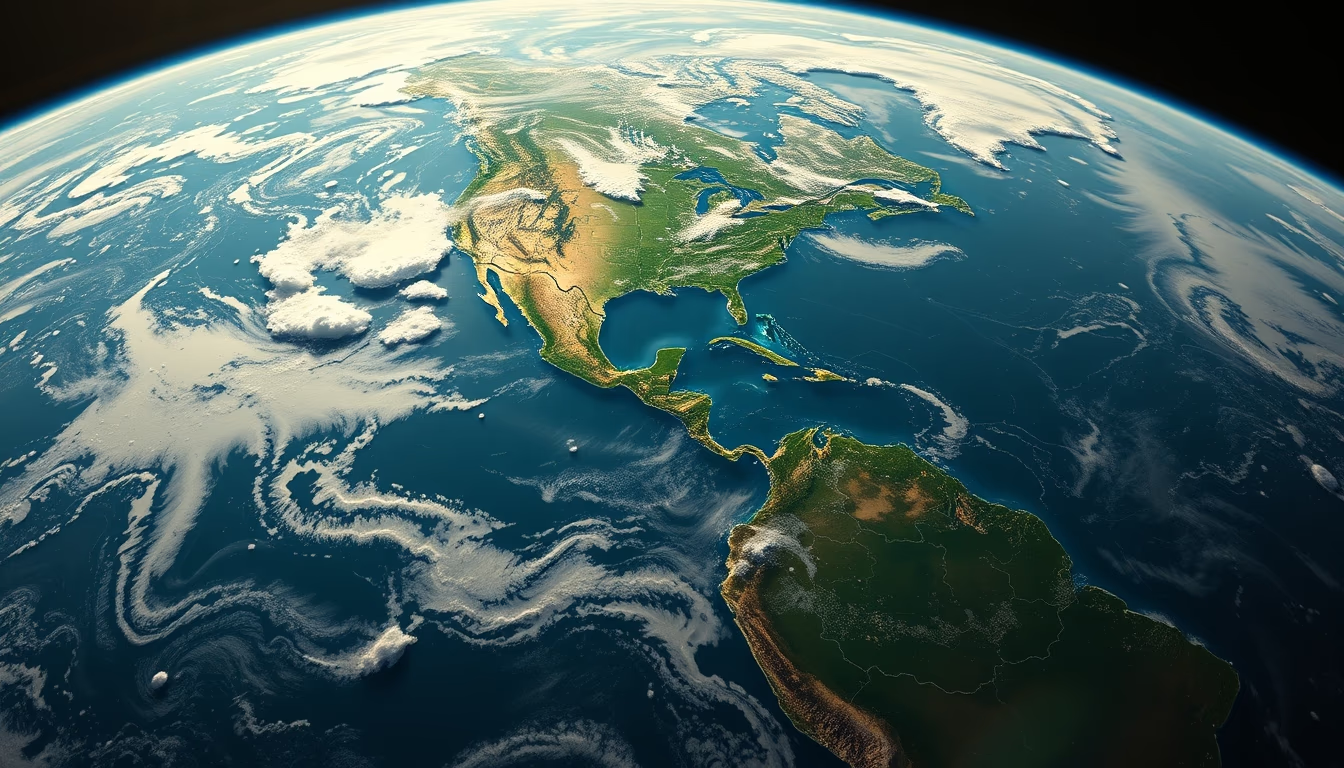
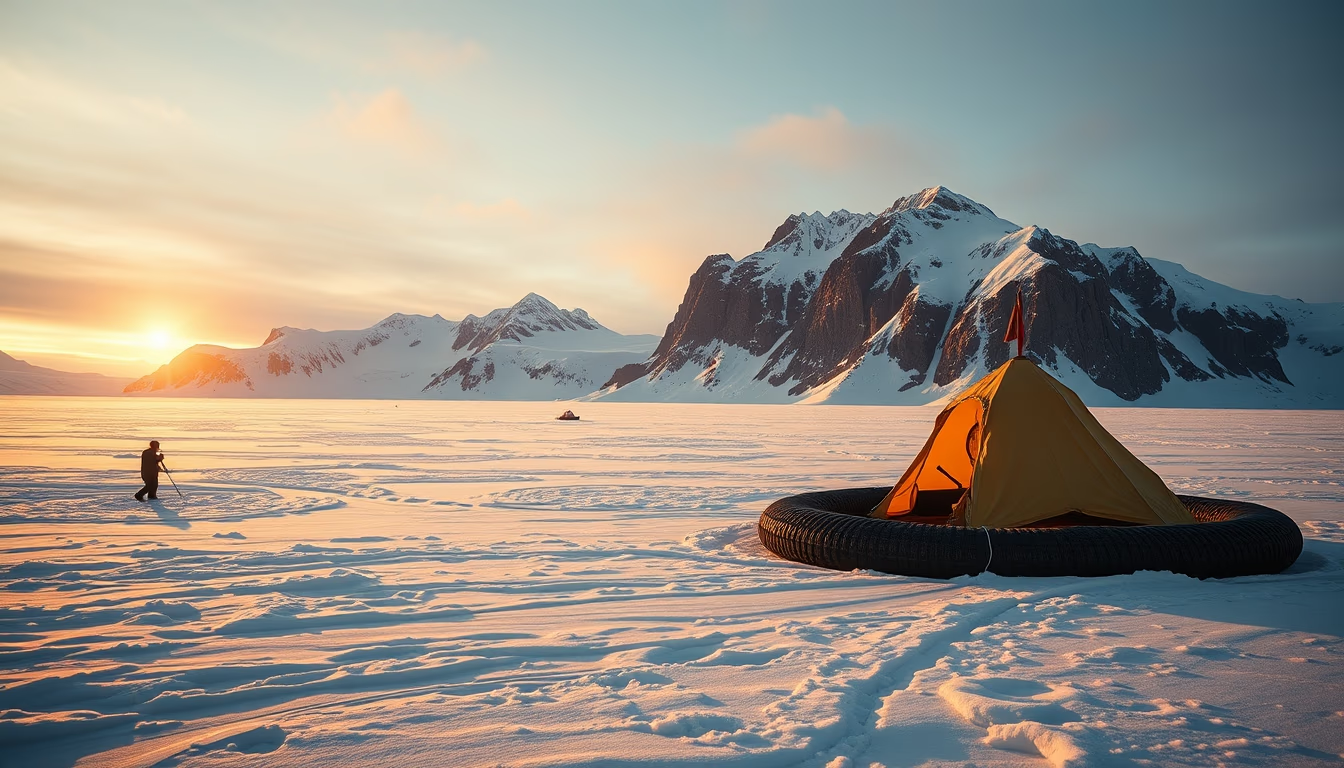
The Antarctic ozone hole is a severe thinning of the ozone layer over Antarctica that occurs annually during the austral spring (August to November). It was first identified in 1985 by scientists from the British Antarctic Survey, who observed a reduction of up to 50% in total ozone over Halley Station. This phenomenon is caused by the release of chlorofluorocarbons (CFCs) and other ozone-depleting substances, which accumulate in the atmosphere and react with ozone under extremely cold conditions, forming polar stratospheric clouds that accelerate destruction.
The discovery sparked global alarm, leading to the swift adoption of the Montreal Protocol in 1987, an international agreement that phased out CFC production. Thanks to these efforts, atmospheric concentrations of these substances are slowly declining, and the ozone hole has shown signs of recovery. In 2023, the hole reached a maximum area of about 26 million km², the 12th largest on record, but still within the projected recovery trend. Climate models suggest that the ozone layer over Antarctica could fully recover by 2066, 2070.
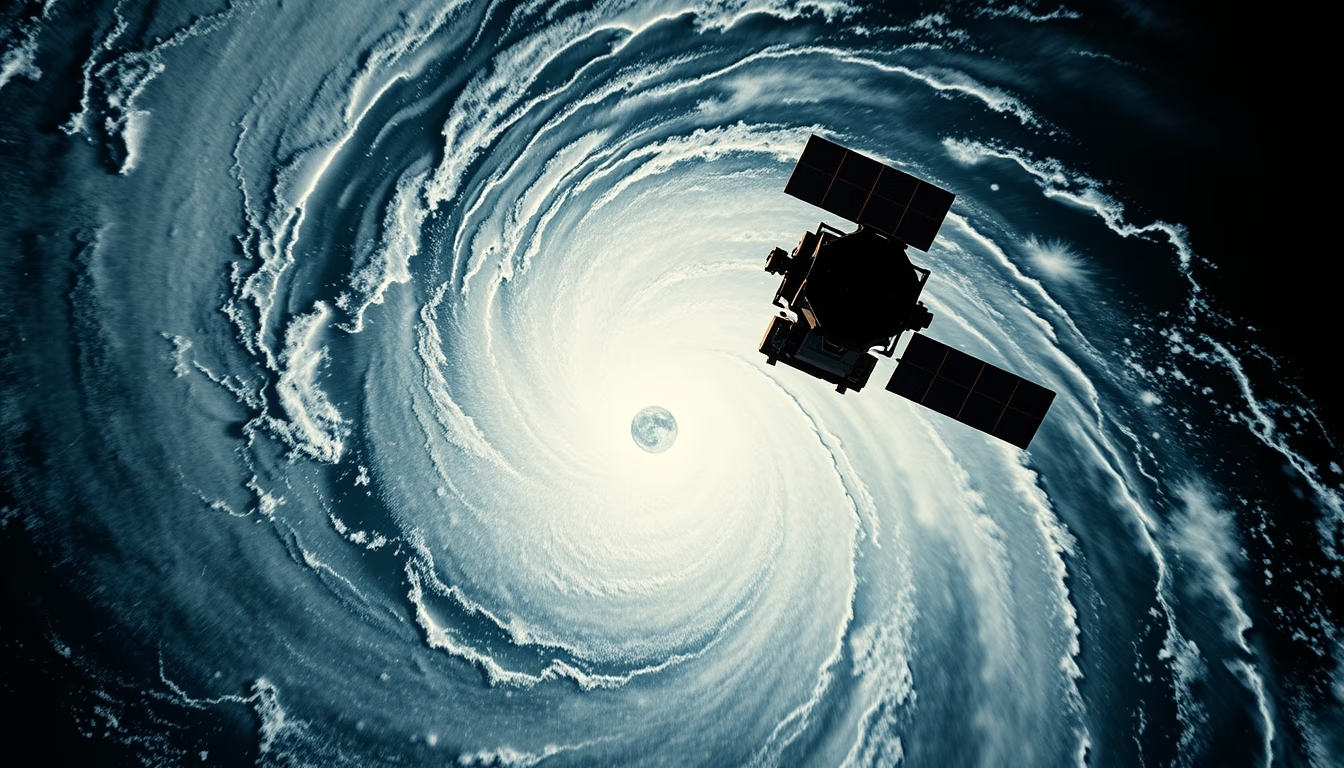
Stratospheric ozone is critical for life on Earth because it absorbs most of the sun's ultraviolet B (UV-B) radiation. Excess UV-B can cause skin cancer, cataracts, and damage to ecosystems, especially marine phytoplankton. Continuous monitoring by satellites such as NASA's Aura (OMI instrument) and ESA's Copernicus Sentinel-5P is essential to track the hole's evolution and verify the effectiveness of environmental policies.
Less pronounced ozone holes also occur over the Arctic, depending on weather conditions. The story of the ozone hole is a successful example of scientific and political global cooperation to solve a transboundary environmental problem, demonstrating that coordinated actions can reverse planetary-scale environmental damage.
Frequently Asked Questions
What causes the Antarctic ozone hole?
The hole is caused by chlorofluorocarbons (CFCs) and other ozone-depleting substances released from human activities like aerosols and refrigeration. Under the extreme cold of the Antarctic stratosphere, these substances react with ozone, destroying it rapidly.
Is the ozone hole recovering?
Yes, thanks to the Montreal Protocol, concentrations of ozone-depleting substances are declining. The hole has shown gradual reduction in size and thickness, with full recovery expected between 2066 and 2070.
Why does the ozone hole occur over Antarctica and not elsewhere?
Antarctica has extremely low stratospheric temperatures that form polar stratospheric clouds. These clouds accelerate the chemical reactions that destroy ozone. Similar conditions in the Arctic create smaller, less persistent holes.
Direct URL
https://pub-c7d6a6ea828543ac903a74a341ccb2e1.r2.dev/imagens/antarctic-ozone-hole-architectural-photography-fresh7.avifHow to credit
Include a visible link back to UtilizAí. Copy one of the snippets below:
<a href="https://xn--utiliza-eza.com/en/midia/imagens/antarctic-ozone-hole-architectural-photography-fresh7">Antarctic ozone hole</a> by <a href="https://xn--utiliza-eza.com">UtilizAí</a>, licensed under <a href="https://creativecommons.org/licenses/by/4.0/">CC BY 4.0</a>.
[Antarctic ozone hole](https://xn--utiliza-eza.com/en/midia/imagens/antarctic-ozone-hole-architectural-photography-fresh7) by [UtilizAí](https://xn--utiliza-eza.com), CC BY 4.0
License: CC-BY-4.0