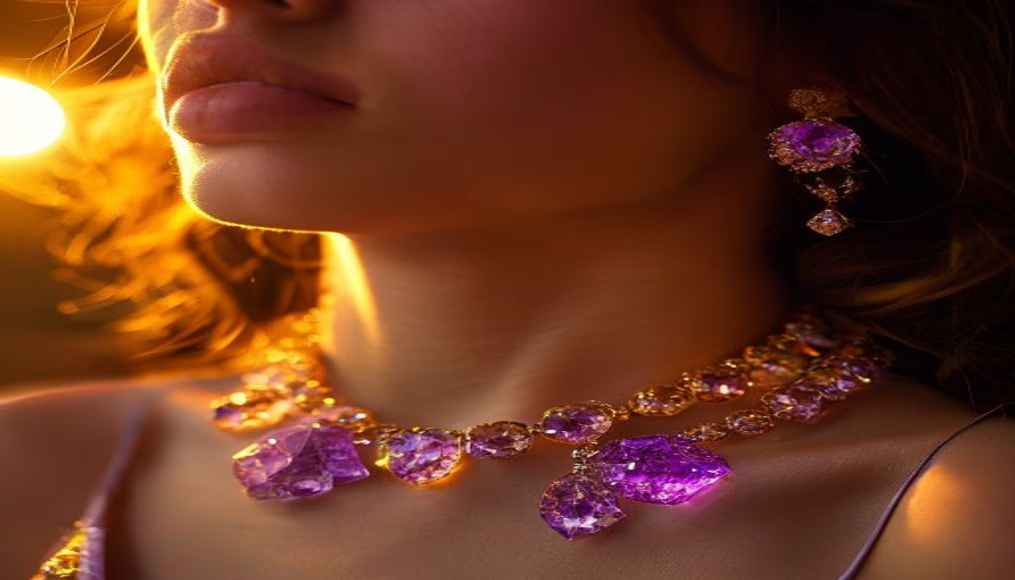
Amethyst statement necklace cushion
1344×768 · AVIF · CC BY 4.0
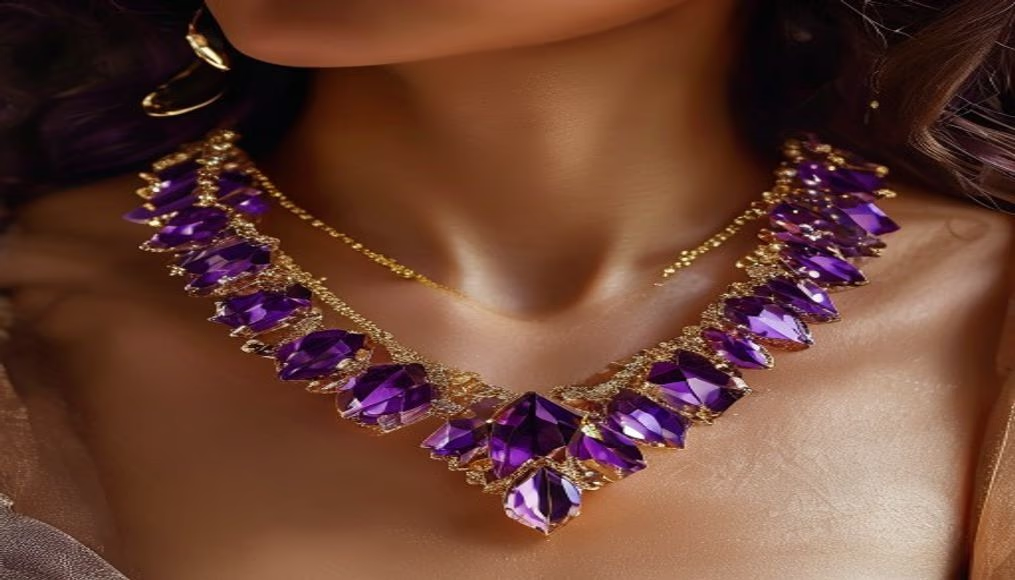
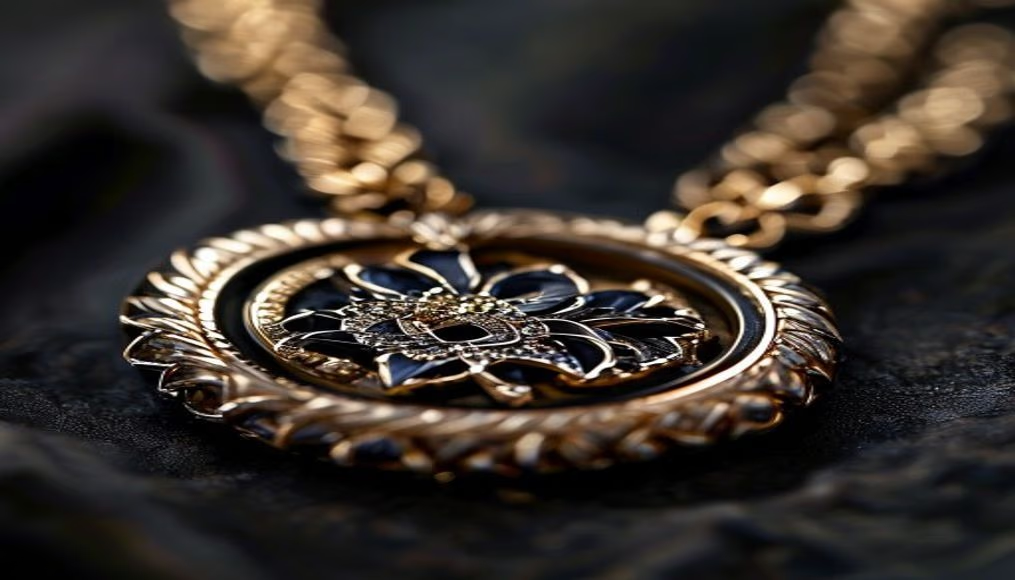
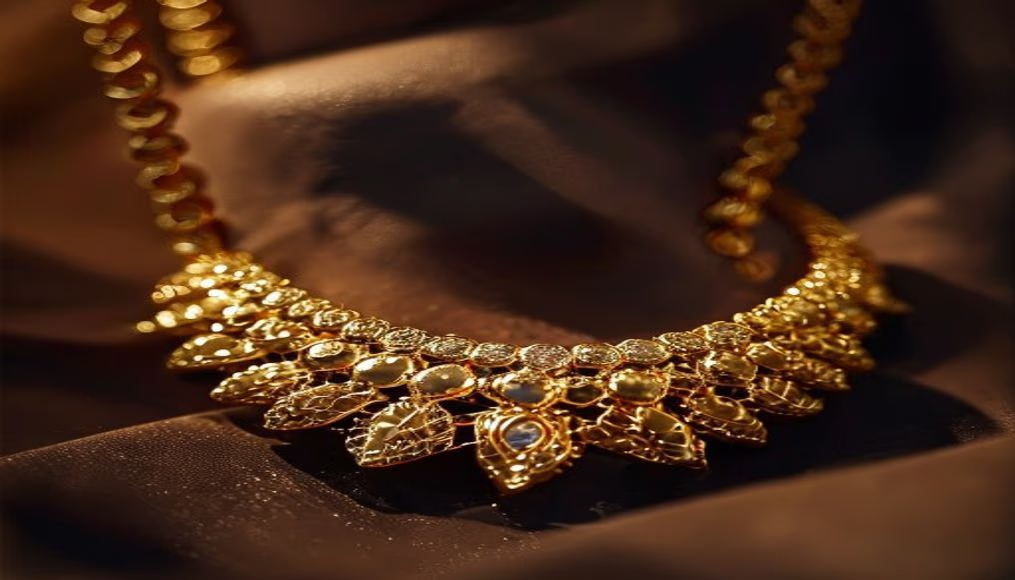
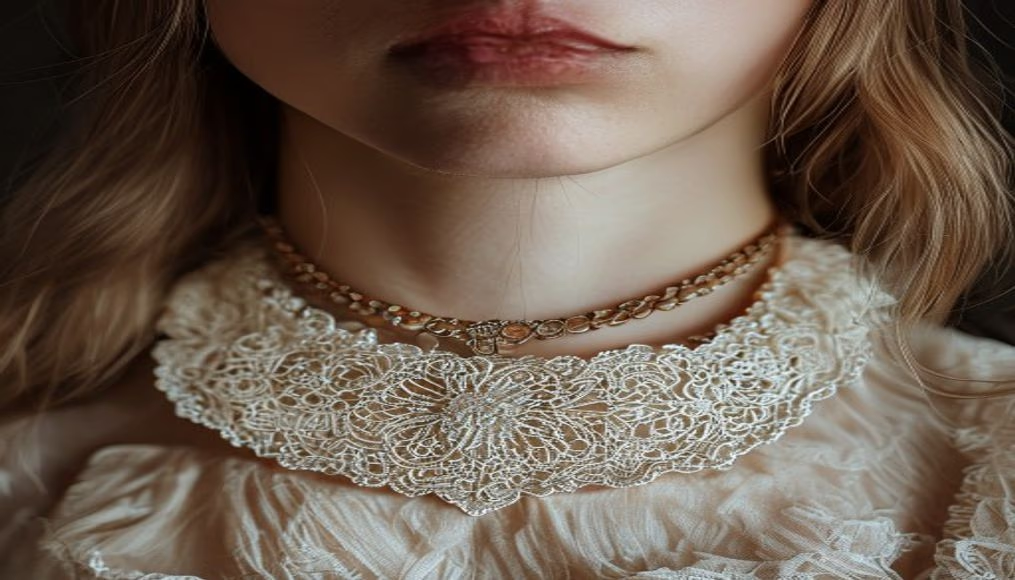
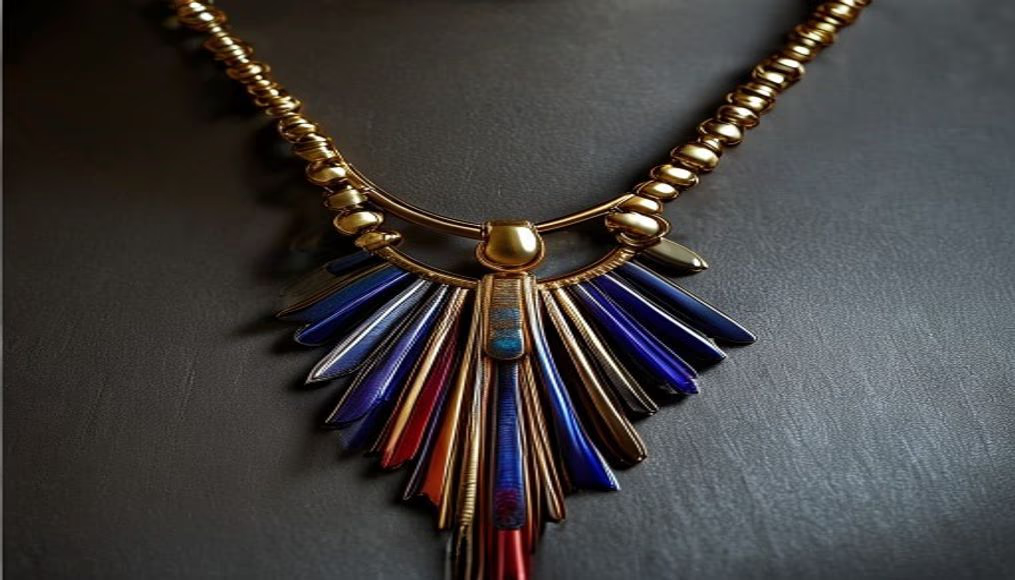
A statement necklace featuring cushion-cut amethyst combines the luxury of the violet gem with the golden ratio, creating a visually impactful piece with historical significance.
About this subject
Amethyst is a violet variety of quartz, prized since antiquity for its intense color and associations with royalty and spirituality. In ancient Egypt, it was used in amulets; in imperial Rome, it adorned rings and seals. Scientifically, its color results from iron impurities and natural irradiation, with major deposits in Brazil (Rio Grande do Sul, Minas Gerais), Uruguay, and Zambia. The cushion cut, or 'pillow' cut, is one of the most classic cuts for large gemstones, combining rounded shapes with facets that maximize brilliance and color. Originating in the 17th century, it remains popular in high-end jewelry.
A statement necklace with cushion-cut amethyst is a standout piece, designed to be the center of attention. These necklaces often incorporate asymmetrical design or elements of the golden ratio, a mathematical ratio (approximately 1.618) found in nature and art, used by jewelers to create visual harmony. Amethyst, with a hardness of 7 on the Mohs scale, is suitable for daily wear but requires care to avoid scratches. In the luxury market, pieces with AAA-grade amethyst (deep purple, no visible inclusions) can fetch high prices, especially when combined with noble metals like 18k gold or platinum.
The choice of cushion cut for large amethysts enhances color depth and allows light to dance through facets, creating a sparkling effect. Beyond aesthetic value, amethyst is the birthstone for February and symbolizes peace, clarity, and protection. In high jewelry collections, the use of the golden ratio in the necklace's design ensures that proportions between the central gem, metals, and decorative elements follow a pleasing visual hierarchy, a technique applied by renowned jewelers such as Cartier and Tiffany in their iconic pieces.
Frequently Asked Questions
What is the difference between amethyst and rose quartz?
Both are varieties of quartz, but amethyst is violet due to iron impurities, while rose quartz is pink due to inclusions of dumortierite fibers or phosphate. Amethyst is harder (7 on Mohs scale) and generally more valued.
How to identify high-quality amethyst?
Color is key: high-quality amethyst has deep, uniform violet without light or dark zones. Visible inclusions reduce value. Cut also matters: well-proportioned cuts maximize brilliance.
What is the golden ratio in jewelry?
It is a mathematical ratio (1.618) used to create aesthetic balance. In jewelry, it is applied to proportions between the central gem, metals, and decorative elements, resulting in visually harmonious pieces.
Direct URL
https://pub-c7d6a6ea828543ac903a74a341ccb2e1.r2.dev/imagens/amethyst-statement-necklace-cushion-golden-ratio-composition-luxury-luxo0.avifHow to credit
Include a visible link back to UtilizAí. Copy one of the snippets below:
<a href="https://xn--utiliza-eza.com/en/midia/imagens/amethyst-statement-necklace-cushion-golden-ratio-composition-luxury-luxo0">Amethyst statement necklace cushion</a> by <a href="https://xn--utiliza-eza.com">UtilizAí</a>, licensed under <a href="https://creativecommons.org/licenses/by/4.0/">CC BY 4.0</a>.
[Amethyst statement necklace cushion](https://xn--utiliza-eza.com/en/midia/imagens/amethyst-statement-necklace-cushion-golden-ratio-composition-luxury-luxo0) by [UtilizAí](https://xn--utiliza-eza.com), CC BY 4.0
License: CC-BY-4.0