Amber baltic trade
1344×768 · AVIF · CC BY 4.0

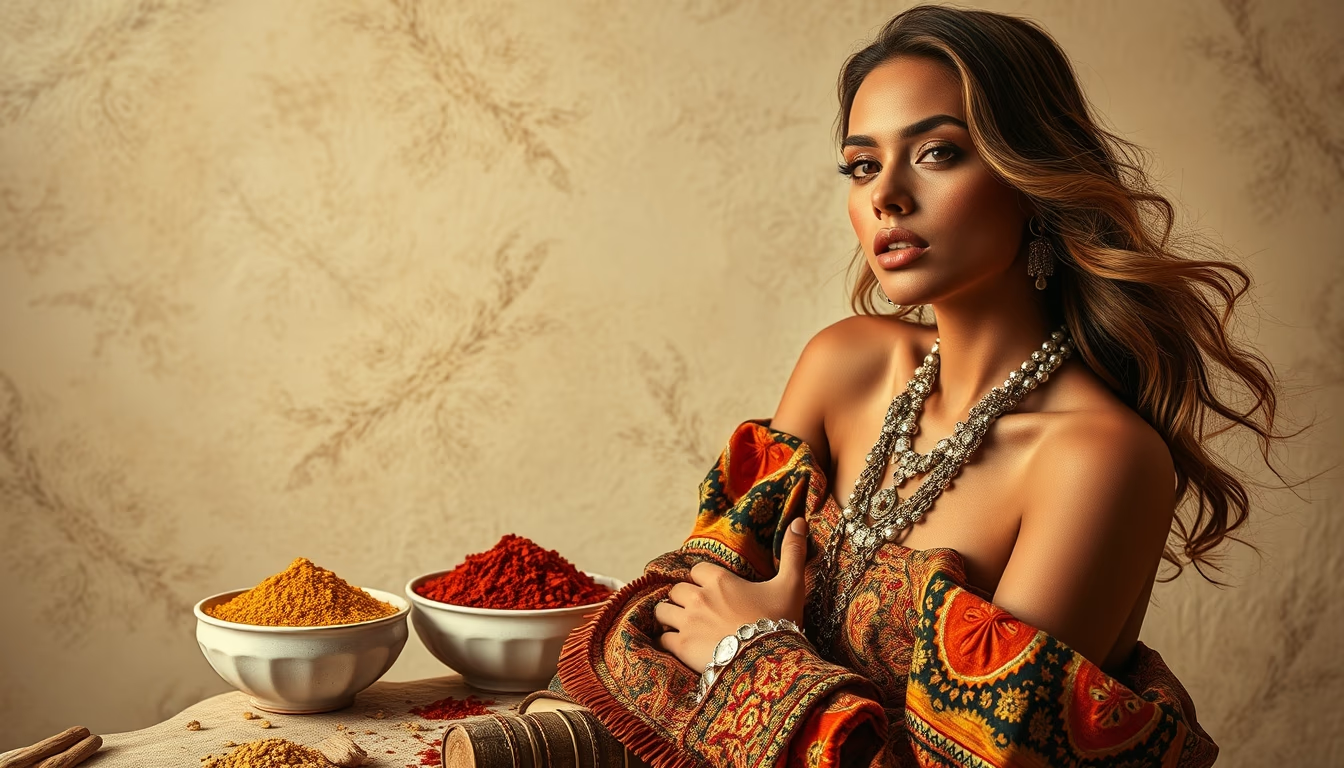
Baltic amber, fossilized resin from prehistoric pines, was traded along the Amber Road from antiquity to Europe and Asia.
About this subject
Baltic amber, fossilized resin up to 44 million years old from prehistoric pine forests, originates from what is now Scandinavia and northern Europe. Historical harvesting focused on the coasts of Poland, Russia (Kaliningrad Oblast), Lithuania, Latvia, and southern Sweden. This amber, often called “Baltic gold,” has been traded since the Neolithic period around 3000 BCE, exchanged for copper, salt, and other goods.
The primary trade arteries was the Amber Road, connecting the Baltic Sea to the Adriatic and Mediterranean, crossing modern Poland, Czech Republic, Austria, Slovenia, and Italy. Pliny the Elder described it as a luxury item in the Roman Empire, used for jewelry, amulets, and incense. About 90% of the world‘s amber comes from the Baltic, prized for its high succinic acid content (3, 8%), giving it aromatic and traditional therapeutic properties.
Today, Russia’s Kaliningrad Oblast produces over 90% of global raw amber, extracted in open-pit mines. The region experienced a smuggling boom in the 2010s, with amber illicitly shipped to China and Arab states. Certified shops in Poland and Lithuania still sell authentic pieces, while inclusion amber (with preserved insects) attracts collectors and scientists, famously portrayed in Jurassic Park.
Beyond ornamentation, amber is used in perfumery (as a fixative), alternative medicine (teething necklaces for babies, controversial), and paleoclimate dating. The Amber Road was recognized as a European Heritage Route in 2012. Museums like the Amber Museum in Gdańsk, Poland, display over 2,000 historical and contemporary pieces.
Frequently Asked Questions
What makes Baltic amber different from other ambers?
Baltic amber has a high succinic acid content (3, 8%), giving it a distinctive aroma and electrostatic properties. It is also the oldest and most abundant amber type, accounting for about 90% of the global market.
Why was the Amber Road important in antiquity?
It was the main trade route for Baltic amber to the Mediterranean, supplying Greeks, Romans, and Egyptians with the material for jewelry and rituals. The route facilitated cultural and economic exchange for over 2,000 years.
Is Baltic amber still mined today?
Yes, primarily in Kaliningrad Oblast (Russia), where open-pit mines produce most of the world‘s raw amber. Extraction is regulated, but smuggling remains a persistent issue.
Direct URL
https://pub-c7d6a6ea828543ac903a74a341ccb2e1.r2.dev/imagens/amber-baltic-trade-studio-editorial-portrait-fresh6.avifHow to credit
Include a visible link back to UtilizAí. Copy one of the snippets below:
<a href="https://xn--utiliza-eza.com/en/midia/imagens/amber-baltic-trade-studio-editorial-portrait-fresh6">Amber baltic trade</a> by <a href="https://xn--utiliza-eza.com">UtilizAí</a>, licensed under <a href="https://creativecommons.org/licenses/by/4.0/">CC BY 4.0</a>.
[Amber baltic trade](https://xn--utiliza-eza.com/en/midia/imagens/amber-baltic-trade-studio-editorial-portrait-fresh6) by [UtilizAí](https://xn--utiliza-eza.com), CC BY 4.0
License: CC-BY-4.0