Amber baltic trade
1344×768 · AVIF · CC BY 4.0
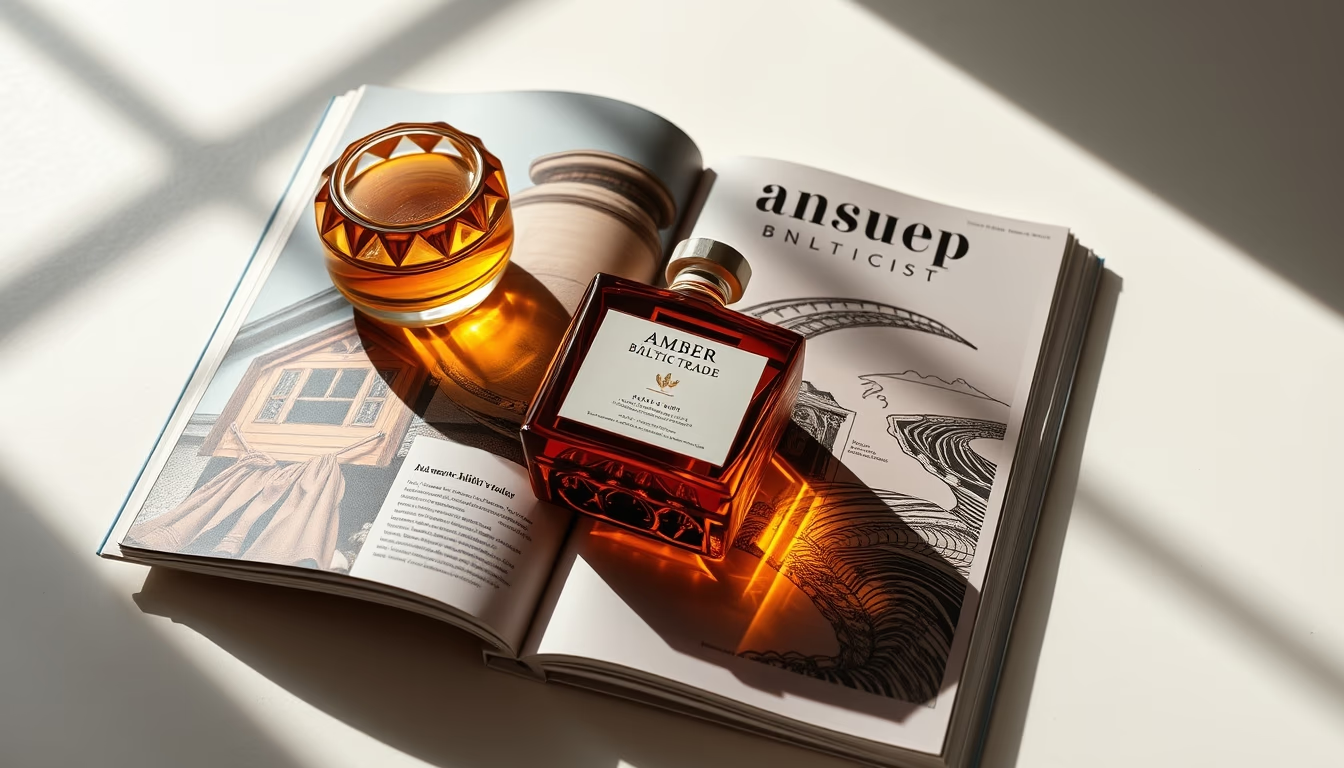
Baltic amber trade, a fossilized resin prized since antiquity, connected cultures and boosted economies across Europe for millennia.
About this subject
Baltic amber, formed about 40 million years ago from prehistoric pine tree resin, is found in deposits along the Baltic Sea, mainly in Poland, Lithuania, Latvia, and Russia. Known as "Baltic gold," it was one of the first luxury goods traded in prehistoric Europe, with evidence of trade routes dating back to the Neolithic. The Amber Road, a network of roads and riverways, connected the Baltic to the Mediterranean, passing through modern-day Germany, Poland, Czech Republic, and Italy. Pliny the Elder documented Roman expeditions to obtain amber in the 1st century AD, and it was used both as ornament and for its supposed medicinal properties.
During the Middle Ages, the Teutonic Order controlled much of the amber production and trade in the Baltic, establishing monopolies in centers like Königsberg (now Kaliningrad). Extraction involved open-pit mining or dredging from the seafloor. Amber was crafted into religious items, jewelry, and even furniture, such as the famous Amber Room in Catherine Palace in St. Petersburg, which disappeared during World War II. Today, the region remains the world leader in amber production, with Poland and Lithuania maintaining artisan traditions while offshore deposits continue to be exploited.
Beyond its aesthetic value, Baltic amber is renowned for its fossil inclusions, preserving insects, plants, and small animals from the Eocene epoch. These fossils are studied by paleontologists and collected by enthusiasts, making amber a scientific resource. Modern trade includes raw and polished amber, with prices varying by color, transparency, and inclusions. Amber fairs in Poland, such as Ambermart in Gdańsk, attract global buyers, keeping alive the millennia-old tradition of a resin that united peoples across centuries.
Frequently Asked Questions
How old is Baltic amber?
Baltic amber is about 40 million years old, dating from the Eocene epoch, when pine forests in the region produced resin that fossilized.
Where is Baltic amber found?
Major deposits are along the Baltic Sea coast, especially in Poland, Lithuania, Latvia, and Kaliningrad (Russia). It also washes ashore after storms.
What was the Amber Road in ancient times?
The Amber Road was a trade network connecting the Baltic to the Mediterranean via rivers and land routes. It allowed amber to reach civilizations like the Greeks and Romans, who used it for jewelry and decoration.
Direct URL
https://pub-c7d6a6ea828543ac903a74a341ccb2e1.r2.dev/imagens/amber-baltic-trade-magazine-editorial-fresh11.avifHow to credit
Include a visible link back to UtilizAí. Copy one of the snippets below:
<a href="https://xn--utiliza-eza.com/en/midia/imagens/amber-baltic-trade-magazine-editorial-fresh11">Amber baltic trade</a> by <a href="https://xn--utiliza-eza.com">UtilizAí</a>, licensed under <a href="https://creativecommons.org/licenses/by/4.0/">CC BY 4.0</a>.
[Amber baltic trade](https://xn--utiliza-eza.com/en/midia/imagens/amber-baltic-trade-magazine-editorial-fresh11) by [UtilizAí](https://xn--utiliza-eza.com), CC BY 4.0
License: CC-BY-4.0