Amber baltic trade
1344×768 · AVIF · CC BY 4.0
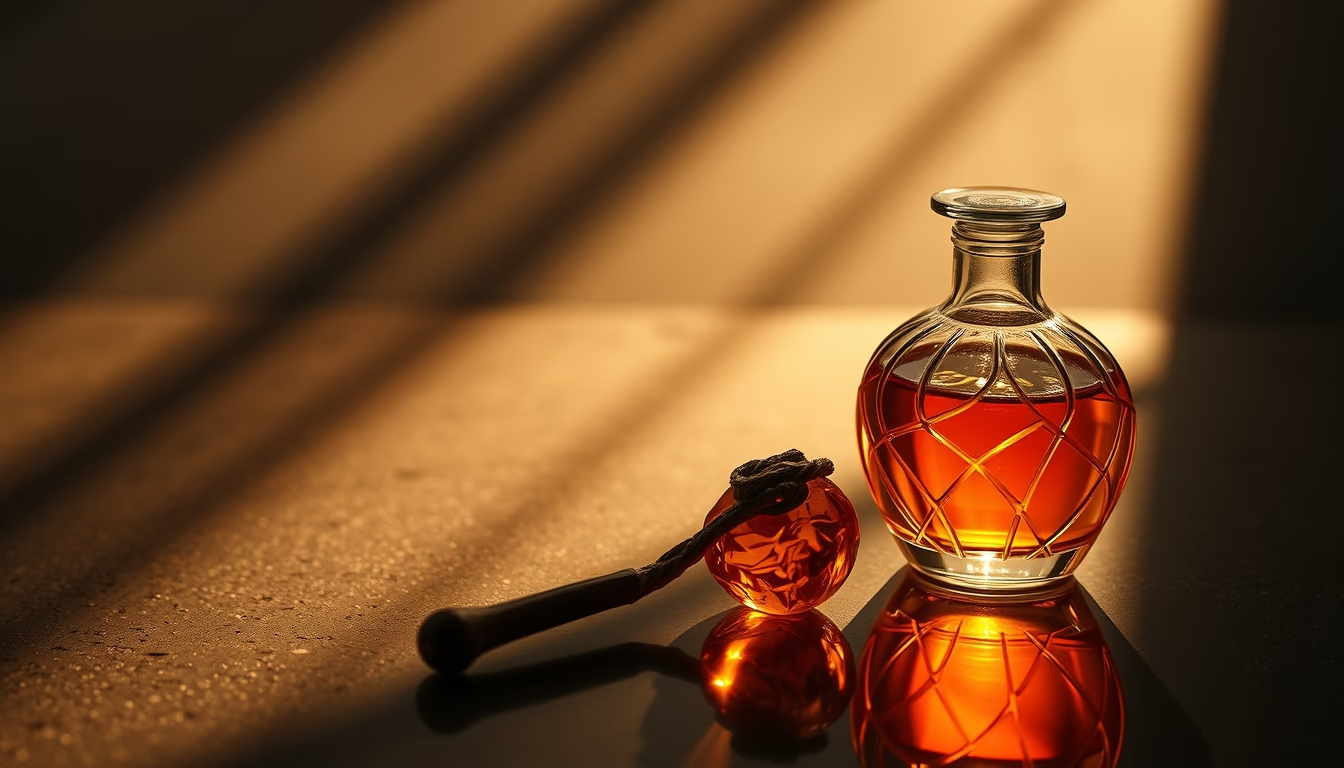
Baltic amber, fossilized resin from prehistoric pines, has been traded since antiquity along the Amber Road connecting the Baltic Sea to the Mediterranean.
About this subject
Baltic amber is a fossilized resin produced by pine trees from the Eocene period, approximately 44 million years ago. Its formation occurred in vast forests that covered the region now corresponding to southern Scandinavia and the Baltic Sea area. Over time, the resin was buried and polymerized, transforming into the translucent, golden material known as amber. The largest global concentration of this fossil is in the Baltic region, especially in deposits along the coasts of Poland, Lithuania, Latvia, and the Russian exclave of Kaliningrad, where an estimated 90% of the world's amber is mined.
Baltic amber trade dates back to the Neolithic era but peaked during the Roman Empire. Romans valued amber as an exotic gem, believing it had magical and medicinal properties. The Amber Road, a network of routes linking the Baltic Sea to the Adriatic, enabled transport of amber to southern Europe, where it was crafted into jewelry, amulets, and decorative items. Pliny the Elder documented the trade in the 1st century AD, noting that small pieces could be worth more than a slave. During the Middle Ages, the Hanseatic League controlled much of the commerce, and amber remained a luxury item in Europe.
Beyond ornamental value, Baltic amber is scientifically important due to its inclusions of plants and insects, which provide insights into prehistoric ecosystems. These inclusions are rare and highly prized by paleontologists. In popular culture, amber is often linked to legends, such as the Greek myth of Phaethon, whose sisters were transformed into trees exuding amber. Today, amber mining and trade continue to be relevant for local economies, though extraction is regulated to prevent environmental damage.
Frequently Asked Questions
What is Baltic amber?
Baltic amber is a fossilized resin from Eocene-era pines, about 44 million years old, primarily found in the Baltic Sea region. It is known for its golden color and frequently contains preserved plant and insect inclusions.
Why was Baltic amber so highly valued in antiquity?
In ancient Rome, amber was regarded as an exotic gem with supposed magical and medicinal properties. It was used in jewelry, amulets, and luxury items, traded along the Amber Road connecting the Baltic to the Mediterranean.
Where is Baltic amber found today?
Major sources of Baltic amber are in Poland, Lithuania, Latvia, and the Russian exclave of Kaliningrad, which holds an estimated 90% of the world's amber. Deposits also exist in Sweden and Denmark.
Direct URL
https://pub-c7d6a6ea828543ac903a74a341ccb2e1.r2.dev/imagens/amber-baltic-trade-fine-art-photography-fresh10.avifHow to credit
Include a visible link back to UtilizAí. Copy one of the snippets below:
<a href="https://xn--utiliza-eza.com/en/midia/imagens/amber-baltic-trade-fine-art-photography-fresh10">Amber baltic trade</a> by <a href="https://xn--utiliza-eza.com">UtilizAí</a>, licensed under <a href="https://creativecommons.org/licenses/by/4.0/">CC BY 4.0</a>.
[Amber baltic trade](https://xn--utiliza-eza.com/en/midia/imagens/amber-baltic-trade-fine-art-photography-fresh10) by [UtilizAí](https://xn--utiliza-eza.com), CC BY 4.0
License: CC-BY-4.0