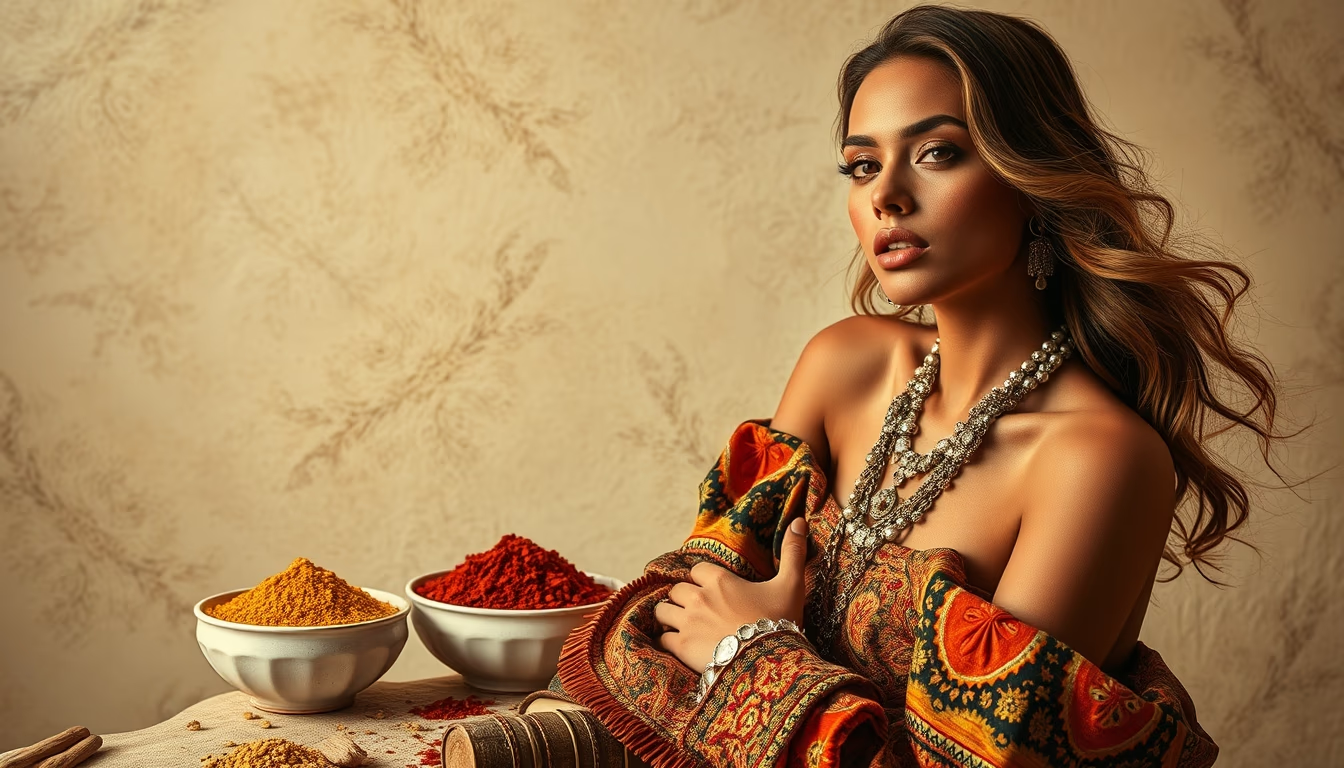
Amber baltic trade
1344×768 · AVIF · CC BY 4.0
Baltic amber, a fossilized resin prized since antiquity, was a vital trade route connecting northern and southern Europe.
About this subject
Baltic amber is fossilized resin from prehistoric trees, mainly pines, that existed about 44 million years ago (Eocene). Its golden-yellow color and insect inclusions made it one of Europe's first luxury goods. The so-called "Amber Road" connected the Baltic Sea to the Mediterranean via the Danube and the Alps. This trade flourished from the Bronze Age to the Roman Empire, where amber was used in jewelry, amulets, and even medicine. Pliny the Elder documented its value and origin.
The largest deposits are in the Kaliningrad region (Russia), which produces about 90% of the world's raw amber. Extracted from open-pit mines, amber is also found on the coasts of Poland, Lithuania, and Latvia. During the Middle Ages, the Teutonic Order controlled the trade, and amber was bartered for spices and silk. Besides jewelry, it was used in varnishes (like polished amber) and in folk medicine to treat pain and inflammation.
Interestingly, Baltic amber contains inclusions of insects, plants, and even small vertebrates, offering a window into ancient ecosystems. The largest known piece, the "Kaliningrad Amber", weighs 11.8 kg. Today, amber remains a cultural symbol in the Baltic states, featuring in festivals and handicrafts. Modern trade focuses on jewelry and art objects, but its historical importance as a link between civilizations endures.
Frequently Asked Questions
What is Baltic amber and how was it formed?
Baltic amber is fossilized resin from prehistoric trees, mainly pines, that lived about 44 million years ago. The resin solidified and fossilized, often preserving inclusions of insects and plants.
Why was Baltic amber so valued in ancient trade?
Its beauty, golden color, and supposedly magical properties made it a luxury item. It was used in jewelry, amulets, and medicine, and traded for spices and metals along the Amber Road.
Where are the largest Baltic amber deposits found today?
About 90% of the world's raw amber comes from the Kaliningrad region in Russia. Significant deposits also exist in Poland, Lithuania, and Latvia.
Direct URL
https://pub-c7d6a6ea828543ac903a74a341ccb2e1.r2.dev/imagens/amber-baltic-trade-documentary-nature-style-fresh13.avifHow to credit
Include a visible link back to UtilizAí. Copy one of the snippets below:
<a href="https://xn--utiliza-eza.com/en/midia/imagens/amber-baltic-trade-documentary-nature-style-fresh13">Amber baltic trade</a> by <a href="https://xn--utiliza-eza.com">UtilizAí</a>, licensed under <a href="https://creativecommons.org/licenses/by/4.0/">CC BY 4.0</a>.
[Amber baltic trade](https://xn--utiliza-eza.com/en/midia/imagens/amber-baltic-trade-documentary-nature-style-fresh13) by [UtilizAí](https://xn--utiliza-eza.com), CC BY 4.0
License: CC-BY-4.0