Amber baltic trade
1344×768 · AVIF · CC BY 4.0
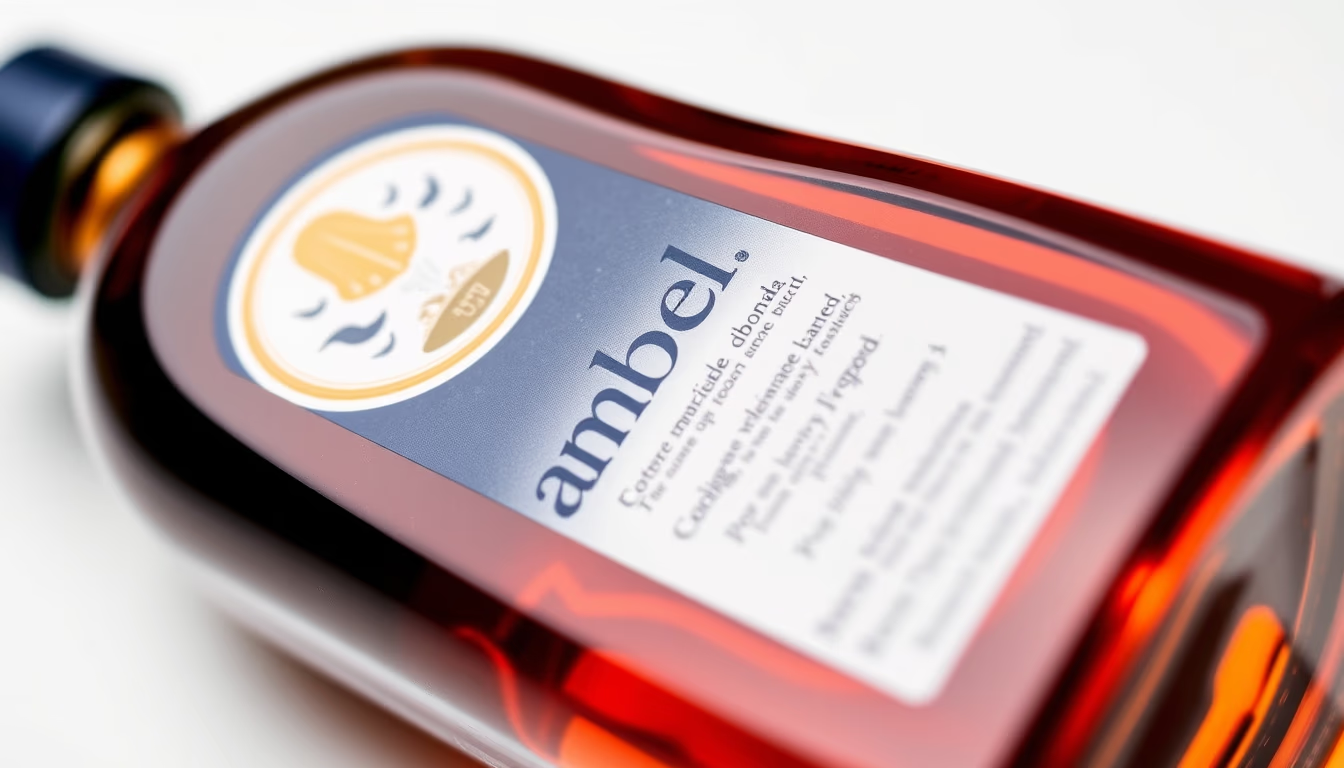
Baltic amber, fossilized resin millions of years old, was one of the most valuable commodities on European trade routes since antiquity.
About this subject
Baltic amber is fossilized resin from coniferous trees of the Eocene epoch, roughly 40 to 50 million years old. Its primary sources lie along the Baltic Sea coast, especially in modern-day Poland, Russia (Kaliningrad), Lithuania, and Latvia. Since the Stone Age, amber was collected on beaches and used for adornment, amulets, and trade. During the Roman Empire, Baltic amber was transported via the famous Amber Road, linking the Baltic to the Mediterranean through the Danube and the Alps. This trade route was vital for the economies of Baltic tribes and supplied Roman luxury markets, where amber was prized for its beauty and alleged medicinal properties. Pliny the Elder noted that amber was more valuable than young slaves.
In the Middle Ages, the Teutonic Order tightly controlled amber production in Prussia, establishing a strict monopoly. Amber was used for rosaries, reliquaries, and sacred art. The Amber Room, a famed chamber decorated with amber panels gifted to Peter the Great, exemplifies the material's prestige. Today, the Kaliningrad region produces about 90% of the world's amber, with open-pit mines extracting tons annually. Amber is widely used in jewelry, cosmetics, and even homeopathic remedies, though its commercial value has declined since the 19th century.
Interestingly, Baltic amber is renowned for preserving inclusions, such as insects and plants, offering a unique fossil record. The presence of succinic acid, which gives it a characteristic scent when heated, distinguishes Baltic amber from other varieties. Sustainable extraction and legal trade are regulated by international agreements, as amber is considered a cultural and natural resource of the region.
Frequently Asked Questions
What is Baltic amber and how is it formed?
It is fossilized resin from coniferous trees of the Eocene epoch, hardened over millions of years. It is mainly found in deposits around the Baltic Sea.
What was the historical significance of the Amber Road?
It was a network of trade routes connecting the Baltic Sea to the Mediterranean, transporting amber from the north to the Roman Empire. This route boosted the economy of Baltic tribes and supplied Roman elites with luxury goods.
Is Baltic amber still mined today?
Yes, about 90% of the world's production comes from the Kaliningrad region of Russia. It is extracted in open-pit mines and used in jewelry, cosmetics, and remedies.
Direct URL
https://pub-c7d6a6ea828543ac903a74a341ccb2e1.r2.dev/imagens/amber-baltic-trade-commercial-product-photography-fresh12.avifHow to credit
Include a visible link back to UtilizAí. Copy one of the snippets below:
<a href="https://xn--utiliza-eza.com/en/midia/imagens/amber-baltic-trade-commercial-product-photography-fresh12">Amber baltic trade</a> by <a href="https://xn--utiliza-eza.com">UtilizAí</a>, licensed under <a href="https://creativecommons.org/licenses/by/4.0/">CC BY 4.0</a>.
[Amber baltic trade](https://xn--utiliza-eza.com/en/midia/imagens/amber-baltic-trade-commercial-product-photography-fresh12) by [UtilizAí](https://xn--utiliza-eza.com), CC BY 4.0
License: CC-BY-4.0