Amber baltic trade
1344×768 · AVIF · CC BY 4.0
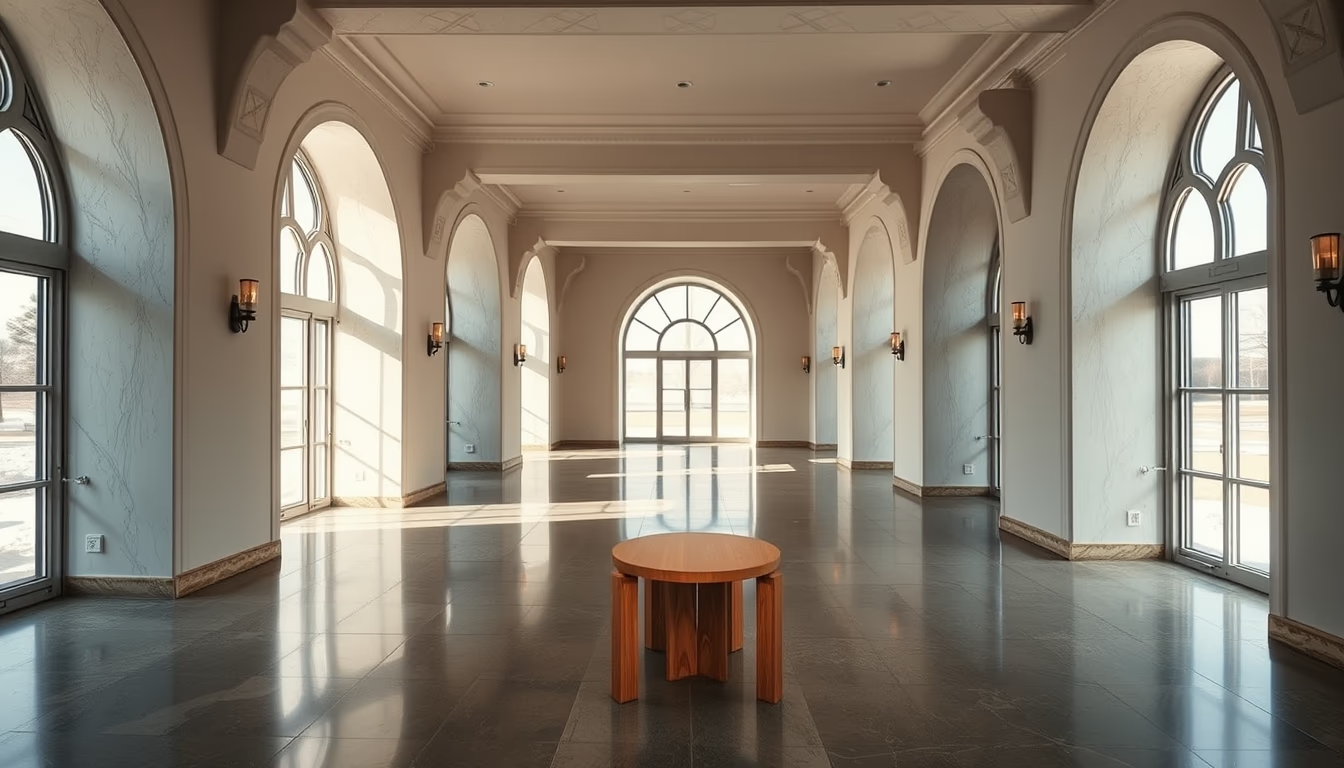
Baltic amber, fossilized tree resin millions of years old, was one of the most valuable commodities in ancient European trade routes, linking the Baltic Sea to the Mediterranean.
About this subject
Baltic amber is a fossilized resin from coniferous trees that existed approximately 44 million years ago, during the Eocene epoch. Around 90% of the world's amber comes from the Baltic Sea region, especially from countries like Poland, Lithuania, Latvia, and Russia (Kaliningrad Oblast). Its formation occurred in subtropical forests that covered the area, with resin buried and fossilized over millions of years, often preserving inclusions of insects and plants.
The trade of Baltic amber dates back to antiquity, with evidence of trade routes connecting the Baltic to the Mediterranean, known as the Amber Road. The Phoenicians, Greeks, and Romans valued amber not only for its beauty but also for its supposed medicinal and magical properties. Pliny the Elder documented its use in jewelry and amulets. Amber was so valuable that it was exchanged for precious metals and slaves, and its possession was a symbol of status.
Culturally, Baltic amber is an integral part of regional folklore and art. In Lithuania, for example, it is known as "gintaras" and is considered the country's gold. Besides jewelry, amber is used in decorative objects, musical instruments (such as the Kaliningrad amber), and even in perfumes and homeopathic medicines. Scientifically, inclusions in amber provide valuable information about prehistoric ecosystems, as demonstrated by the study of preserved insects and plants.
Today, Baltic amber trade remains significant, with Russia and Poland being the largest producers. Mining is carried out mainly in open-pit mines and by dredging at sea. Amber is exported worldwide, especially to Asia, where it is used in jewelry and traditional Chinese medicine. However, illegal mining and smuggling are persistent issues, with estimates that up to 30% of amber extracted in Russia is illegal.
Frequently Asked Questions
What is Baltic amber and how was it formed?
Baltic amber is a fossilized resin from coniferous trees of the Eocene epoch, about 44 million years ago. It formed when tree resin was buried and fossilized, often preserving inclusions of insects and plants.
Why was Baltic amber so valuable in ancient trade routes?
Besides its beauty, amber was believed to have medicinal and magical properties. It was used in jewelry and amulets, and its rarity made it a luxury item traded for precious metals and slaves.
What are modern uses of Baltic amber?
Today, amber is mainly used in jewelry, decorative objects, and alternative medicine. Scientifically, inclusions in amber help study prehistoric ecosystems.
Direct URL
https://pub-c7d6a6ea828543ac903a74a341ccb2e1.r2.dev/imagens/amber-baltic-trade-architectural-photography-fresh15.avifHow to credit
Include a visible link back to UtilizAí. Copy one of the snippets below:
<a href="https://xn--utiliza-eza.com/en/midia/imagens/amber-baltic-trade-architectural-photography-fresh15">Amber baltic trade</a> by <a href="https://xn--utiliza-eza.com">UtilizAí</a>, licensed under <a href="https://creativecommons.org/licenses/by/4.0/">CC BY 4.0</a>.
[Amber baltic trade](https://xn--utiliza-eza.com/en/midia/imagens/amber-baltic-trade-architectural-photography-fresh15) by [UtilizAí](https://xn--utiliza-eza.com), CC BY 4.0
License: CC-BY-4.0