Amazon river meandering aerial
1344×768 · AVIF · CC BY 4.0
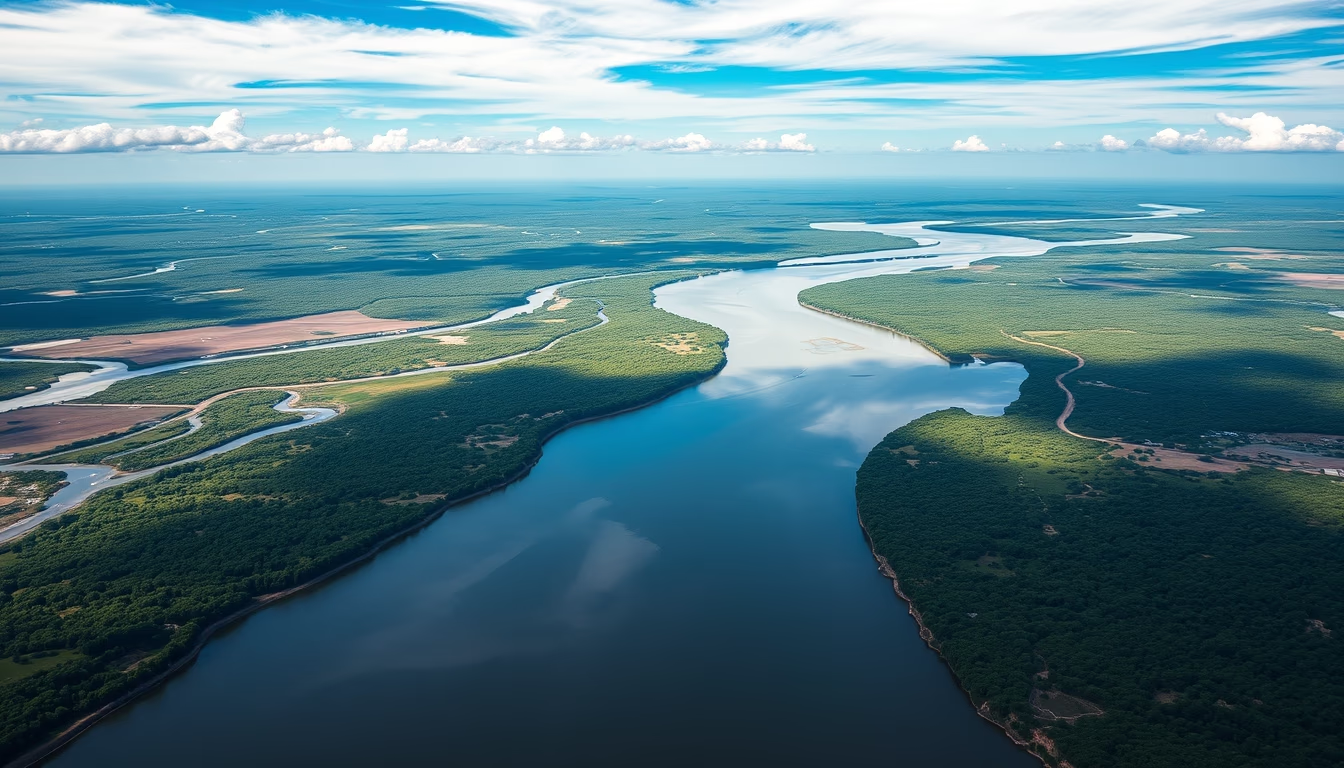
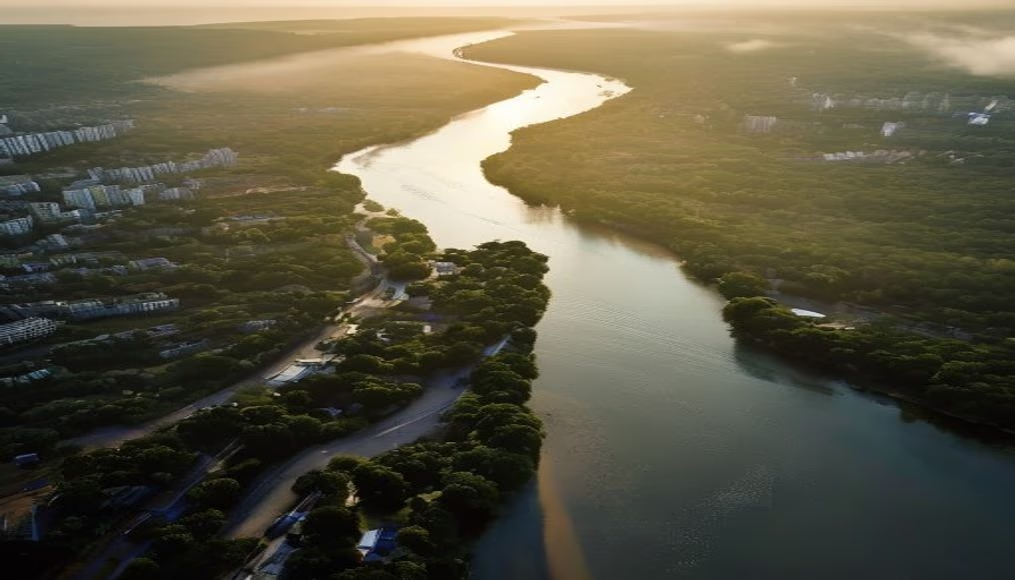
The Amazon River meanders through the world's largest tropical rainforest, forming sinuous curves that reveal the natural dynamics of the Amazon landscape.
About this subject
The Amazon River is the second longest river in the world, stretching approximately 6,400 km, and the largest by water volume, discharging about 209,000 m³/s into the Atlantic Ocean. Its basin covers nearly 7 million km², spanning Brazil, Peru, Colombia, Ecuador, Bolivia, Venezuela, Guyana, and Suriname. Meandering is a typical feature of lowland rivers, where the current erodes the outer banks of curves and deposits sediment on the inner banks, creating a sinuous pattern that constantly shifts over geological time. In the Amazon, this process is intensified by the enormous water volume and low terrain gradient, resulting in wide curves and oxbow lakes known as 'meander lakes'. The dense vegetation along the banks helps stabilize part of the soil, but during seasonal floods, which can raise the river level by up to 15 meters, the water overflows and reshapes the landscape. The region hosts extraordinary biodiversity: the Amazon basin is estimated to contain over 3,000 fish species, 1,300 bird species, and 430 mammal species, many endemic. The Amazon's meandering is not just a geographic phenomenon but also a crucial factor in creating riparian habitats such as floodplains and flooded forests, which sustain unique ecosystems and traditional communities that depend on the river's cycles for their livelihoods.
Frequently Asked Questions
Why does the Amazon River form so many meanders?
Meandering occurs due to the combination of low terrain slope, enormous water volume, and sediment load. The current erodes the outer banks of curves and deposits material on the inner banks, creating a sinuous pattern that slowly shifts over time.
What is the importance of meanders for the Amazon ecosystem?
Meanders create diverse habitats such as floodplains and oxbow lakes, which harbor high biodiversity. They also influence nutrient cycling and flood dynamics, essential for fish reproduction and the livelihoods of riverside communities.
Do the Amazon's meanders change frequently?
Yes, especially during seasonal floods when the river overflows and may cut new channels. On a geological timescale, meanders migrate laterally, potentially forming isolated oxbow lakes over decades or centuries.
Direct URL
https://pub-c7d6a6ea828543ac903a74a341ccb2e1.r2.dev/imagens/amazon-river-meandering-aerial-landscape-photography.avifHow to credit
Include a visible link back to UtilizAí. Copy one of the snippets below:
<a href="https://xn--utiliza-eza.com/en/midia/imagens/amazon-river-meandering-aerial-landscape-photography">Amazon river meandering aerial</a> by <a href="https://xn--utiliza-eza.com">UtilizAí</a>, licensed under <a href="https://creativecommons.org/licenses/by/4.0/">CC BY 4.0</a>.
[Amazon river meandering aerial](https://xn--utiliza-eza.com/en/midia/imagens/amazon-river-meandering-aerial-landscape-photography) by [UtilizAí](https://xn--utiliza-eza.com), CC BY 4.0
License: CC-BY-4.0