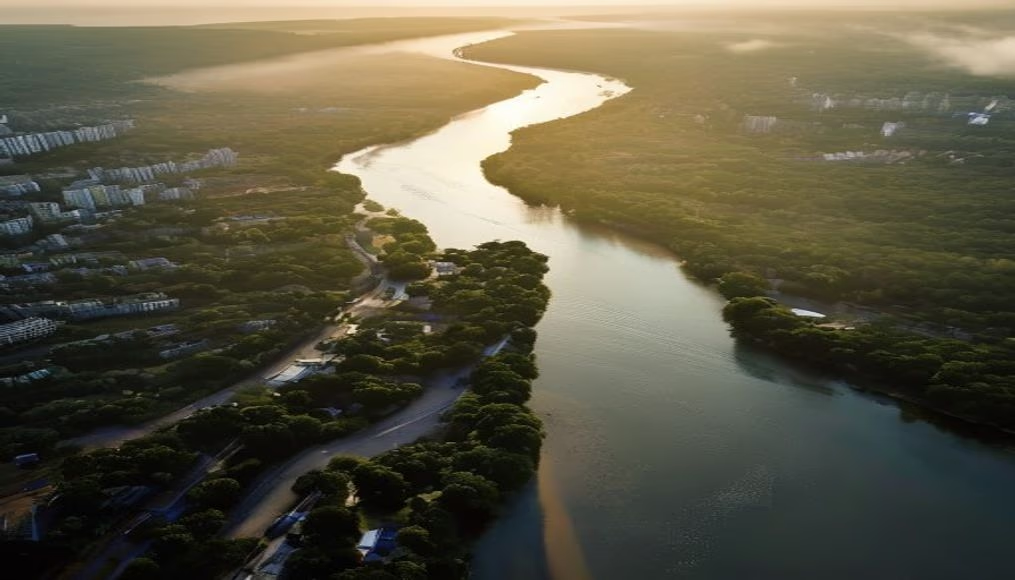
Amazon river meandering aerial
1344×768 · AVIF · CC BY 4.0
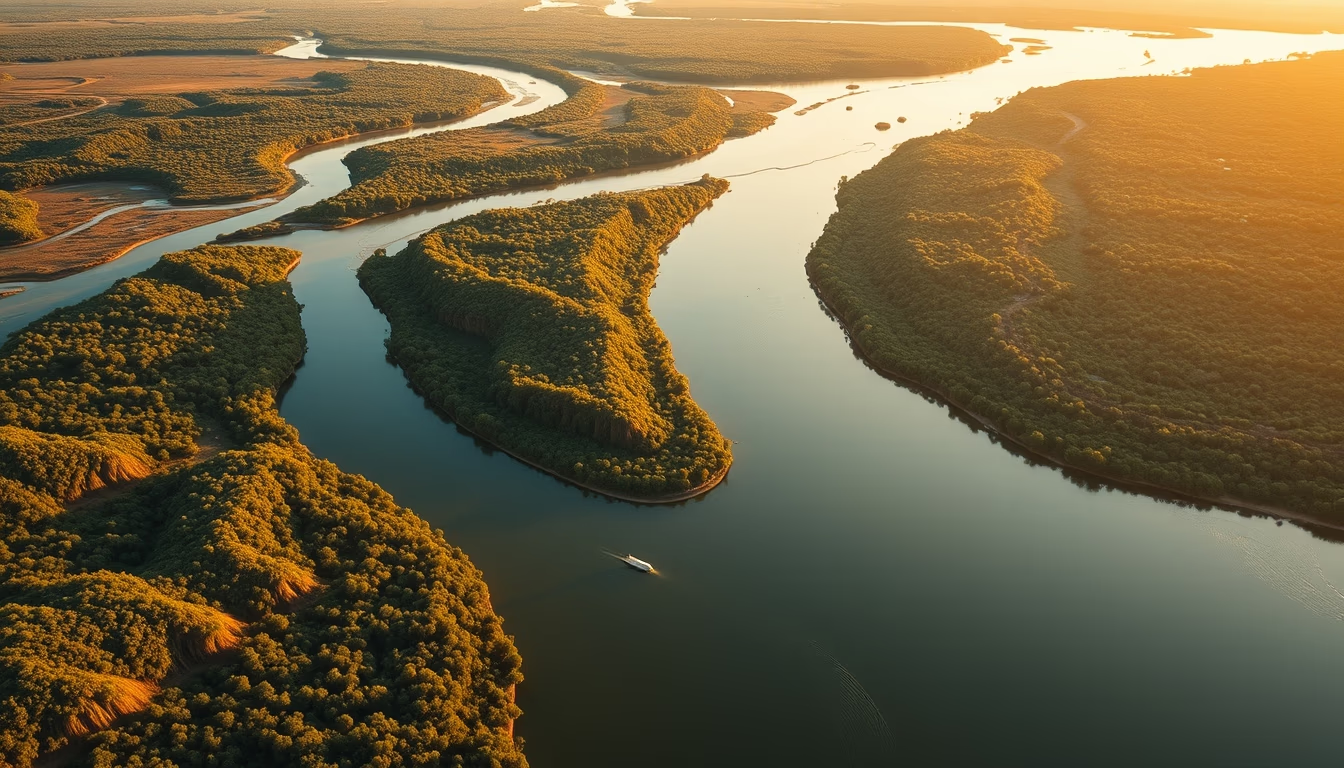
Aerial view of the Amazon River meanders, one of the most extensive and dynamic river systems on Earth.
About this subject
The Amazon River, approximately 6,400 km long, is the second longest river in the world and the largest by water volume, discharging about 20% of the world's freshwater into the oceans. Its basin covers over 7 million km², spanning eight South American countries: Brazil, Peru, Colombia, Venezuela, Ecuador, Bolivia, Guyana, and Suriname. The image captures the characteristic meanders, sinuous curves formed by water flow on alluvial plains, typical of low-gradient rivers like the Amazon.
Amazon meanders result from millennia of erosion and sediment deposition, carving a labyrinth of channels, oxbow lakes (locally called 'paranás' or 'furos'), and river islands. During the rainy season (December to May), the river level can rise over 10 meters, flooding vast floodplain areas and creating a unique ecosystem known as 'flooded forest' or igapó. This phenomenon is essential for fish reproduction and the maintenance of local biodiversity.
The Amazon region hosts the world's largest tropical rainforest, with an estimated 10% of all known species. The river itself is home to more than 3,000 fish species, including the pirarucu (Arapaima gigas), one of the largest freshwater fish, and the Amazon river dolphin (Inia geoffrensis), an endemic river dolphin. Additionally, the riverbanks are inhabited by riverside communities that depend on the Amazon for transportation, food, and livelihood, preserving centuries-old cultural traditions.
Threats such as deforestation, illegal mining, and climate change jeopardize this vital ecosystem. Studies indicate that deforestation in the Amazon basin has already exceeded 20%, compromising the hydrological cycle and carbon sequestration capacity. Preserving the meanders and floodplain forests is crucial for global climate regulation and the sustenance of life in the region.
Frequently Asked Questions
What causes meanders in the Amazon River?
Meanders are formed by erosion and sediment deposition over millennia in low-gradient areas. Water seeks the path of least resistance, creating curves that become more pronounced over time.
Why are meanders important for the Amazon ecosystem?
Meanders create diverse habitats such as lakes and channels, supporting high biodiversity. During floods, flooded floodplains are essential for the reproduction of fish and waterbirds.
Is the Amazon River navigable along its entire length?
No. Although much of the river is navigable for medium-sized vessels, meanders and sandbars can hinder navigation in some stretches, especially during the dry season.
Direct URL
https://pub-c7d6a6ea828543ac903a74a341ccb2e1.r2.dev/imagens/amazon-river-meandering-aerial-cinematic-wide-shot-v2.avifHow to credit
Include a visible link back to UtilizAí. Copy one of the snippets below:
<a href="https://xn--utiliza-eza.com/en/midia/imagens/amazon-river-meandering-aerial-cinematic-wide-shot-v2">Amazon river meandering aerial</a> by <a href="https://xn--utiliza-eza.com">UtilizAí</a>, licensed under <a href="https://creativecommons.org/licenses/by/4.0/">CC BY 4.0</a>.
[Amazon river meandering aerial](https://xn--utiliza-eza.com/en/midia/imagens/amazon-river-meandering-aerial-cinematic-wide-shot-v2) by [UtilizAí](https://xn--utiliza-eza.com), CC BY 4.0
License: CC-BY-4.0