Amalfi coast cliffs
1344×768 · AVIF · CC BY 4.0
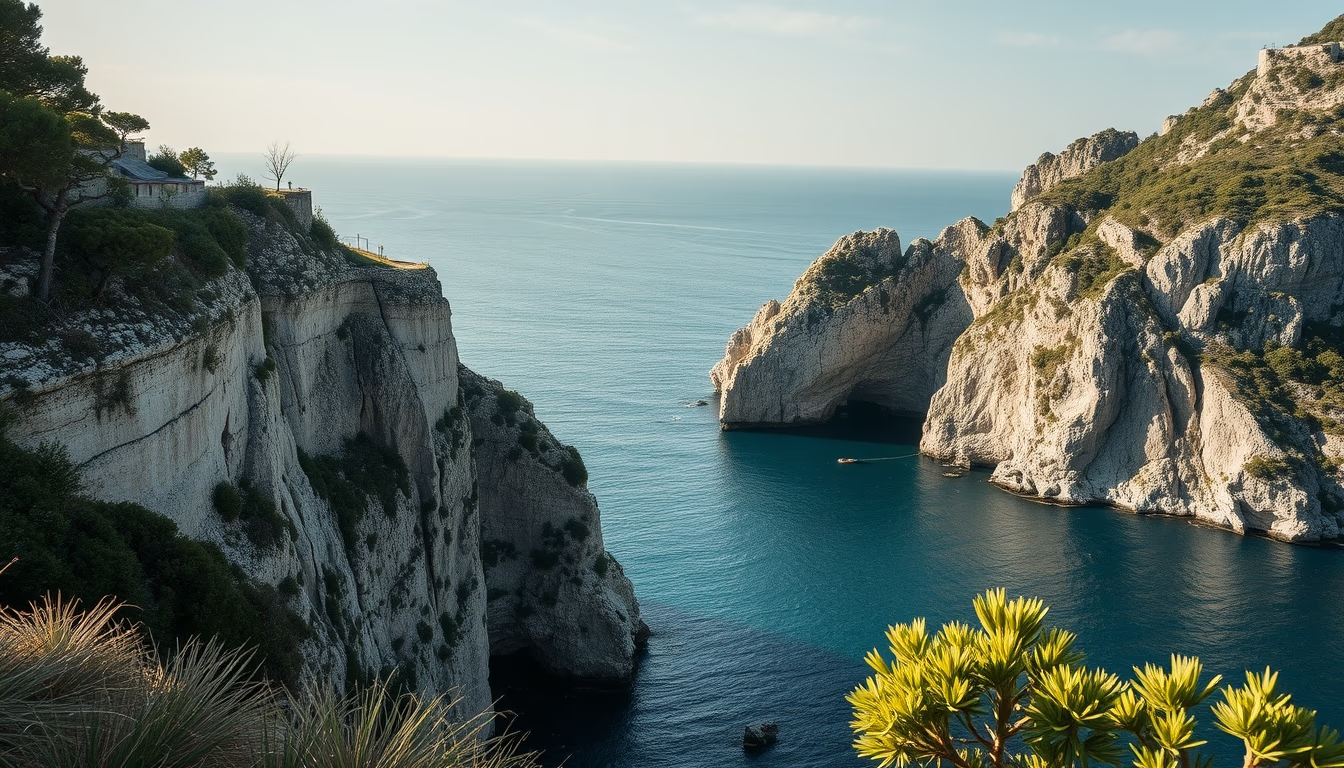
The cliffs of the Amalfi Coast in Italy are renowned for their dramatic beauty and historical significance, with colorful villages and hanging gardens.
About this subject
The Amalfi Coast, located in the Campania region of southern Italy, is a roughly 50-kilometer stretch of coastline extending from Positano to Vietri sul Mare. Its steep, jagged cliffs are composed of limestone and dolomite, shaped by millennia of marine erosion. These cliffs, reaching over 500 meters in height in some sections, harbor agricultural terraces planted with vineyards and lemon groves, a defining feature of the landscape. The area was declared a UNESCO World Heritage Site in 1997, recognizing the harmony between human intervention and the natural environment.
Historically, the Amalfi Coast was a major maritime center during the Middle Ages, with the Republic of Amalfi rivaling other Italian republics. The rugged geography necessitated the construction of winding roads, such as the famous SS163 Amalfitana, which snakes between rocks and offers panoramic views. Local curiosities include Sorrento's limoncello and Amalfi's handmade paper, a tradition dating back to the 13th century. The Mediterranean climate, with mild winters and dry summers, supports lush vegetation like pines, cypresses, and bougainvillea.
Trails traversing the cliffs, such as the Sentiero degli Dei (Path of the Gods), are popular among hikers, offering views of the Tyrrhenian Sea and the islands of Capri and Ischia. The villages, with their stacked and colorful houses, are accessible via stairways and narrow alleys, maintaining a medieval character. The local economy heavily depends on tourism but also on agriculture, notably olive oil, cheese, and seafood. Occasional landslides, exacerbated by the steepness of the cliffs, are constant challenges, requiring monitoring and reinforcement works.
Frequently Asked Questions
How high are the cliffs of the Amalfi Coast on average?
The cliffs of the Amalfi Coast can exceed 500 meters in some spots, with an average height ranging between 300 and 400 meters along the coastline.
Why is the Amalfi Coast a UNESCO World Heritage Site?
It was declared a World Heritage Site in 1997 for its outstanding cultural and landscape value, resulting from human adaptation to the rugged terrain, with agricultural terraces and villages integrated into nature.
What are the main economic activities along the cliffs?
Tourism is the main activity, followed by agriculture (lemons, grapes, olives), limoncello production, handicrafts (Amalfi paper), and fishing.
Direct URL
https://pub-c7d6a6ea828543ac903a74a341ccb2e1.r2.dev/imagens/amalfi-coast-cliffs-magazine-editorial-p8.avifHow to credit
Include a visible link back to UtilizAí. Copy one of the snippets below:
<a href="https://xn--utiliza-eza.com/en/midia/imagens/amalfi-coast-cliffs-magazine-editorial-p8">Amalfi coast cliffs</a> by <a href="https://xn--utiliza-eza.com">UtilizAí</a>, licensed under <a href="https://creativecommons.org/licenses/by/4.0/">CC BY 4.0</a>.
[Amalfi coast cliffs](https://xn--utiliza-eza.com/en/midia/imagens/amalfi-coast-cliffs-magazine-editorial-p8) by [UtilizAí](https://xn--utiliza-eza.com), CC BY 4.0
License: CC-BY-4.0