Alexandrite color change ring rare
1344×768 · AVIF · CC BY 4.0
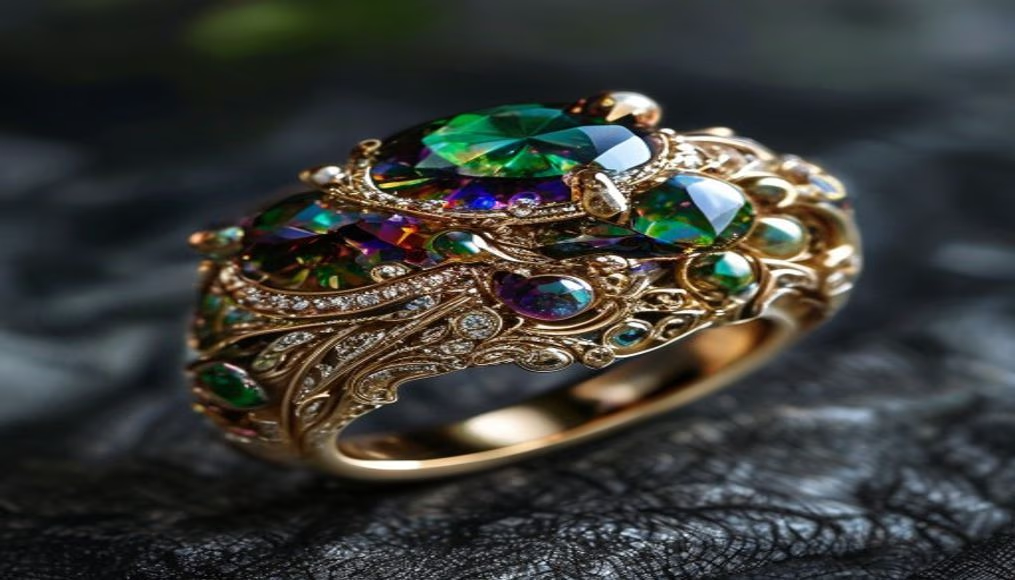
The alexandrite color change ring is a lapidary rarity that fascinates collectors and high jewelry enthusiasts.
About this subject
Alexandrite is a variety of the mineral chrysoberyl, discovered in 1830 in the Ural Mountains of Russia and named after Tsar Alexander II. Its most extraordinary feature is color change: under natural daylight or fluorescent light, it shows bluish green hues; under incandescent or tungsten light, it turns red to purplish red. This phenomenon, known as the alexandrite effect, is caused by chromium impurities in the crystal structure, which selectively absorb different wavelengths. Stones with strong, contrasting color change are extremely rare, especially above one carat. Due to the depletion of Russian deposits, most alexandrite today comes from secondary sources such as Sri Lanka, Brazil, and Tanzania. The cutting quality and ring design also reflect the Art Nouveau style, an artistic movement from the late 19th and early 20th centuries characterized by organic lines, natural forms, and floral motifs. In jewelry, this style prized unusual materials and innovative techniques like filigree settings and colored stones. An alexandrite ring in this context is not just a jewel but a work of art that merges the rarity of the gem with the fluid, symbolic aesthetic of the period. The piece, likely from the early 1900s, represents a unique convergence of natural history, materials science, and luxury design.
Frequently Asked Questions
How does the alexandrite color change work?
The color change occurs because chromium in the crystal structure absorbs light at different wavelengths. Under natural daylight (rich in blue), the stone appears green; under incandescent light (more red), it reflects red. The intensity depends on the purity and orientation of the gem.
Why is alexandrite so rare?
Gem-quality alexandrite is scarce because the original Russian deposits are depleted, and current sources yield few crystals with strong color change. Stones above 1 carat with sharp contrast are extremely valuable and rare in the market.
How can you tell if an alexandrite is natural?
The most reliable method is gemological analysis including spectroscopy and observation of color change under standard light sources. Synthetic alexandrite exists (often with more uniform change), but an expert can distinguish them by inclusions and optical properties.
Direct URL
https://pub-c7d6a6ea828543ac903a74a341ccb2e1.r2.dev/imagens/alexandrite-color-change-ring-rare-art-nouveau-aesthetic-luxo0.avifHow to credit
Include a visible link back to UtilizAí. Copy one of the snippets below:
<a href="https://xn--utiliza-eza.com/en/midia/imagens/alexandrite-color-change-ring-rare-art-nouveau-aesthetic-luxo0">Alexandrite color change ring rare</a> by <a href="https://xn--utiliza-eza.com">UtilizAí</a>, licensed under <a href="https://creativecommons.org/licenses/by/4.0/">CC BY 4.0</a>.
[Alexandrite color change ring rare](https://xn--utiliza-eza.com/en/midia/imagens/alexandrite-color-change-ring-rare-art-nouveau-aesthetic-luxo0) by [UtilizAí](https://xn--utiliza-eza.com), CC BY 4.0
License: CC-BY-4.0