Airport terminal modern with travelers walking
1344×768 · AVIF · CC BY 4.0
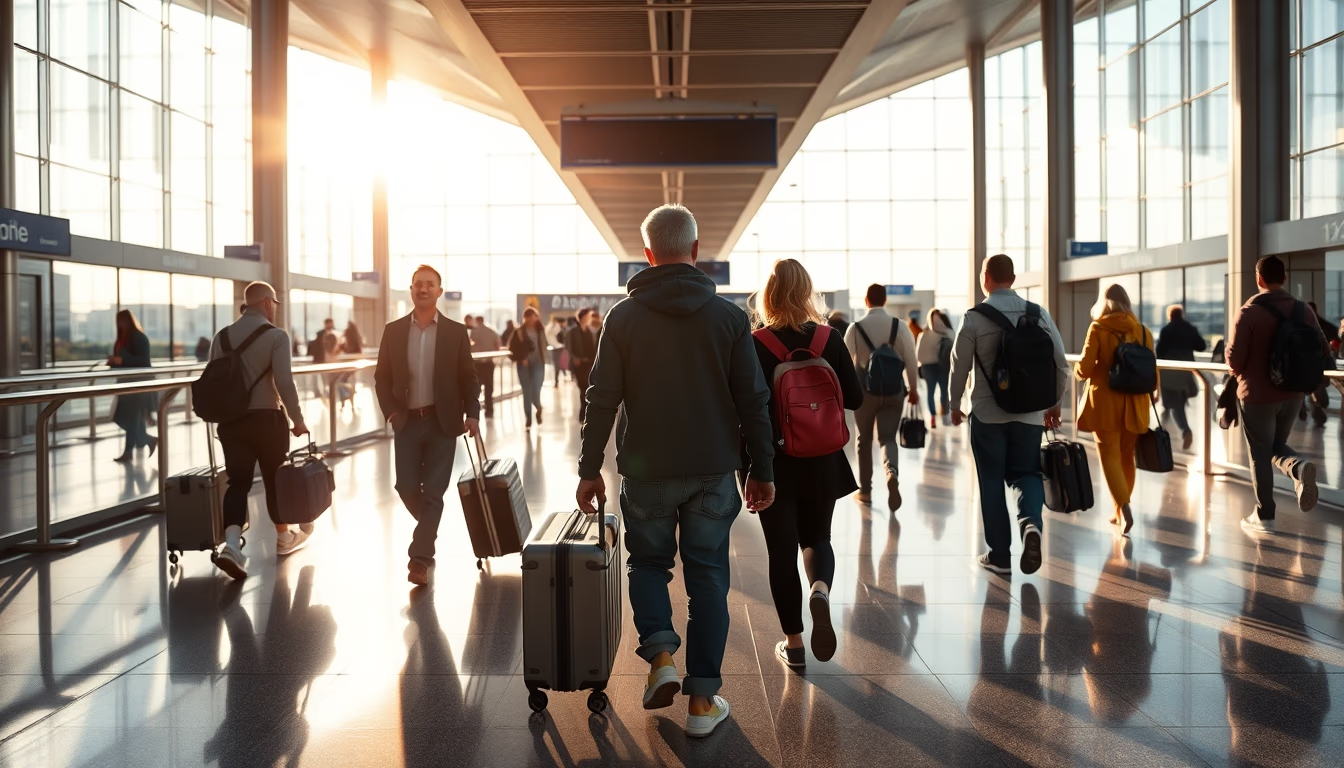
Modern airport terminals combine functional design and efficient passenger flow, reflecting the globalization of transportation.
About this subject
Contemporary airport terminals are designed to manage large volumes of travelers efficiently and comfortably. Structures like Dubai International Airport or Singapore's Changi Airport exemplify the use of vast open spaces, abundant natural lighting, and intuitive signage. These projects prioritize user experience, reducing the typical stress of air travel. Architectural symmetry, often employed, is not merely aesthetic: it logically guides passenger flow from check-in to boarding areas.
Operational efficiency is another pillar of these terminals. Automated baggage systems, boarding bridges, and moving walkways speed up movement. Data from the International Air Transport Association (IATA) indicates that well-designed terminals can reduce average connection time by up to 30%. Moreover, integration with other transport modes, such as trains and subways, makes airports multimodal hubs. London's Heathrow Airport, for example, connects directly to the Heathrow Express line, taking passengers to the city center in 15 minutes.
Culturally, modern terminals serve as showcases for the city or country they serve. Many incorporate local art, duty-free shops with regional products, and restaurants offering typical cuisine. Incheon International Airport in South Korea has a Korean culture museum and a traditional garden. This approach not only entertains travelers but also promotes tourism. Security, though largely invisible, is rigorous: surveillance cameras, body scanners, and constant patrols ensure passenger safety.
Interestingly, the largest airport terminal in the world by area is Terminal 3 of Dubai International Airport, with 1.7 million square meters. The busiest terminal is Terminal 1 of Atlanta Airport, serving over 50 million passengers annually. The current trend is sustainability: airports like Oslo, Norway, use solar energy and water recycling systems. These data show how terminals evolve to meet the demands of an increasingly connected world.
Frequently Asked Questions
What are the largest airport terminals in the world?
The largest terminal by area is Terminal 3 at Dubai International Airport, with 1.7 million square meters. The busiest is Terminal 1 at Atlanta Airport, serving over 50 million passengers annually.
How do modern terminals improve the traveler experience?
They use spacious areas, natural lighting, clear signage, and integration with public transport. Many offer local art, shops, and restaurants, along with automated systems that streamline flow.
Why is sustainability important in airports?
Airports are adopting solar energy, water recycling, and eco-friendly materials to reduce environmental impact. Examples include Oslo Airport using renewable energy and Singapore's airport with indoor gardens.
Direct URL
https://pub-c7d6a6ea828543ac903a74a341ccb2e1.r2.dev/imagens/airport-terminal-modern-with-travelers-walking-symmetric-composition-bright-midday-sun.avifHow to credit
Include a visible link back to UtilizAí. Copy one of the snippets below:
<a href="https://xn--utiliza-eza.com/en/midia/imagens/airport-terminal-modern-with-travelers-walking-symmetric-composition-bright-midday-sun">Airport terminal modern with travelers walking</a> by <a href="https://xn--utiliza-eza.com">UtilizAí</a>, licensed under <a href="https://creativecommons.org/licenses/by/4.0/">CC BY 4.0</a>.
[Airport terminal modern with travelers walking](https://xn--utiliza-eza.com/en/midia/imagens/airport-terminal-modern-with-travelers-walking-symmetric-composition-bright-midday-sun) by [UtilizAí](https://xn--utiliza-eza.com), CC BY 4.0
License: CC-BY-4.0