Airport terminal modern with travelers walking
1344×768 · AVIF · CC BY 4.0
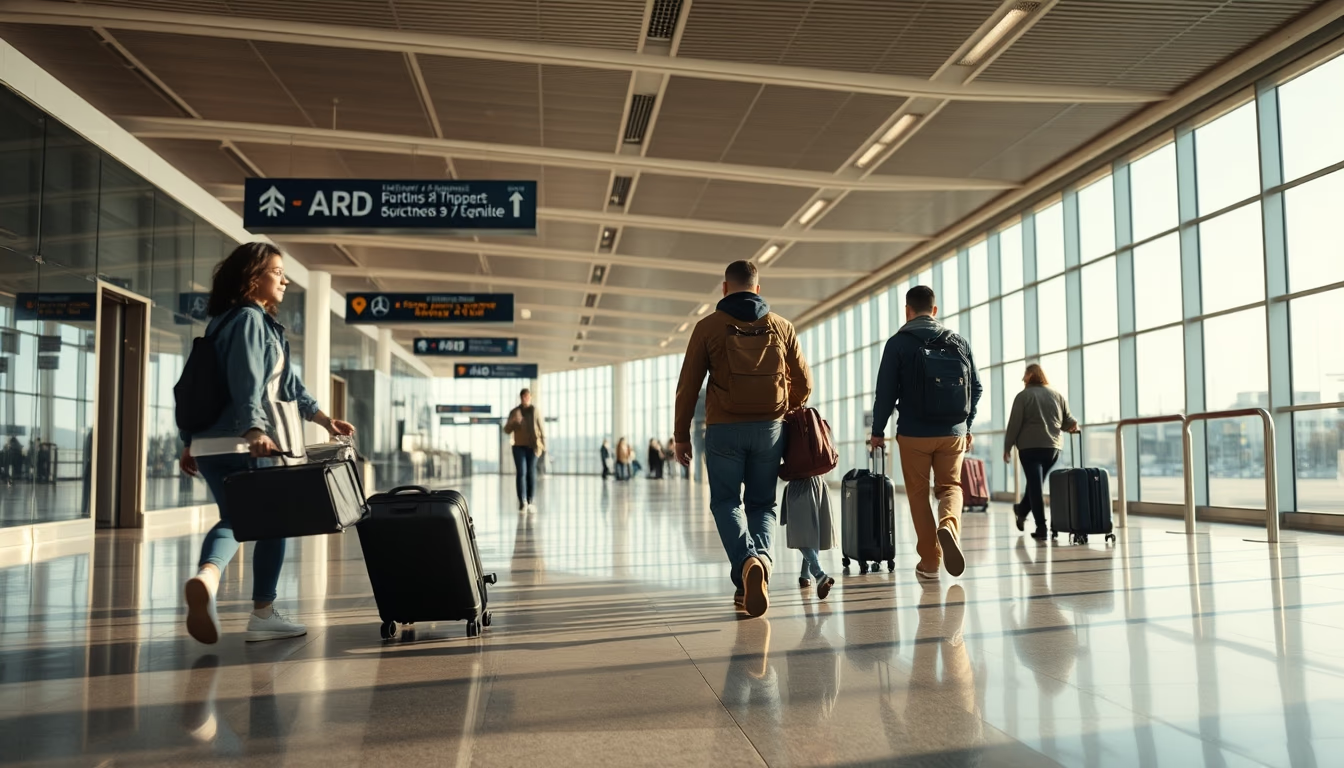
Modern airport terminals are global connectivity hubs, designed for efficient passenger flow.
About this subject
Contemporary airport terminals have evolved beyond mere boarding points into multifunctional hubs reflecting 21st-century architecture and engineering. Designed to process millions of travelers annually, these spaces prioritize human traffic flow with wide concourses, intuitive signage, and integrated commercial services. Natural light, often harnessed through skylights and glass facades, reduces energy consumption and enhances user experience, as seen in airports like Changi (Singapore) or Kuala Lumpur.
Passenger circulation in these terminals follows wayfinding principles, a design field studying how people orient in complex environments. Studies show that corridor layout, ceiling height, and check-in counter placement directly influence travel time and stress levels. In modern airports like Incheon (South Korea) or Heathrow (London), biometric technology and moving walkways accelerate flow, while lounges and green areas provide respite.
Culturally, terminals are microcosms of globalization, where different nationalities, languages, and habits converge. Architecture often incorporates local elements: at Guarulhos Airport (São Paulo), exposed concrete and glass panels reflect São Paulo's brutalist aesthetic. At Congonhas Airport, the historic terminal retains 1950s modernist features, contrasting with recent expansions.
Trivia: Denver International Airport's terminal has a tent-like roof evoking the Rocky Mountains, but also sparked conspiracy theories due to enigmatic murals. For efficiency, Tokyo Haneda Airport is among the world's most punctual, with an average domestic connection time of just 15 minutes.
Frequently Asked Questions
What is the busiest airport in Brazil?
Guarulhos International Airport (GRU) in São Paulo is the busiest, handling over 40 million passengers per year (2023 data).
How does airport terminal architecture affect passenger experience?
Elements like high ceilings, natural light, and clear signage reduce stress and improve orientation. Studies show well-designed environments can cut travel time by up to 20%.
What technological innovations are common in modern terminals?
Facial recognition for boarding, high-speed moving walkways, automated baggage systems, and indoor navigation apps are increasingly common, streamlining passenger flow.
Direct URL
https://pub-c7d6a6ea828543ac903a74a341ccb2e1.r2.dev/imagens/airport-terminal-modern-with-travelers-walking-documentary-photography-morning-natural-light.avifHow to credit
Include a visible link back to UtilizAí. Copy one of the snippets below:
<a href="https://xn--utiliza-eza.com/en/midia/imagens/airport-terminal-modern-with-travelers-walking-documentary-photography-morning-natural-light">Airport terminal modern with travelers walking</a> by <a href="https://xn--utiliza-eza.com">UtilizAí</a>, licensed under <a href="https://creativecommons.org/licenses/by/4.0/">CC BY 4.0</a>.
[Airport terminal modern with travelers walking](https://xn--utiliza-eza.com/en/midia/imagens/airport-terminal-modern-with-travelers-walking-documentary-photography-morning-natural-light) by [UtilizAí](https://xn--utiliza-eza.com), CC BY 4.0
License: CC-BY-4.0