Airport terminal modern with travelers walking
1344×768 · AVIF · CC BY 4.0
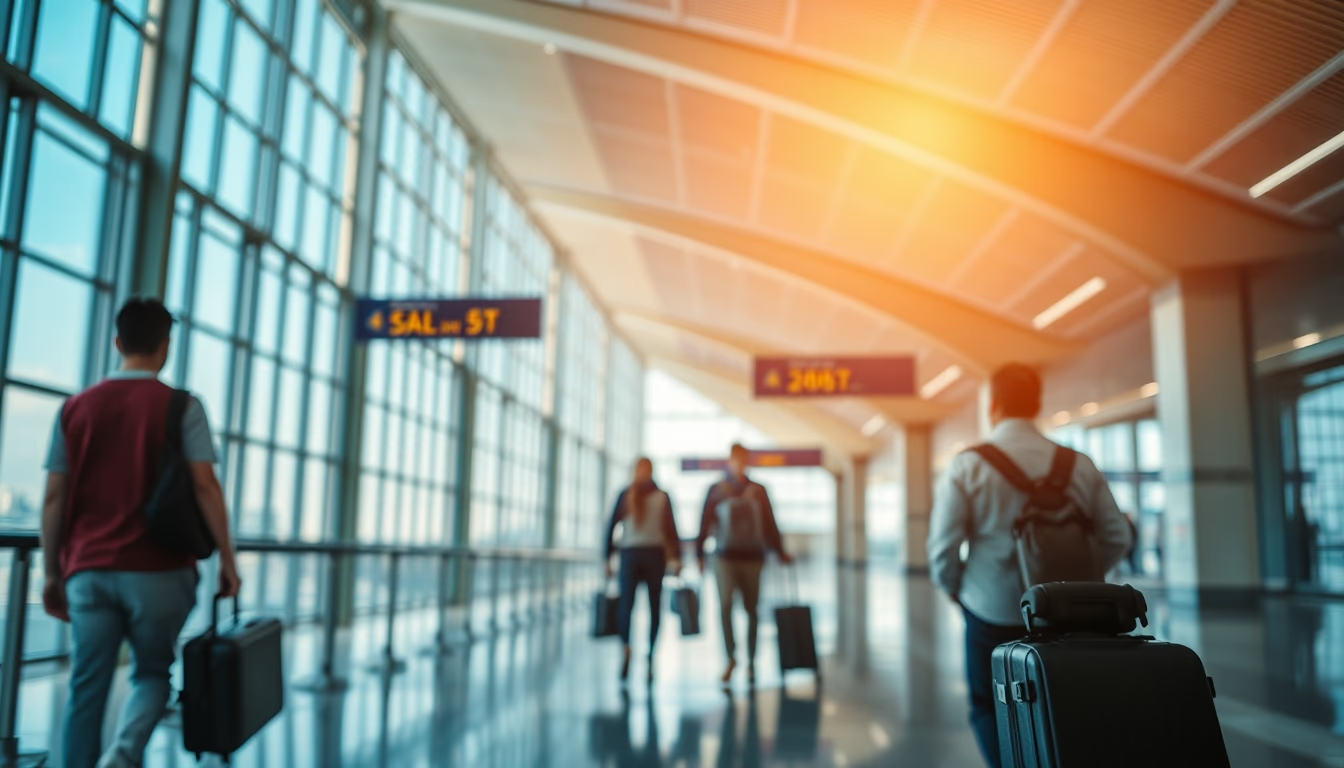
Modern airport terminals combine functional architecture with intense passenger flow, reflecting the pace of global aviation.
About this subject
Contemporary airport terminals are designed to manage millions of travelers annually, integrating operational efficiency and comfort. Examples like São Paulo's Guarulhos International Airport (GRU), the largest in Latin America, handle about 40 million passengers per year. These spaces feature advanced automated check-in systems, baggage carousels, and boarding bridges, along with commercial areas resembling shopping malls. Architecture favors natural lighting and clear signage to guide flow, while moving walkways and elevators speed up movement between gates.
Passenger-centric design is a recent trend. Before the 2000s, terminals prioritized aircraft logistics; today, user experience dictates layout. VIP lounges, workstations, and rest areas are common. Sustainability also gains prominence: airports like Congonhas (CGH) invest in solar panels and selective waste collection. Security combines facial recognition cameras and X-ray baggage screening, balancing speed and control.
Interestingly, the world's largest terminal by area is Terminal 3 at Dubai International Airport (DXB), covering 1.5 million square meters. In Brazil, Brasília Airport (BSB) has the largest terminal by built area, over 110,000 square meters. Peak hour movements, such as weekends and holidays, require coordination among airlines, air traffic control, and ground services to avoid delays.
Frequent travelers know the rituals well: checking luggage, passing through X-ray, finding the boarding gate, and waiting for the call. In modern terminals, mobile apps provide real-time updates on delays and gate changes, reducing anxiety. Despite global standardization, each airport reflects local culture in food, shops, and decor, making the experience unique.
Frequently Asked Questions
What is the largest airport terminal in Brazil?
The largest airport terminal in Brazil by built area is at Brasília International Airport (BSB), with over 110,000 square meters.
How do modern airports improve passenger experience?
They invest in user-centric design, with natural lighting, clear signage, lounges, rest areas, and mobile apps providing real-time flight updates.
What security measures are common in modern terminals?
Facial recognition cameras, X-ray baggage screening, and security checkpoints balance speed and control, following international standards.
Direct URL
https://pub-c7d6a6ea828543ac903a74a341ccb2e1.r2.dev/imagens/airport-terminal-modern-with-travelers-walking-closeup-macro-shot-bright-midday-sun.avifHow to credit
Include a visible link back to UtilizAí. Copy one of the snippets below:
<a href="https://xn--utiliza-eza.com/en/midia/imagens/airport-terminal-modern-with-travelers-walking-closeup-macro-shot-bright-midday-sun">Airport terminal modern with travelers walking</a> by <a href="https://xn--utiliza-eza.com">UtilizAí</a>, licensed under <a href="https://creativecommons.org/licenses/by/4.0/">CC BY 4.0</a>.
[Airport terminal modern with travelers walking](https://xn--utiliza-eza.com/en/midia/imagens/airport-terminal-modern-with-travelers-walking-closeup-macro-shot-bright-midday-sun) by [UtilizAí](https://xn--utiliza-eza.com), CC BY 4.0
License: CC-BY-4.0